REVIEW · MILAN
Milan Skyscrapers Guided Tour: Porta Nuova, Unicredit tower & Vertical Forest
Book on Viator →Operated by Raphael Tours & Events · Bookable on Viator
Milan’s newest skyline has a story. In this 3-hour guided walk you’ll connect the dots between Porta Nuova’s makeover after Expo 2015, the city’s big-name modern landmarks, and the eco-minded ideas behind them. I particularly like how the tour keeps one foot in street-level reality while still aiming at the big-view drama of Milan’s towers and terraces. You’ll also get the standout wow-factor of the Vertical Forest, explained in a way that makes the design feel practical, not just pretty.
The one thing to think about: you’re walking with a moderate fitness level in mind, and you’ll climb up to terrace viewpoints—so plan for stairs and heat, especially in summer.
In This Review
- Key things I’d plan around
- Milan skyscraper views without the guesswork
- Porta Nuova and the World Expo 2015 renewal, on foot
- The terrace moment
- Corso Como and Gae Aulenti Square at walking speed
- Unicredit Tower at Piazza Gae Aulenti: the big-sky moment
- A practical tip for photos
- Isola’s “railing houses” and the Vertical Forest towers
- The plant numbers that make it feel real
- The Eataly finish: regional bites as a smart payoff
- Price and value for a 3-hour Milan architecture focus
- Who this tour fits best (and who might want a different plan)
- Should you book this Milan skyscrapers tour?
- FAQ
- How long is the Milan Skyscrapers guided tour?
- Where does the tour start and end?
- What is the price per person?
- Is the tour private?
- What’s included in the tour?
- Is hotel pickup and drop-off included?
- What kind of physical fitness level do I need?
- Is the meeting point near public transportation?
- Can I cancel for a full refund?
Key things I’d plan around
- Expo 2015 renewal explained on your feet, not in a lecture
- Terrace viewpoints in Porta Nuova for that true skyline look
- Corso Como by night energy, plus the design-focused stops around Gae Aulenti Square
- Unicredit Tower focus at Piazza Gae Aulenti, where the skyline conversation gets real
- Isola and its “railing houses” (with common galleries and courtyard elements) before you hit the Vertical Forest
- Eataly as the finish line, where regional Italian bites—from Valle d’Aosta to Sicily—turn the walk into a meal
Milan skyscraper views without the guesswork
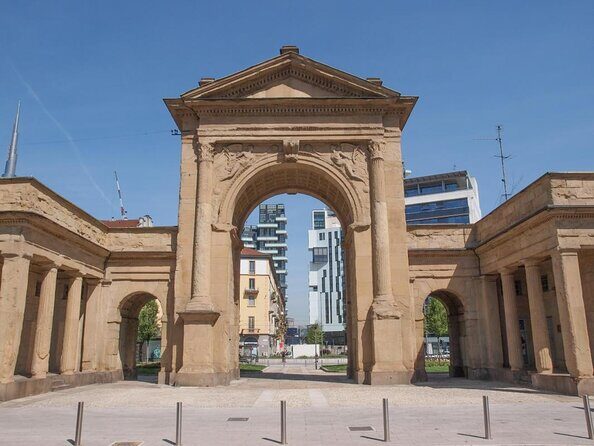
If you like architecture, you’ll love this kind of tour: it’s timed to show Milan’s modern districts as a connected project, not a list of random buildings. You start at Eataly Milano Smeraldo and end right back there, which is a big deal when you’re trying to keep the day simple. It also means you can treat the tour like a “get your bearings fast” architecture intro and then keep exploring with a clearer sense of where everything sits.
This one also has a strong planning advantage: it’s set up as a private tour for your group with a professional art historian guide. That usually translates into fewer awkward pauses and more direct answers to the questions you actually care about, like why certain areas were rebuilt and what the design choices were meant to achieve.
You can also read our reviews of more guided tours in Milan

Porta Nuova and the World Expo 2015 renewal, on foot
The tour kicks off with the idea that Milan hosted the 2015 World Expo, and that event triggered a broader renewal push. Your guide frames it as more than construction news; it’s a redesign effort tied to eco-sustainability goals and a major shift in how parts of the city were planned. That context matters, because Porta Nuova can look like it appeared overnight—but the tour gives you the why behind the skyline.
From there, you move into the renovated heart of Porta Nuova, an area shaped by leading architects and a noticeably different skyline than the older city core. I like that the tour doesn’t just point upward; it helps you see how new urban planning changes street life—where views open up, how districts connect, and why the new towers are part of a bigger system.
The terrace moment
One of the most practical highlights is that you get to climb to the top of one of the scenic terraces in Porta Nuova. That’s the sort of stop that’s worth planning for because it turns “I saw photos” into “I understand the geometry of the city.” You’ll get a skyline perspective that helps everything else click—Corso Como, Gae Aulenti Square, and the newer Isola area feel like part of one design conversation.
Just know the terrace element is where the moderate fitness piece comes in. If you don’t enjoy stairs or you’re heat-sensitive, bring water and take it slow at the climb.
Corso Como and Gae Aulenti Square at walking speed
Next you head along Corso Como, a Milan landmark especially known for the way it looks after dark. Even if you’re not chasing nightlife, this stop works because it changes your visual “lens”—the street reads differently when the city is in evening mode. It’s a good way to show how modern architecture interacts with daily life, not just daylight postcards.
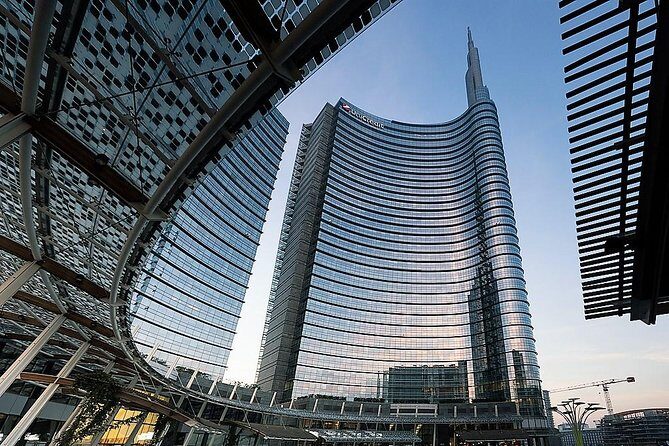
Then you reach Gae Aulenti Square, a key design anchor where the conversation turns from streetscape to skyline centerpiece. This is where you get the Unicredit tower framing, and where your guide can connect modern urban design to what you’re seeing in front of you.
If you get a guide with strong energy, this is usually the moment the tour speeds up. One recent writeup mentioned a guide named Valerio on a very hot July afternoon, and the pacing helped keep the experience comfortable even when the weather wasn’t.
Unicredit Tower at Piazza Gae Aulenti: the big-sky moment
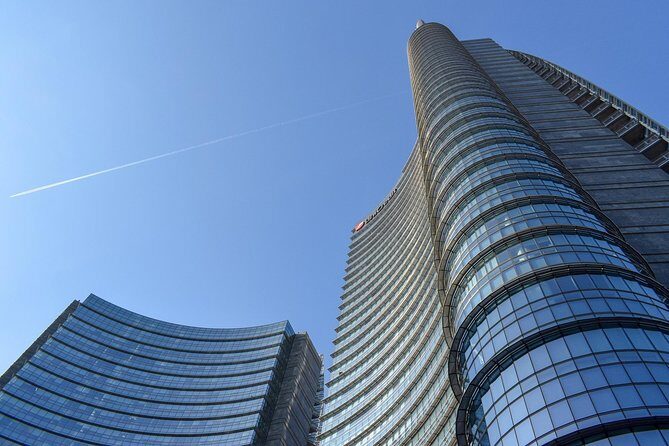
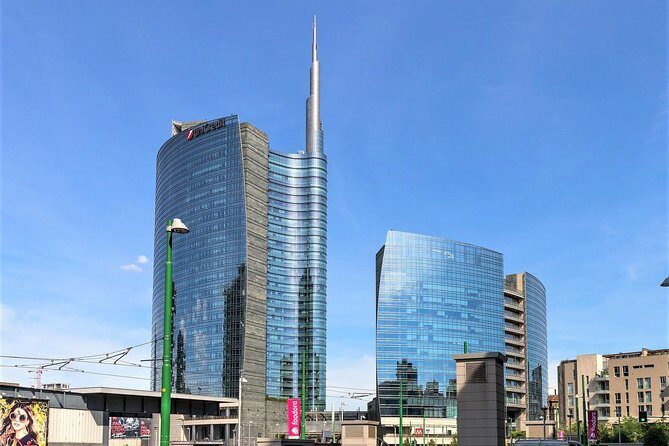
At Piazza Gae Aulenti, you’ll see the Unicredit tower, described in the tour as one of the highest skyscrapers in Europe and even the tallest in Europe. Even if you’ve seen it in photos, this is still the kind of structure that feels more real when you’re standing close enough to notice scale changes—how tall it truly is compared to surrounding buildings and how the plaza layout frames it.
This stop is more than a photo op. It’s your checkpoint for the whole tour theme: Milan isn’t just building upward—it’s rebuilding sections of the city so the skyline becomes a planned experience. Your guide’s narration is what makes it click, since you’re learning to read the district like a designed space rather than a random skyline cluster.
A practical tip for photos
Arrive with a phone battery that’s actually charged. Terrace and plaza lighting can flip quickly, especially in late afternoon. You’ll want a few angles: wide shots to capture the plaza context, and closer shots when you find a cleaner line of sight.
Isola’s “railing houses” and the Vertical Forest towers
After the modern plaza and skyline focus, the tour shifts to Isola, described as a historical district with distinctive “railing houses” that include common galleries and a courtyard setup. This matters because it shows the city’s layering effect: old and new are not separated into different worlds. You can feel that in the way the tour moves—from renovated modern districts to an older neighborhood fabric, then back to a bold architectural statement.
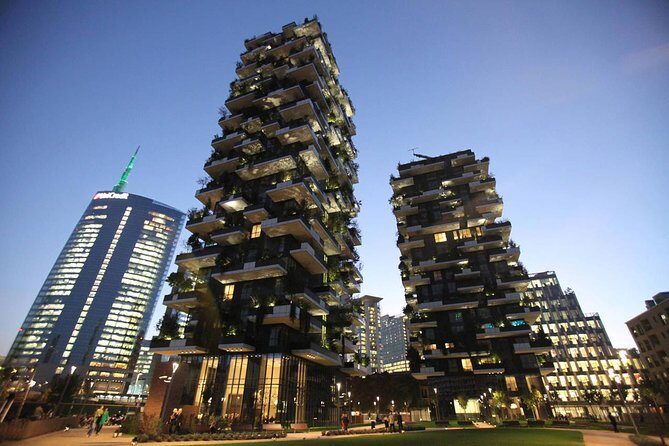
Then you hit the main eco-architecture headline: the Vertical Forest towers. These are credited as being awarded in 2016 as the most beautiful urban project of the World. More importantly, the tour explains the concept: the Vertical Forest is presented as a model of urban reforestation and biodiversity. The idea is regeneration of the environment without expanding city territory, so the green elements are built vertically in the dense urban setting.
The plant numbers that make it feel real
The tour also gives the concrete details that separate this from a marketing slogan: the towers are described as having 900 hundreds trees and more than 20 thousands plants. Even if you mentally simplify the numbers, the point lands—this is a large-scale green system, not a small facade garden.
When I think about the value here, it’s this: you’re seeing a modern landmark that’s easy to admire visually, but the guide also tells you what it’s trying to do environmentally. That makes your photos better too, because you’ll notice different parts of the facade and structure based on the design intent.
The Eataly finish: regional bites as a smart payoff
The tour ends at Eataly, which is more useful than it sounds. After 3 hours of architecture walking, you’ve got two needs: a reset and something to do with your appetite. Eataly handles both, and it keeps the tour story consistent by ending where you started—at Eataly Milano Smeraldo, Piazza XXV Aprile.
What you get at the food stop is described as sampling regional typical treats from all over Italy, from Valle d’Aosta to Sicily. That range makes the tasting feel like a mini tour of its own, and it’s a nice counterbalance to the heavy design content. Even if you’re not a foodie, you’ll likely find at least a couple of items you want to try slowly while you talk with your guide.
If you want to make this stop work best, keep your plan flexible. Don’t schedule your next appointment immediately after the tour. Let it be the end of the experience, not a quick detour.
Price and value for a 3-hour Milan architecture focus
At $265.09 per person for a tour that runs about 3 hours, this isn’t a budget activity. But it also isn’t just a generic walking loop. You’re paying for a professional art historian guide, a private tour format, and multiple high-impact locations tied together by a clear theme: Expo renewal, Porta Nuova terraces, Corso Como/Gae Aulenti Square, Unicredit Tower context, and the Vertical Forest concept.
The value gets better when you’re traveling in a small group that wants direct explanations and a tailored pacing. The tour also notes mobile ticket use and group discounts, which can help if your travel party setup fits how those discounts apply.
One more value factor: the booking lead time. It’s noted that this is on average booked 45 days in advance, so if you’re traveling during peak season, you’ll want to reserve earlier rather than later.
Who this tour fits best (and who might want a different plan)
This tour is ideal if you:
- like modern architecture and want the context behind the skyline
- want a guided story that connects districts instead of hopping randomly
- enjoy a structured walk that ends with an easy meal at a central spot
It’s also a good fit for first-time Milan visitors who want one high-quality architecture overview without spending the whole day commuting. Because the start and end are both at Eataly Milano Smeraldo, you get a clean “start here, finish here” flow.
You might choose something else if:
- you want a mostly historical old-town focus
- you strongly prefer minimal walking or you dislike stairs, since terrace climbing is part of the experience
- you’re not interested in architecture explanations and would rather do self-guided sightseeing
Should you book this Milan skyscrapers tour?
I’d book it if your goal is to understand why Milan’s newest skyline looks the way it does. The Vertical Forest and Unicredit Tower stops are the kind of anchors that make the tour memorable, and the World Expo 2015 renewal context gives meaning to what you’re seeing. The fact that it ends at Eataly is icing, not an afterthought.
Skip it only if you know you won’t enjoy a design-focused walk or if stairs and heat are a real issue for you. If those are manageable, this is the sort of 3-hour experience that makes the city feel organized in your head—not just photographed.
FAQ
How long is the Milan Skyscrapers guided tour?
It lasts about 3 hours.
Where does the tour start and end?
It starts at Eataly Milano Smeraldo, Piazza XXV Aprile, 10, 20121 Milano, MI, Italy, and it ends back at the same meeting point.
What is the price per person?
The price is $265.09 per person.
Is the tour private?
Yes. It’s a private tour/activity, and only your group participates.
What’s included in the tour?
Included are a professional art historian guide and the private tour format.
Is hotel pickup and drop-off included?
No. Hotel pickup and drop-off are not included.
What kind of physical fitness level do I need?
The tour is described for travelers with a moderate physical fitness level.
Is the meeting point near public transportation?
Yes, it’s near public transportation.
Can I cancel for a full refund?
Yes, you can cancel up to 24 hours in advance for a full refund.