REVIEW · MILAN
Milan: Leonardo3 The World of Leonardo Museum Entry Ticket
Book on GetYourGuide →Operated by Leonardo3 - The World of Leonardo · Bookable on GetYourGuide
Leonardo’s machines feel oddly alive. Inside Leonardo3, you walk through interactive 3D machines and working models recreated from Leonardo da Vinci’s own manuscripts, turning ideas on paper into gear-driven reality.
What I love most is how hands-on it feels without being a gimmick, plus the exhibit uses an audioguide option so the science stories actually land.
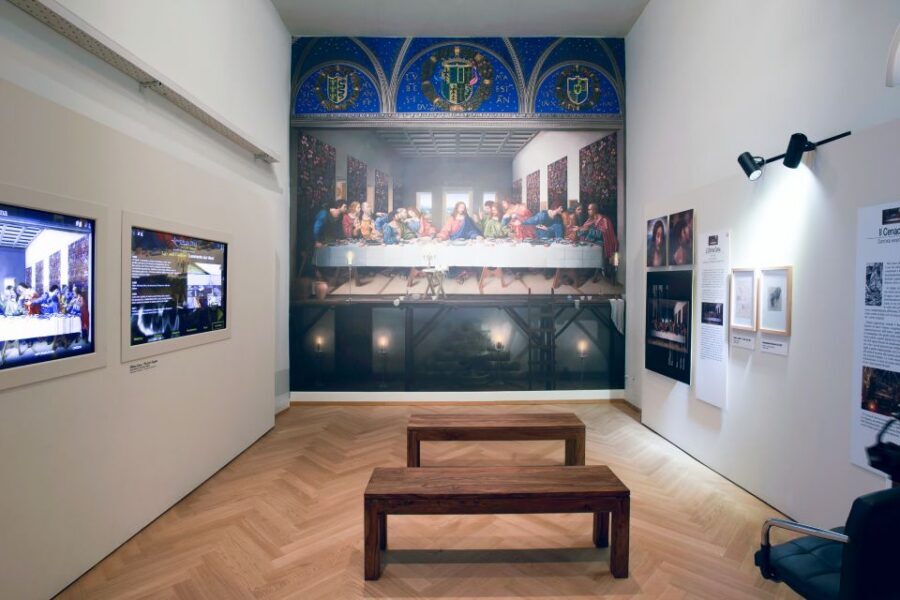
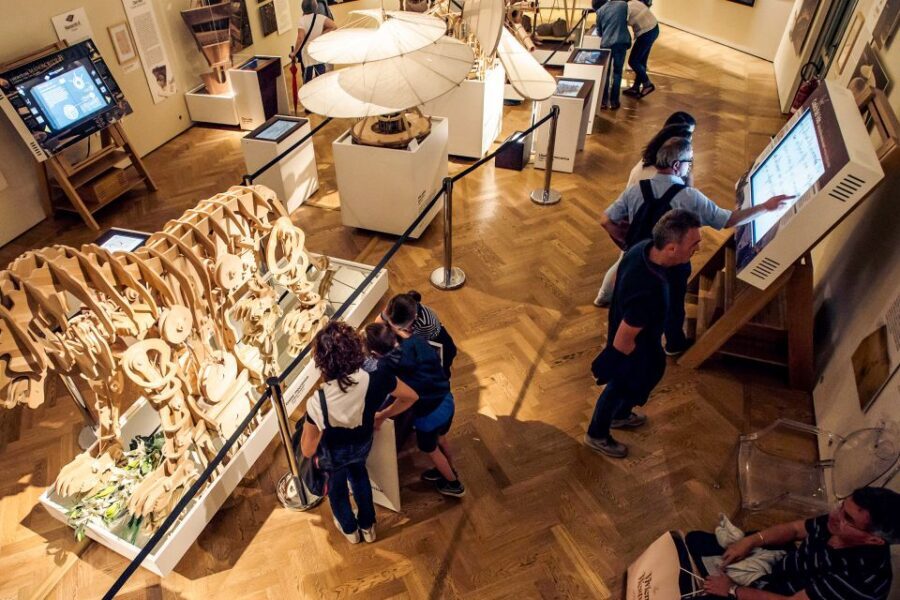
The second standout for me is the immersive Last Supper restoration, tied to the digital version associated with Santa Maria delle Grazie. The only catch I’d flag is that some rooms feel tight and warm, which can make the most interactive stations a little harder to reach and linger at comfortably.
In This Review
- Key highlights to look for at Leonardo3
- Entering Leonardo3: finding it through Galleria Vittorio Emanuele II
- What you’ll see: 200+ interactive 3D machines made from Leonardo’s notes
- The immersive Last Supper restoration tied to Santa Maria delle Grazie
- Audioguides in English and beyond: when you should choose the headset option
- Kid-friendly workshops: the bridge build and inventor certificate
- How to pace Leonardo3: timing, tight space, and heat management
- Price and value: is the $18 ticket worth it for Milan?
- Practical rules and on-site tips for a smoother visit
- Should you book Leonardo3 in Milan?
- FAQ
- Where is the meeting point for Leonardo3 in Milan?
- How much does the Milan Leonardo3 ticket cost?
- How long is the ticket valid?
- Do I need to pick an audioguide option, and what languages are available?
- Are cameras allowed inside Leonardo3?
- Are food and drinks allowed during the visit?
- Is Leonardo3 wheelchair accessible?
Key highlights to look for at Leonardo3
- 200+ interactive 3D reconstructions of Leonardo’s concepts you can explore at your own pace
- Working machines built from studying Leonardo’s manuscripts, including a mechanical dragonfly model
- Immersive digital Last Supper restoration linked to the Santa Maria delle Grazie wall-painting
- Audioguide in many languages (English/Italian plus a long list of other options)
- Kid-focused workshop activities, including a self-supporting bridge build and an inventor certificate print
- No-cameras and no-food rules, which helps keep the exhibit focused and uncluttered
Entering Leonardo3: finding it through Galleria Vittorio Emanuele II
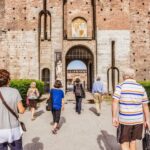
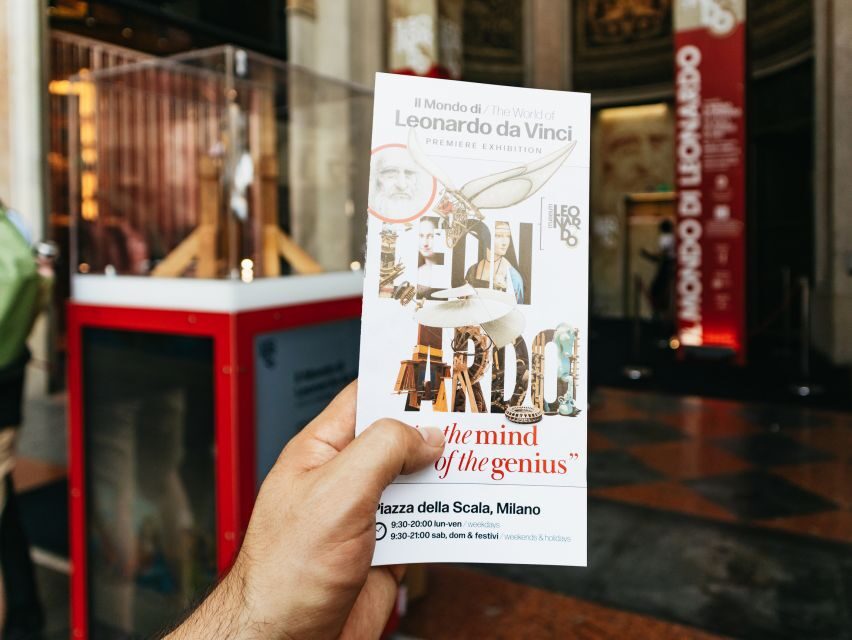
Your visit starts in a very Milan way: enter through the Galleria Vittorio Emanuele II in Piazza della Scala. You’ll show your ticket at the ticket office, then you’re set up to explore the exhibition without needing extra planning.
This matters because the museum sits in a busy part of central Milan. If you’re walking in from the Duomo area or from Piazza della Scala, the Galleria entrance is an easy anchor point. I like having one clear “meet here” instruction, especially when you’re traveling solo or with kids and don’t want to wander in the wrong direction.
One more practical note: your ticket is valid for 1 day. That sounds simple, but it’s worth checking available starting times before you head out—timing can shape how relaxed your visit feels.
You can also read our reviews of more tours and experiences in Milan

What you’ll see: 200+ interactive 3D machines made from Leonardo’s notes
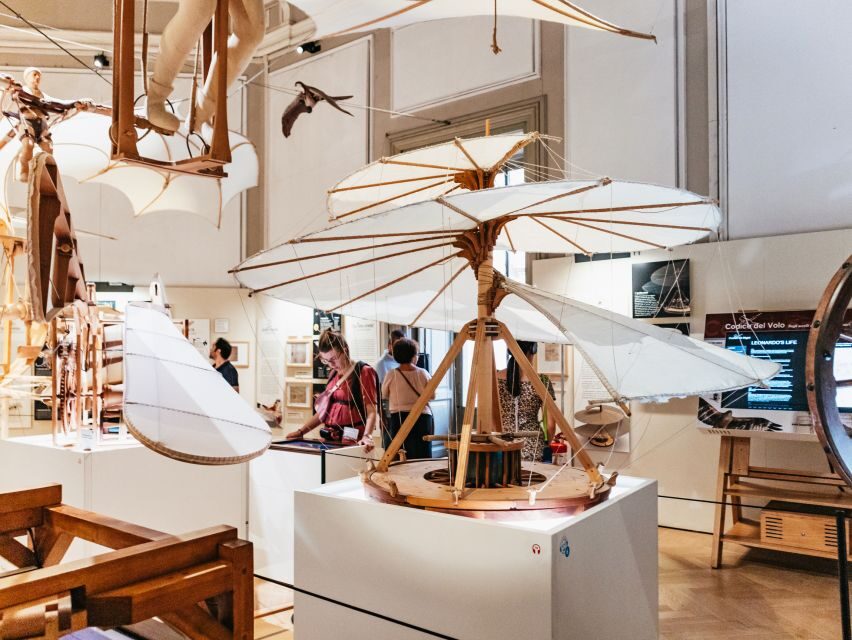
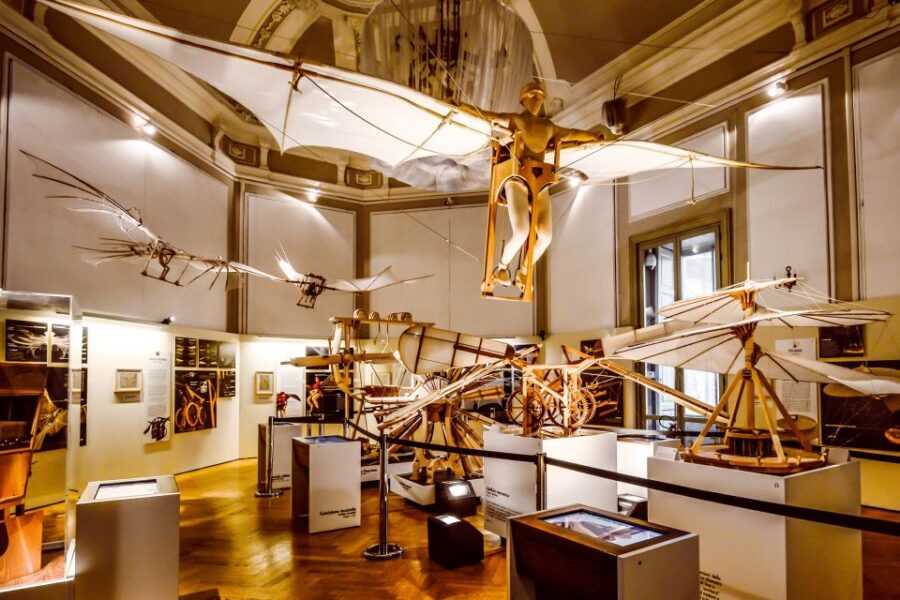
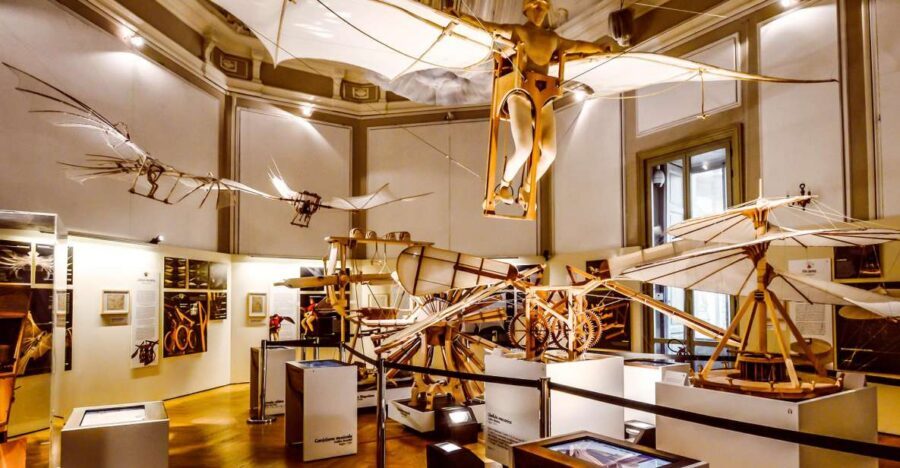
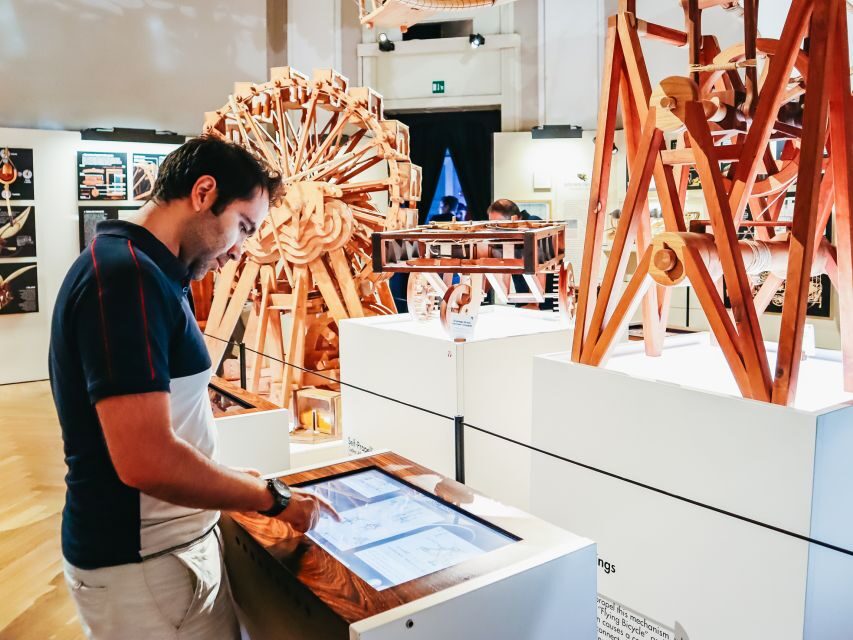
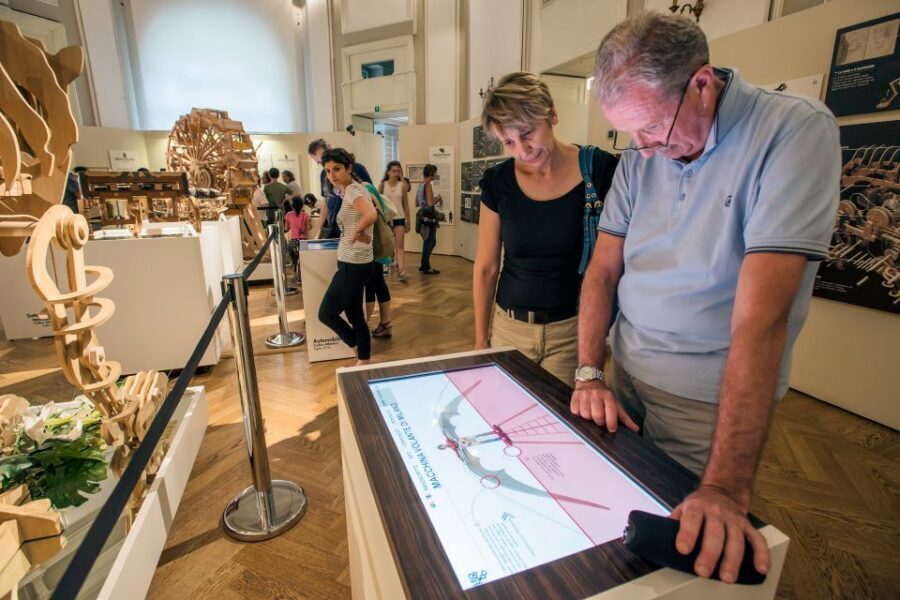
Leonardo3’s core idea is straightforward and fun: it turns Leonardo da Vinci’s drawings and concepts into interactive 3D reconstructions and, in many cases, functional models. The highlight is seeing more than 200 interactive machines, all tied back to the way Leonardo studied motion, mechanics, and practical engineering problems.
Instead of only reading about how a concept might work, you watch it behave. That makes a huge difference. Leonardo’s notebooks can feel abstract if you’re not trained in engineering. Here, you can connect the dots between:
- the sketch or manuscript inspiration,
- the reconstructed mechanism,
- and what the machine is trying to achieve.
I also like that the exhibit doesn’t treat Leonardo like a magician. It leans into the “research and rebuild” angle—studying manuscripts, translating ideas into 3D, and then recreating machines that operate when built correctly. You’ll find working models across multiple themes, including theatrical inventions, flight-related concepts, water and canals ideas, and mechanical systems.
A specific model mentioned in the experience is a mechanical dragonfly. Even if you’re not obsessed with insects, it’s a great example of how Leonardo’s curiosity shows up in unexpected places.
The immersive Last Supper restoration tied to Santa Maria delle Grazie
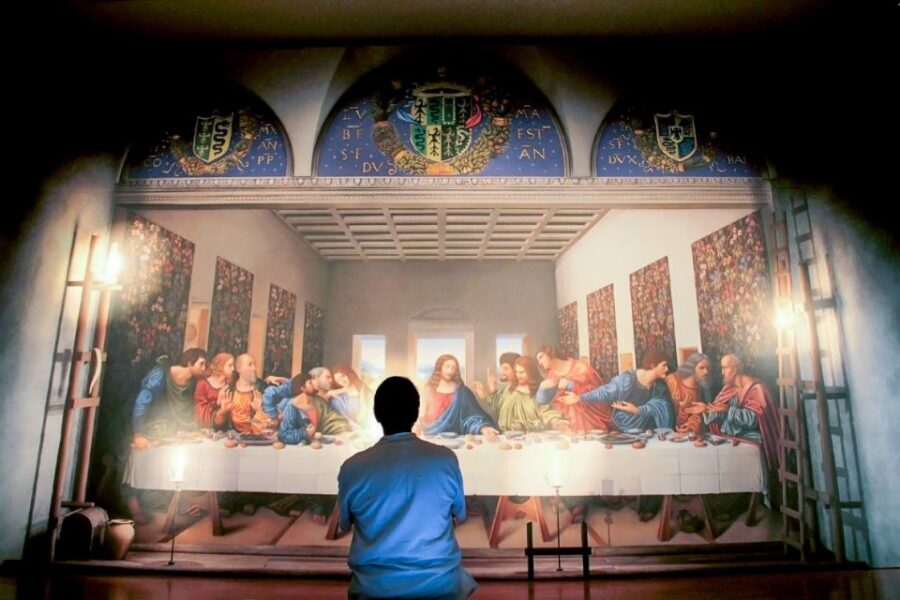
Leonardo3 also includes a standout digital centerpiece: an immersive digital restoration of The Last Supper. The experience focuses on a digital version of the wall painting in the church of Santa Maria delle Grazie.
Why this is worth your attention: it gives you a guided way to look at a famous artwork through a “process and technique” lens. Even if you’ve seen photos before, seeing how the restoration is presented can make details easier to understand and appreciate.
That said, it’s still a digital restoration. If you’re hoping for the feeling of standing in the real space with real light and real paint, you won’t get that here. What you do get is a high-impact interpretation designed for learning—especially if you like seeing how images and compositions can be reconstructed and explained.
I’d also treat this as the moment in your visit when you slow down. The exhibit is playful everywhere, but the Last Supper station is where the “wow” often becomes “okay, I get it now.”
Audioguides in English and beyond: when you should choose the headset option
You can explore the interactive exhibits in English and Italian, but the big unlock is choosing the option with the audioguide. The audioguide is designed to explain Leonardo’s secrets behind the machines—so you’re not just watching mechanisms move. You’re also learning why they work and what Leonardo was thinking when he drew them.
Audio guides are available in Italian, English, Russian, German, French, Spanish, Portuguese, and Chinese. That’s a big deal if you’re traveling with someone who prefers their native language, or if you’re not feeling confident with Italian that day.
Here’s a practical tip: when an exhibit is complicated, give yourself 30 seconds to read what the station is trying to show, then let the audioguide narrate the story. That rhythm helps you avoid the common trap of standing there looking at buttons and gears without connecting them to the concept.
Also, because cameras aren’t allowed in the museum, audio matters even more. You’ll want to capture the learning in your head rather than in photos.
Kid-friendly workshops: the bridge build and inventor certificate
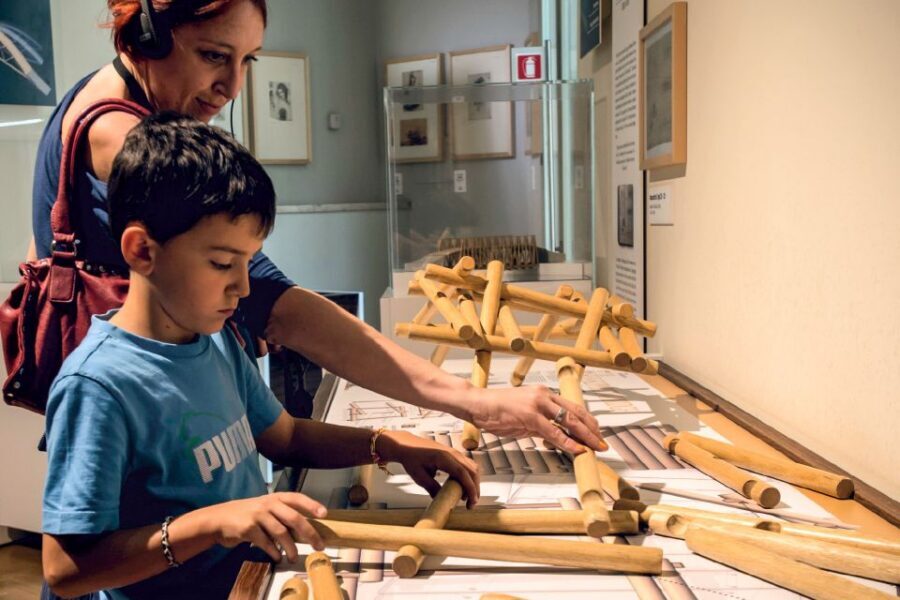
Leonardo3 isn’t just “for adults who like museums.” It has a hands-on children’s area with workshop-style activities. Two activities mentioned for kids are:
- a workshop where kids can print an inventor’s certificate
- a station where kids can assemble a self-supporting bridge from wooden parts
If you’re traveling with kids, these are often the moments that make the visit feel earned. Instead of watching machines all day, they get to build something with their own hands, and that makes the science concepts feel less distant.
If you’re an adult, don’t rush past these zones. Even though the building activity is aimed at younger visitors, the idea is the same: Leonardo’s thinking becomes understandable when you physically test the structure. It also makes it easier to stay patient in the tighter sections of the exhibit, because you can shift gears from “look” to “build” whenever you need a reset.
You can also read our reviews of more museum experiences in Milan




How to pace Leonardo3: timing, tight space, and heat management
Plan for a visit that takes more than a quick walk-through. Many people end up spending time moving between stations, re-checking machines when the audioguide provides extra context, and lingering on the sections with the most detail.
Because the experience is interactive, pacing matters. Don’t feel like you have to hit every station in a single sprint. Instead, pick a few “anchor” machines to understand deeply—then let yourself wander through the rest at a lighter pace.
A consideration I’d take seriously: some rooms can feel tight, and it can run warm inside. That means your comfort will depend on when you go and how busy it is. If you’re someone who gets annoyed in crowded indoor spaces, you’ll likely want to visit earlier in your day or plan a faster loop through the busiest areas.
Also remember: food and drinks aren’t allowed. If you’re coming straight from a long walk, grab a snack and water before you enter the museum.
Price and value: is the $18 ticket worth it for Milan?
At about $18 per person, Leonardo3 sits in a category of “pay for experiences you can’t replicate at home.” And that’s the key to the value question.
You’re paying for three things that are hard to get elsewhere:
- Reconstructed machines that translate Leonardo’s sketches into working (or interactive) models.
- A major digital centerpiece: the Last Supper restoration, presented in a learning-focused way.
- Optional audioguide support that connects the visuals to the stories behind them.
If you’re the kind of person who enjoys science, engineering, drawing, or mechanics—even casually—this ticket usually feels fair because you get plenty of structured moments to learn without needing prior knowledge. If you’re only looking for fine art, you might still enjoy the exhibit, but you may find some of the art elements less compelling than the engineering and reconstruction sections.
There’s also a small value perk: you get a 10% discount at the bookshop on books when you show your voucher at the counter. It’s not a huge discount, but if you want a Leonardo-focused book to bring home, it’s a nice closing bonus.
Practical rules and on-site tips for a smoother visit
A few house rules make sense once you’re inside:
- No cameras
- No food and drinks
That policy shapes the vibe. It reduces distraction, and it keeps the exhibit experience focused on the machines and the audioguide story.
You’ll also want to plan for your comfort:
- Wear shoes you can stand in for a while.
- If you run hot, consider light layers. Tight indoor areas can feel warmer than you expect.
Good news if mobility is a concern: the exhibition is wheelchair accessible.
Finally, don’t forget that interactive experiences are in English and Italian, and the audioguide can be used in many other languages. If you’re with friends or family who want different languages, pick the audioguide option that best fits your group and let everyone settle in before you start moving between rooms.
Should you book Leonardo3 in Milan?
I’d book Leonardo3 if you want a hands-on, technology-forward way to experience Leonardo da Vinci in Milan. It’s especially good for families, for science-curious travelers, and for anyone who likes seeing how ideas become machines you can understand.
I’d be a bit more careful if you’re primarily chasing the real-world atmosphere of famous artworks and you’re expecting the closest possible match to a museum-grade viewing of the original setting. This experience is about reconstructions and digital presentation, and that can’t fully replace the sensation of the real painting in person.
If you want to make the decision easy: choose this when you want learning plus interactive fun, not just a quick look. With the audioguide option, it’s one of the more satisfying ways to spend a chunk of time near Piazza della Scala.
FAQ
Where is the meeting point for Leonardo3 in Milan?
You enter through the Galleria Vittorio Emanuele II in Piazza della Scala. You’ll show your ticket at the ticket office.
How much does the Milan Leonardo3 ticket cost?
The price is listed as $18 per person.
How long is the ticket valid?
Your ticket is valid for 1 day. Starting times depend on availability, so it’s smart to check before you go.
Do I need to pick an audioguide option, and what languages are available?
The audioguide is included only if you select the option. Audio guides are available in Italian, English, Russian, German, French, Spanish, Portuguese, and Chinese.
Are cameras allowed inside Leonardo3?
No. Cameras are not allowed in the museum.
Are food and drinks allowed during the visit?
No. Food and drinks are not allowed.
Is Leonardo3 wheelchair accessible?
Yes, the experience is wheelchair accessible.