REVIEW · MILAN
Bernina and Glacier Train Two Routes in One Day from Milan
Book on Viator →Operated by Zani Viaggi · Bookable on Viator
This is a one-day rail adventure through Swiss engineering. You get the UNESCO Albula Line on the way to St. Moritz, with big-window views of valleys, rivers, viaducts, and tunnels. I love how the route climbs over the Albula Pass and funnels you toward standout sights like the Landwasser Viaduct and the alpine village of Bergün. One thing to watch: the name can feel confusing, and you should expect a single continuous train ride rather than two separate full experiences.
I also like that the day is built around an actual plan, not guesswork. You travel with a professional guide, ride 2nd class with a mobile ticket, and spend a fixed block of time in St. Moritz (about two hours). The main drawback for some people is time: the total day runs about 13 hours, so you’ll need a patient mindset and smart snacking.
In This Review
- Key Points You’ll Care About
- The Biggest Reality Check: “Two Routes” Means One Rail Ride
- Boarding From Milan: A Long Day, a Simple Plan
- The UNESCO Albula Line: Viaducts, Tunnels, and the Big Alpine Climb
- Landwasser Viaduct: The Moment the Windows Earn Their Keep
- Tunnels and Viaducts: Why This Route Feels Like Storytelling
- Bergün and Preda: Traditional Village Charm Meets a High Point
- Preda: The Highest Point on the Line
- Arriving at St. Moritz: 2 Hours in the Engadin Valley
- What to Do With Your Two Hours
- Getting Back to Milan: Coach Ride Means You Can Relax
- Price and Value: Is $163.53 a Good Deal?
- Weather and Clothing: The Alps Are Unpredictable
- Who This Day Trip Suits Best
- Should You Book This Tour?
- FAQ
- FAQ
- Is this tour really two train experiences, or just one?
- How long is the tour from Milan?
- How much time do I get in St. Moritz?
- What’s included in the price?
- Are meals included?
- Is English available?
- What happens if weather is bad or I need to cancel?
Key Points You’ll Care About
- UNESCO Albula Line route: famous rail engineering plus classic alpine scenery
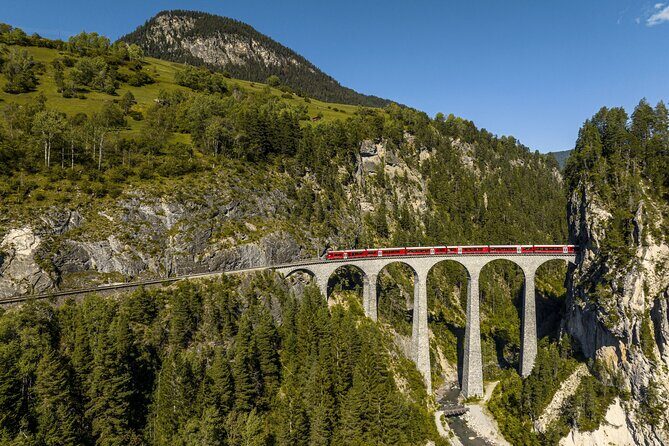
- Landwasser Viaduct: a curved icon crossing a deep gorge
- Bergün stop: a traditional Swiss village with an old-town feel
- Preda (highest point on the line): the climb peaks, then you start the descent toward St. Moritz
- About 2 hours in St. Moritz: enough time to walk and reset, not enough for a deep dive
- English is guaranteed: Spanish may vary by day, and group size tops out at 50
The Biggest Reality Check: “Two Routes” Means One Rail Ride
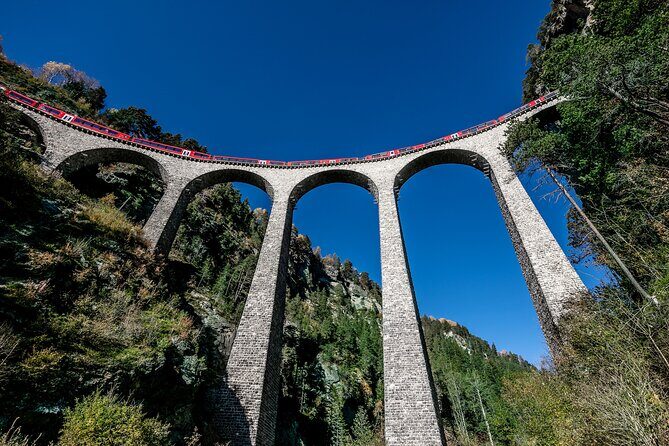
The title sounds like you’ll hop between the Bernina and Glacier experiences in one day. The program details point to a different reality: you ride the Albula Line, which is part of the Glacier Express story, from the Chur area toward St. Moritz. So think of this as a Glacier Express–style rail day built around the Albula Line’s engineering, not two separate long train segments back-to-back.
That matters because it changes expectations. If your goal is to do a full Bernina Express segment with its own distinct route highlights, you may feel shorted by this itinerary. If your goal is to see the Albula Line’s most famous structures and arrive in St. Moritz without planning connections, this tour hits the sweet spot.
You can also read our reviews of more tours and experiences in Milan
Boarding From Milan: A Long Day, a Simple Plan
From Milan, the tour uses an air-conditioned vehicle and a professional guide. You’re not doing the logistics on your own—tickets are handled as part of the tour, and you’ll use a mobile ticket rather than worrying about paper transfers.
Your total time commitment is about 13 hours, and travel time is included. That’s long enough that comfort and rhythm matter. Plan for a slow breakfast, a small bag for snacks, and time to settle into the train ride once you start moving into the Swiss Alps. Also note that timing can shift due to traffic or operational needs, so don’t build a tight follow-on plan the same evening.
The UNESCO Albula Line: Viaducts, Tunnels, and the Big Alpine Climb
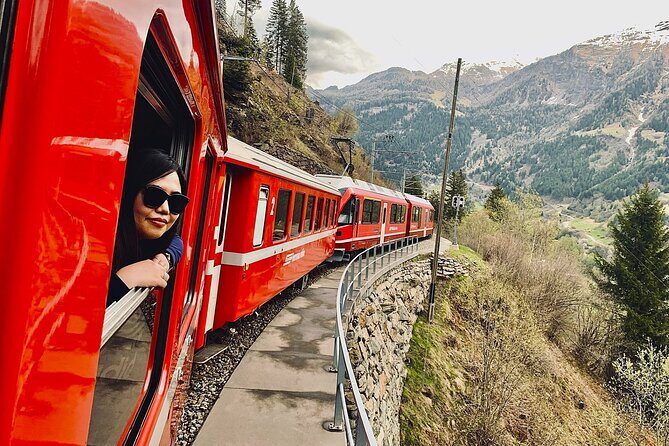
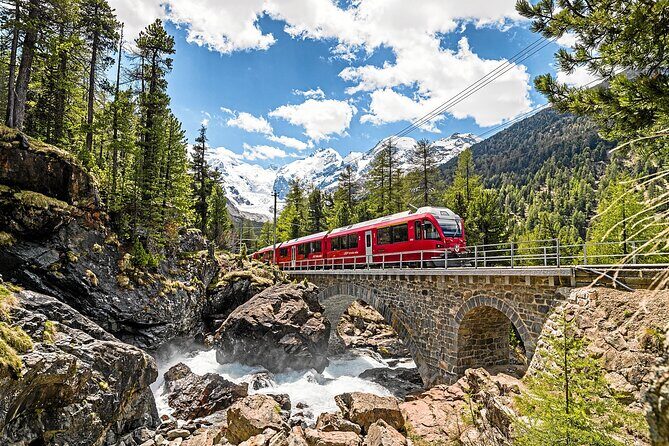
This is the heart of the day. The Albula Line is known for engineering marvels and sweeping mountain views, and the ride is especially strong because it mixes dramatic structure with changing scenery: lush valleys, meandering rivers, and Swiss villages sliding by as the train gains altitude.
Here’s what you’re really buying with this part of the route: you get the Alps without hiking for days, and you see the architecture that makes the train famous. The train ascends through the Albula Pass, so the feeling builds as you go from valley life into higher mountain country.
Landwasser Viaduct: The Moment the Windows Earn Their Keep
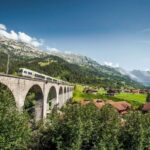
The standout structure is the Landwasser Viaduct, spanning a deep gorge with its distinctive curved design. Even if you’ve seen photos, it plays differently from inside the train window: the depth and angle become clear, and the curve gives you a sense of motion and scale at the same time.
This is one of those “slow down and watch” segments. Don’t spend the whole time filming. Let your eyes adjust to what you’re seeing—then glance at your phone for the same moment from a different angle.
Tunnels and Viaducts: Why This Route Feels Like Storytelling
You’ll also pass numerous viaducts and tunnels. That pattern matters because it gives you variety minute to minute: open views, sudden interior darkness, then another burst of light and mountains. It’s not one long straight panorama—it’s a sequence.
That’s a big part of why this kind of day tour works. You’re not stuck with one type of scenery the entire time, and you don’t have to pick which photo stop is “best.” The rail line does the directing.
Bergün and Preda: Traditional Village Charm Meets a High Point
As the train continues along the Albula Line, you’ll reach Bergün, a charming Swiss village known for traditional architecture. This is where the ride gives you a sense of local life rather than only sweeping altitude. If you enjoy slowing down and noticing village design—rooflines, streetscapes, and how people build in mountain terrain—Bergün is a satisfying shift.
Bergün also helps break up the intensity of the climb. You’re still in the Alps, but the scenery gets human scale for a moment.
Preda: The Highest Point on the Line
Then comes Preda, described as the highest point on the line. This is a key “turning point” moment in your day. You go from climbing and looking upward to preparing for the descent toward St. Moritz.
Even without a long stop, the route profile changes the mood. Expect the scenery to start opening up in a different way as the train transitions from high pass territory into the Engadin side of the mountains.
Arriving at St. Moritz: 2 Hours in the Engadin Valley
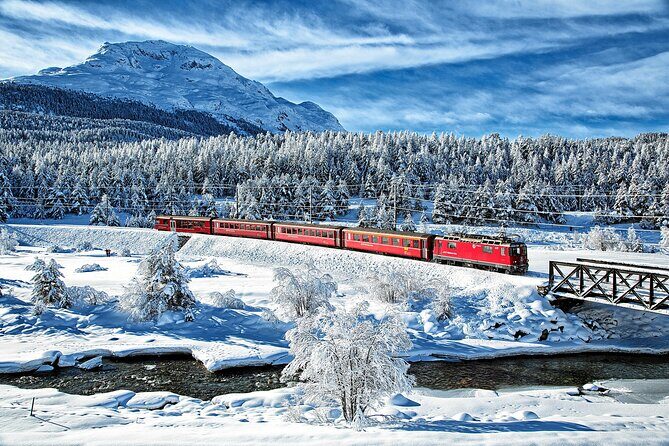
You end the rail portion in St. Moritz, in the Engadin Valley. It’s a well-known resort town, surrounded by lakes and towering peaks, and it has a polished feel compared with smaller villages along the line.
Your time here is about two hours. That’s enough to do a short walking circuit, take in the atmosphere, and grab something to eat, but it’s not enough to settle in like a full-day visit. If you love quick orientation—where you can get your bearings fast—this timing is ideal.
What to Do With Your Two Hours
With a time limit, keep it simple:
- Step out and enjoy the lake/peak views from accessible areas
- Find a place for a drink or snack since food is not included in the tour price
- Take a few photos, then move on before you feel rushed
A practical tip: wear shoes that work on uneven sidewalks. Resort-town streets can be a bit smoother than old city centers, but you’ll still want stable footing for a short stroll.
Getting Back to Milan: Coach Ride Means You Can Relax
After your St. Moritz stop, the tour returns you to Milan by coach. This matters because it lets you keep the day structured: rail experience in the Alps, then a straightforward land transfer back.
You’ll still feel the length of the day, though. Aim to use the coach time to reset—hydrate, stretch your legs, and get ready for the evening arrival. If you’re prone to motion discomfort, consider bringing whatever helps you most for long rides in general.
Price and Value: Is $163.53 a Good Deal?
At $163.53 per person, the value depends on what you’re trying to avoid. This price includes:
- a professional guide
- an air-conditioned vehicle
- the train ticket in 2nd class
- a mobile ticket
It does not include food and drinks, and it does not include hotel pickup/drop-off (so you’ll meet at the tour’s meeting point, which can vary by option).
So what are you paying for? Convenience plus someone handling the moving parts: guide guidance, tickets, and the planned sequence of rail and coach. If you were trying to do this on your own, you’d likely spend time coordinating timing across the Swiss rail system, figuring out how to connect smoothly, and managing language/seat logistics. This tour strips out a lot of that mental load.
You should still evaluate whether the name matches your goal. If you came specifically for two distinct named train experiences in one day, the itinerary details suggest you’ll mainly get the Albula Line highlight package. If you’re happy with that framing, the price starts to feel fair for a full day of high-impact sights.
Weather and Clothing: The Alps Are Unpredictable
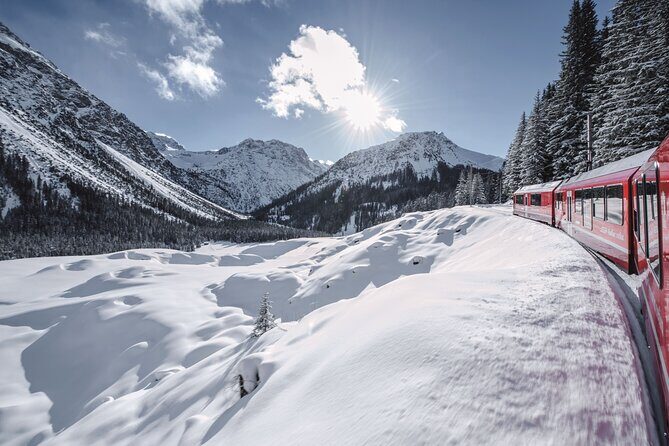
The tour notes that weather can be extremely variable and practical, versatile clothing is recommended. That’s not just a warning—it affects comfort during long stretches outdoors at stations and during short walks in St. Moritz.
Pack like you’re visiting mountain weather:
- layers you can add or remove
- a light rain layer or wind protection
- sun protection if skies open up
Also remember that this tour requires good weather. If conditions are poor and the experience is canceled for that reason, you’ll be offered a different date or a full refund.
Who This Day Trip Suits Best
This tour is a great fit if you want:
- a single-day way to see famous Albula Line engineering
- the Landwasser Viaduct and the climb toward Preda
- a guided plan that gets you from Milan to Switzerland without building a timetable from scratch
- English guidance (guaranteed), with possible additional languages depending on the day
It may not be the best fit if you:
- want a full second, separate Bernina Express-style rail experience in the same day
- hate long days (about 13 hours total)
- need lots of time in St. Moritz beyond the roughly two-hour window
Should You Book This Tour?
If you’re excited by the idea of riding through the Albula Line’s famous structures—especially the Landwasser Viaduct—and you like the efficiency of a guided day trip from Milan, I think this is a smart booking. You’re getting a high-satisfaction rail segment plus a manageable, scenic stop in St. Moritz.
If your main goal is checking off two fully distinct named train routes in one day, pause and confirm what rail segments you’ll actually ride. The program details point to the Albula Line section into St. Moritz, so treat the “two routes” wording as marketing rather than a promise of two separate full train adventures.
FAQ
FAQ
Is this tour really two train experiences, or just one?
The program details focus on the Albula Line ride that reaches St. Moritz. The tour title may sound like multiple full routes, but your rail portion is described as a single planned train journey along the Albula Line.
How long is the tour from Milan?
The duration is listed as approximately 13 hours, and travel time is included in that total.
How much time do I get in St. Moritz?
You get about 2 hours in St. Moritz, and admission for the visit is free.
What’s included in the price?
Included are a professional guide, an air-conditioned vehicle, the train ticket in 2nd class, and a mobile ticket.
Are meals included?
No. Food and drinks are not included.
Is English available?
Yes. The tour in English is always guaranteed. Other languages may vary by day.
What happens if weather is bad or I need to cancel?
The experience requires good weather. If it’s canceled due to poor weather, you’ll be offered a different date or a full refund. You can cancel up to 24 hours in advance for a full refund. A current valid passport is required on the day of travel.