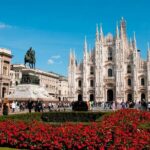
Milan in 150 minutes sounds impossible—but it works. This private, English walking tour gives you a real sense of the city by bouncing between big landmarks and calmer neighborhoods, so you understand what you’re seeing, not just where it is. I especially like how you start at Piazza del Duomo and study the Duomo from the outside, with time to notice details without a ticket rush.
My second favorite part is the guide-style. On tours with guides like Salvatore and Armando, the explanations go past dates and names into day-to-day Milan: art, culture, and the city’s lifestyle. You also get practical tips that actually help—like where to eat and drink, plus local habits such as how people use public fountains.
One thing to consider: you’re not going inside the Duomo here (it’s outside only), and it’s a walking-heavy route. If you’re planning to enter major interiors during your trip, this is best as your orientation tour—not your one-and-only ticket strategy.
In This Review
- Key Highlights You’ll Feel Immediately
- Piazza del Duomo: Getting Oriented Without Buying an Entrance
- Galleria Vittorio Emanuele II: The Famous Arcade, Explained Like a Street-Level Story
- Brera District: Learning Milan Where the Footprints Slow Down
- Basilica di San Simpliciano: A Major Milan Church With Entry Included
- Castello Sforzesco Courtyards: The Castle Feeling Without the Full Museum Detour
- Coffee, Local Tips, and a Private Guide Who Adjusts
- Price and Value: Is $108.43 a Smart Spend?
- Who Should Book This Milan Highlights and Sights Tour?
- Should You Book This Tour or Not?
- FAQ
- How long is the tour?
- Is this tour private?
- What language is the tour offered in?
- Where does the tour start and end?
- Is the Duomo entrance included?
- Is admission included for any stops?
- Is coffee or tea included?
- Do I need a mobile ticket?
- What is the cancellation policy?
- How far in advance should I book?
Key Highlights You’ll Feel Immediately
- Duomo piazza time without the entrance pressure: you get the front-of-the-building story from ground level
- A full walk through Galleria Vittorio Emanuele II’s interior for history + architecture you can actually see
- Brera off the main crowd flow so you can breathe and think while you learn
- Basilica di San Simpliciano with admission included—one stop where entry is handled for you
- Castello Sforzesco courtyards only: big castle atmosphere without a long museum detour
- Coffee and/or tea included, plus the kind of local guidance that helps after the tour ends
Piazza del Duomo: Getting Oriented Without Buying an Entrance
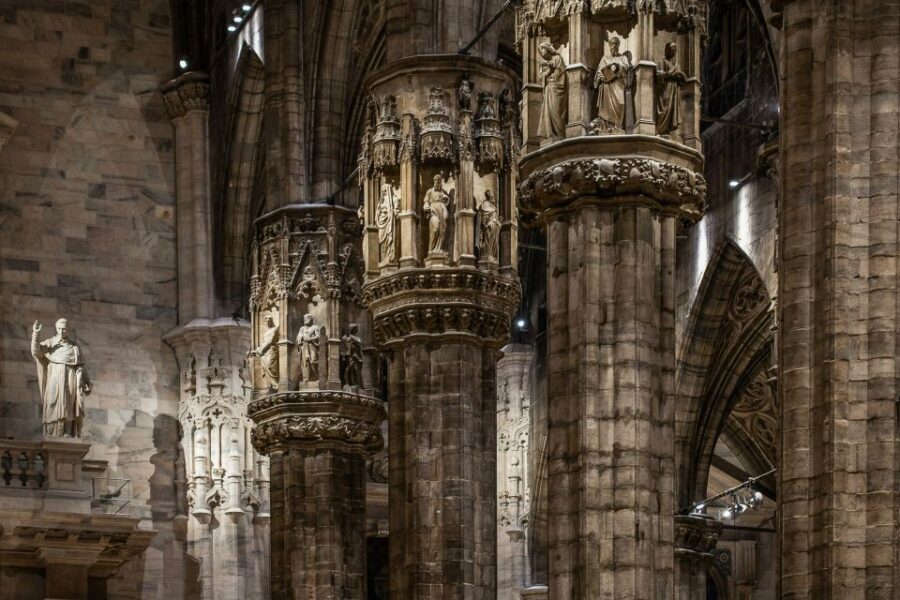
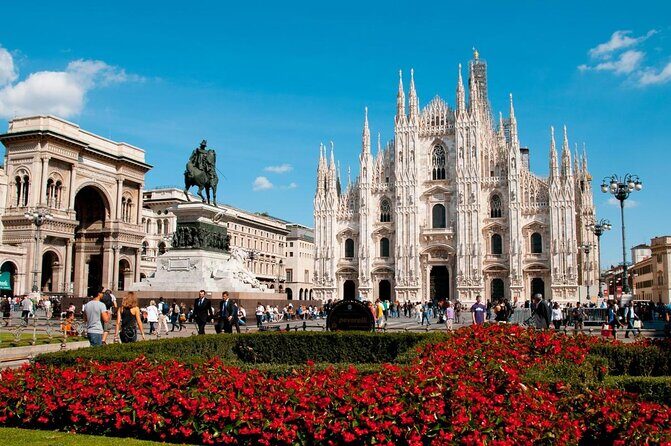
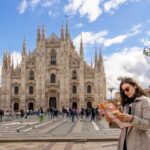
This tour is smartly built around your first mental map of Milan. You begin at Piazza del Duomo, and the approach is practical: you spend about 30 minutes outside, soaking in the Duomo’s scale and the façade details. You won’t be in the lines or stuck inside while your legs get restless. Instead, you learn how the building fits into Milan’s identity—so when you do visit the inside later (if you choose to), it lands with more meaning.
I like that the focus stays usable. You’re not just staring up at stone; you’re learning what to notice. Expect your guide to point out specific visual cues on the Duomo exterior and connect them to Milan’s story—old faith, later artistic shifts, and why the city still treats the Duomo as a daily reference point, not a museum object.
The potential drawback is clear: no Duomo entrance. If you came to Milan mainly for cathedral interiors, you’ll still need a separate plan. But if you’re here for context and direction—especially on day one or day two—this is a fast way to get your bearings and walk confidently afterward.
You can also read our reviews of more private tours in Milan
Galleria Vittorio Emanuele II: The Famous Arcade, Explained Like a Street-Level Story
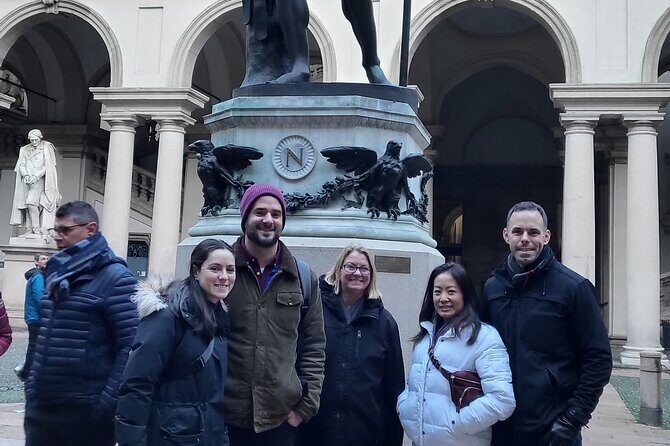
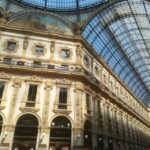
From the open sky of the Duomo, you step into a different Milan: the glass-and-iron world of the Galleria Vittorio Emanuele II. You spend about 30 minutes inside, and that matters because it’s one thing to walk past the Galleria; it’s another to understand how the space is designed to shape movement and mood.
What you’ll appreciate is that this stop isn’t treated like a quick photo corridor. Your guide turns the Galleria into a readable place: what makes it feel grand, what parts reflect status and commerce, and how it became a key Milan meeting point. And you can see it all without needing special tickets—the tour lists admission as free here.
Practical tip: keep your eyes up while you walk. The ceiling and the structure influence how the arcade feels, and a good guide will help you “see” the design instead of just passing through it. This stop is ideal when the weather turns or your feet want a smoother, covered segment of the day.
Brera District: Learning Milan Where the Footprints Slow Down
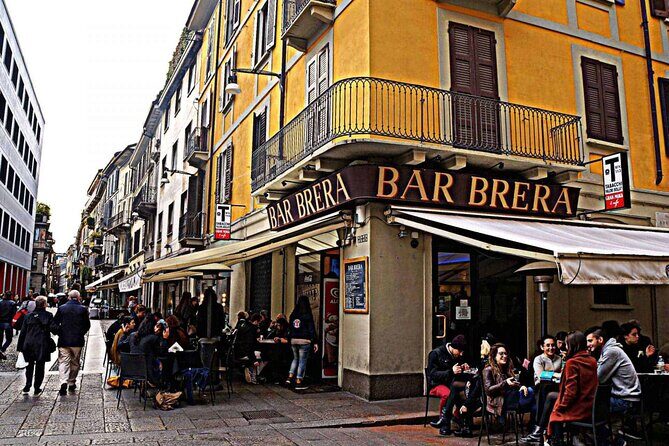
After the Galleria’s controlled elegance, you head into Brera, and the goal is explicitly a different experience: being in a local-feeling district out of the tourist crowd pressure. You get about 30 minutes here, enough time to understand why people linger—without turning it into an all-day wandering exercise.
Brera is a strong choice for a tour like this because it lets you balance “big history” with “real life.” Your guide can connect the dots between architecture, art culture, and daily routines—how the neighborhood works as a living part of the city, not just a backdrop. This is also where insider food and drink advice becomes more than a generic recommendation. Expect your guide to steer you toward places to eat, drink, and explore after the tour, based on what you like.
A small caution: Brera is a neighborhood, not a single monument. That’s great for atmosphere, but it means the experience depends on your guide’s pacing and your own curiosity. If you prefer strict sightseeing checklists, you might want to choose your own extra Brera time after this stop—because the tour gives you a taste, not the whole menu.
Basilica di San Simpliciano: A Major Milan Church With Entry Included
One of the most valuable stops on the route is Basilica di San Simpliciano. You’ll spend about 30 minutes here, and the tour lists admission as included—a real convenience. When entry is bundled, you spend more of your limited time actually inside, and less time figuring out ticket logistics in a place that already wants your attention.
This church is often described as one of Milan’s most important historic churches, and your time here should feel different from the Duomo approach. Instead of huge, showpiece scale, San Simpliciano gives you a calmer, older kind of sacred atmosphere—an opportunity to understand Milan’s religious and artistic layers across time.
What makes this stop especially worth it for first-timers: it fills the “Milan beyond the headline” gap. The tour already covers famous sights, but San Simpliciano adds depth that helps the city feel three-dimensional. If you’re trying to understand Milan as a living place with long continuity, this is where that idea becomes real.
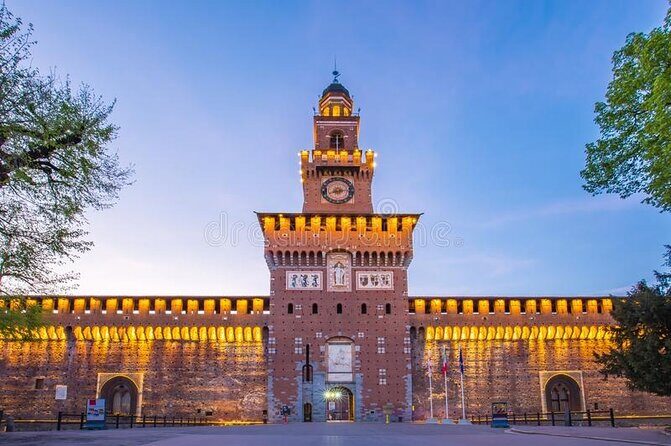
Castello Sforzesco Courtyards: The Castle Feeling Without the Full Museum Detour
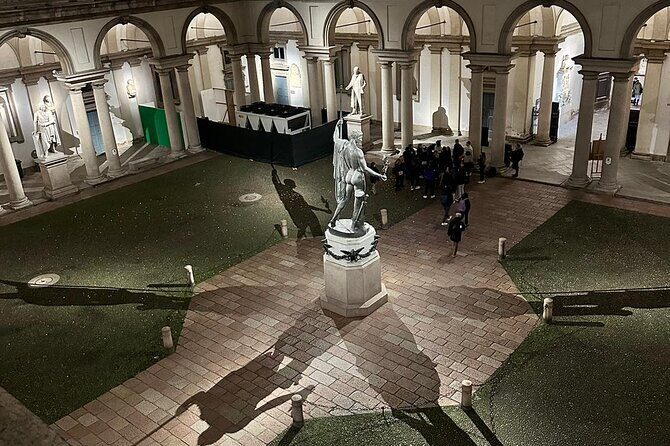
You end at Castello Sforzesco, and the tour approach is again practical: you visit the main courtyards, with admission free for what you’re doing. You get about 30 minutes, so you feel the scale and atmosphere of the complex without turning the day into a museum marathon.
The courtyards are often where a castle works best as a mental image. You can sense the defensive layout and the power story while still moving at a walking-tour pace. And because the tour route keeps things efficient, you’re not stuck choosing between spending time here or elsewhere—you get a strong “castle overview” and then can decide what to do next on your own.
Since the tour ends at Piazza Castello, it’s a convenient finish point. You’re placed near transit and near more roaming options, so the day doesn’t collapse into “now what?” You can swing toward nearby streets for a final gelato stop or continue your own route based on what you learned.


Coffee, Local Tips, and a Private Guide Who Adjusts
Included in the tour is coffee and/or tea, which sounds small until you realize what it does to your energy. After Duomo stone and Galleria walking, you’re ready for a pause, and that break helps you absorb information instead of speed-reading it.
The real value, though, is the private guide relationship. Because it’s a private tour, you only share the experience with your group, not a large crowd. That makes a difference if you want slower pacing, extra time at a detail, or help translating what you see. In past tours, guides like Armando were noted for being funny and warm—more like talking with a friend who’s serious about their city than someone reciting facts from a script.
You’ll also get practical local tips: where to eat and drink, and even small “how-to” moments. One example from guide-led experiences is learning how locals drink from public fountains—exactly the kind of detail that makes your next walk feel more like Milan and less like a checklist.
If you want the best results, come with two questions ready: what neighborhood you’re staying in (or what area you want to return to later), and what kind of food you actually want that day. Guides can steer you fast when you give them a clue.
Price and Value: Is $108.43 a Smart Spend?
At $108.43 per person for about 2 hours 30 minutes, this tour sits in the “pay for convenience and context” category. It’s not just a walk past landmarks. You get a private guide, English explanations, a clear route built around major Milan touchpoints, and one included admission (San Simpliciano). You also get coffee or tea, and you don’t have to manage tickets for most stops (Duomo is outside; Galleria and courtyards are free/covered for what you’re doing).
Here’s how to judge value for your trip: if you’re short on time and want your Milan to make sense, the guide time is the product. If you’re the type who likes to read a little, look closely, and then eat well, this tour pays you back quickly.
If you’re already planning to tour the Duomo interior and multiple major museums on your own, you might feel like Duomo is incomplete here. But you’d still be paying for orientation and for the ability to understand the city’s logic across older and newer parts.
A useful planning detail: the tour tends to be booked around 62 days in advance on average. So if your dates are fixed, don’t leave it to the last minute—especially if you want English guide availability.
Who Should Book This Milan Highlights and Sights Tour?
This is a great fit when you want day-one orientation. The route hits the Duomo area, the Galleria, Brera, San Simpliciano, and ends at Sforzesco—so you leave with a practical mental map and a set of next-step recommendations.
It’s also a smart option if you like a balance of:
- famous landmarks done at a tour pace you can actually enjoy
- quieter district time that feels more local
- at least one interior/entry moment (San Simpliciano)
- advice you can use immediately for food and drink
It may not be the best match if your priority is “I must enter the Duomo and do major museum interiors during one single outing.” This tour intentionally keeps the Duomo outside and limits time at each stop to around 30 minutes.
You’ll also get the most out of it if you’re flexible about walking and public transport connections. Some guided experiences for this style of itinerary use local transit between stops, so expect a mix of walking and short transfers, depending on the day.
Should You Book This Tour or Not?
I’d book this if you want Milan to feel connected, not random. The route is efficient, the guide-centered approach adds meaning, and the included coffee/tea plus one included church entry makes it feel thoughtfully put together. It’s also a safe bet if you’re traveling with family or a mixed group, since guides are used to adjusting to preferences.
I would skip or supplement it if your top goal is only interior tickets—especially for the Duomo—because this one does not include entering. In that case, you can still use this tour as your orientation, but plan your interior visits separately.
If you’re on a short trip and want the best return for your first half-day, this is the kind of private walk that sets you up. Get your bearings, learn what matters, then spend the rest of your trip chasing the parts that genuinely sparked your interest.
FAQ
How long is the tour?
It runs for about 2 hours 30 minutes.
Is this tour private?
Yes. It’s private, and only your group participates.
What language is the tour offered in?
The tour is offered in English.
Where does the tour start and end?
It starts at Piazza del Duomo and ends at Sforzesco Castle (Piazza Castello).
Is the Duomo entrance included?
No. The Duomo stop is from outside, and there’s no Duomo entrance included.
Is admission included for any stops?
Yes. Admission is included for Basilica di San Simpliciano. Other stops on the route list admission as free.
Is coffee or tea included?
Yes. Coffee and/or tea is included.
Do I need a mobile ticket?
Yes. A mobile ticket is part of the experience.
What is the cancellation policy?
You can cancel for a full refund up to 24 hours in advance. Canceling less than 24 hours before the start time isn’t refundable.
How far in advance should I book?
It’s commonly booked around 62 days in advance on average, so booking ahead is a good idea if your dates are fixed.