REVIEW · MILAN
Cesarine: Typical Dining & Cooking Demo at Local’s Home in Milan
Book on Viator →Operated by Cesarine: Cooking Class · Bookable on Viator
Ciao, Milan smells like dinner. This experience brings hands-on Milanese cooking to a real home setting, then follows it with a 4-course meal and local wines. You’ll cook alongside your host and learn family-style recipes that feel like they come straight from the kitchen chalkboard, not a demo set.
What I like most is the mix of learning and eating in the same 2.5-hour block. You’re not just watching—hosts guide you step by step, and you get to taste the results at the table. I also love the personal size: it caps at 10 travelers, so you’re more likely to have real conversation than shuffle through a crowd.
One drawback to consider is coordination can vary day to day. In one case, a guest had multiple host changes and a vegetarian adjustment after learning about a cat allergy, so if you have allergies or strict dietary needs, plan to confirm details early.
In This Review
- Key things to know before you go
- Cooking at a real Milan home, not a staged demo
- Your evening flow: from kitchen work to the table
- The menu you’re likely to eat: starter, pasta main, dessert
- Milanese cooking “secrets” that actually help you
- Wine pairing: local, practical, and part of the meal
- Group size and the “private meal” feeling
- Who it’s best for (and who should think twice)
- Timing in Milan: why 2.5 hours works so well
- Price and value: what $102.35 really covers
- Sanitary care and comfort in a home setting
- Real host personalities: Giuliana, Sandra, and Beatrice
- How to get the most out of your night
- Should you book Cesarine in Milan?
- FAQ
- How long is the Cesarine dining and cooking experience in Milan?
- What’s included in the meal?
- How big are the groups?
- Where does it start and end?
- Is the location easy to reach using public transportation?
- Is free cancellation available?
- Does the experience consider health and sanitary precautions?
Key things to know before you go
- Up to 10 people means this feels like a dinner you get invited to, not a show you attend.
- Show cooking with your help: you’ll be active, not just seated and watching.
- A true 4-course Milanese-style meal with local wine pairing.
- Seasonal starter + pasta main gives you a taste of what Milan tables actually do.
- Sanitary practices are built in (sanitizer, paper towels, distance guidance).
- Hosts vary by night, so your evening might be led by different Cesarine with different specialties.
Cooking at a real Milan home, not a staged demo
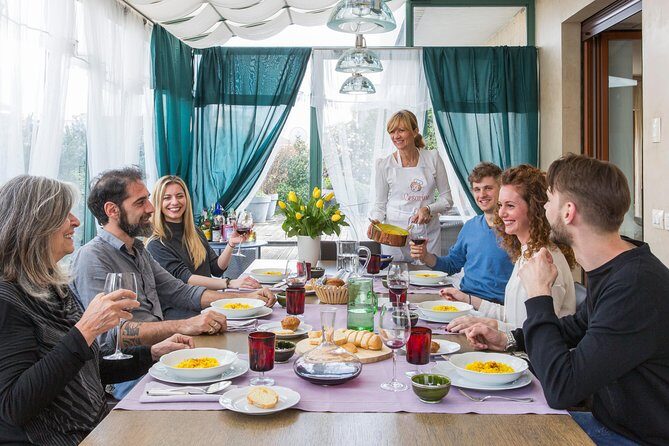
This is the kind of food experience that’s hard to fake. The setting is someone’s home, which changes everything: the pace slows down, the conversation feels natural, and the cooking shows up with small practical details you’d only learn from a real kitchen rhythm.
You’re there for hands-on learning, but the real goal is to leave with a clearer picture of how Milanese recipes work—flavor choices, timing, and the little habits that make a dish taste right. The Cesarine are ready and thrilled to host you, and the setup includes essential sanitary equipment like hand sanitizer and paper towels, plus guidance around keeping distance.
The tone is warm and social, but it still moves on a schedule. You should expect about 2 hours 30 minutes from start to finish, and you’ll end back where the activity begins.
You can also read our reviews of more cooking classes in Milan


Your evening flow: from kitchen work to the table
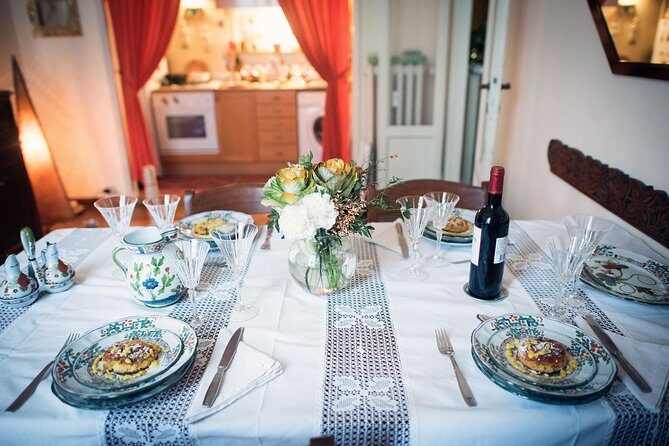
The whole experience is built around three phases that fit together smoothly: kitchen time, tasting time, then sitting down for the full meal.
First, you’ll be welcomed into the home and brought into the cooking process. Depending on the host and what they’re making, your role can look like prepping, assembling, or helping at key steps. Even if you’re a beginner, this format is designed so you’re not stuck doing nothing while others work.
Next comes the meal. This isn’t a light snack: you sit down to a 4-course dinner paired with local wines. That pairing matters because you’re tasting dishes in context, the way an Italian table typically does—wine alongside the food, not wine after the fact.
Finally, you wrap up in the same home space, which makes it easier to ask questions and get practical answers. If you’ve ever wondered why someone’s sauce tastes like theirs and not yours, this is the kind of moment you can ask.
The menu you’re likely to eat: starter, pasta main, dessert
The menu is structured but not rigid. You’re promised a seasonal starter, a pasta-based main, and a typical dessert, with a few common Milan-friendly options.
For the starter, expect something seasonal. That likely means you’ll see what’s fresh and common in Milan at the time you go—simple, home-style, and meant to set up the courses rather than steal the show.
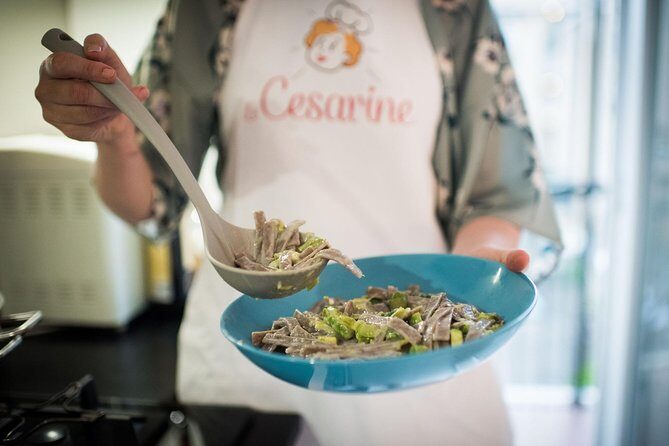
The main course is where the Milan flavor shows up. Your pasta options include pizzoccheri, risotto, or lasagna—and yes, those choices change the feel of the meal. Risotto brings a slow, stirring type of technique. Lasagna is layered and timing-sensitive. Pizzoccheri has its own regional identity and texture that stands apart from typical pasta shapes.
Then comes dessert, which is often where the evening turns cozy. You may get sbrisolona or tiramisu, or something similar and typical for the region. Either way, you’re tasting a classic style dessert rather than a generic “European sweet.”
Tip: if you’re food-driven, show up hungry. Even with wine pairing, this isn’t designed as an appetizer-only experience.
Milanese cooking “secrets” that actually help you
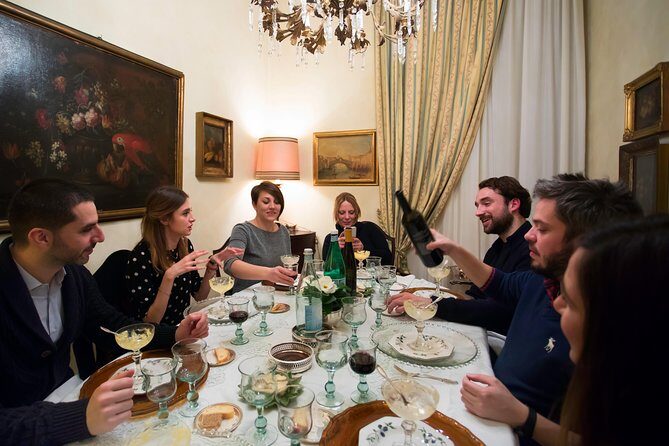
The experience sells secrets, but here’s the useful part: the recipes are family-based, passed down through real Italian Mamas (as the concept describes it), and taught in a way that makes sense in a home kitchen.
What you’ll typically gain isn’t some magic ingredient. You’ll gain understanding—how the host thinks about flavor balance, the role of texture, and what they do at key moments. In a dinner setting led by hosts like Giuliana and her family, the emphasis was on feeling welcomed and learning step by step. Another host, Sandra, was praised for sharing authentic dishes with good knowledge of Italian cooking.
If you’re the kind of traveler who reads a menu and wants to know what it means, this class gives you that translation. You’ll understand why certain pasta choices matter, and how a “simple” dish can taste deeply right when you get the technique moving in the correct direction.
Wine pairing: local, practical, and part of the meal
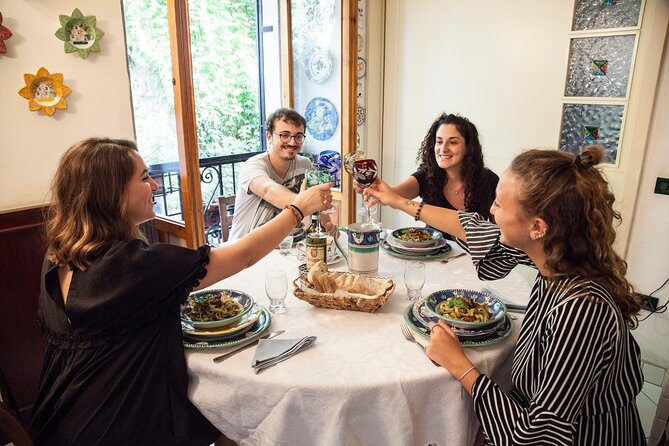
You’ll be served local wines with the dinner, and it’s not an afterthought. The pairing is meant to travel with the food across courses.
This works best if you treat wine as part of the course experience. Take small sips as the flavors show up, and notice how the wine changes the way you perceive salt, richness, and acidity. Even if you don’t drink much, you’ll still get the Italian-table rhythm that comes from having a drink at the table, not separate tastings later.
You can also read our reviews of more tours and experiences in Milan




Group size and the “private meal” feeling
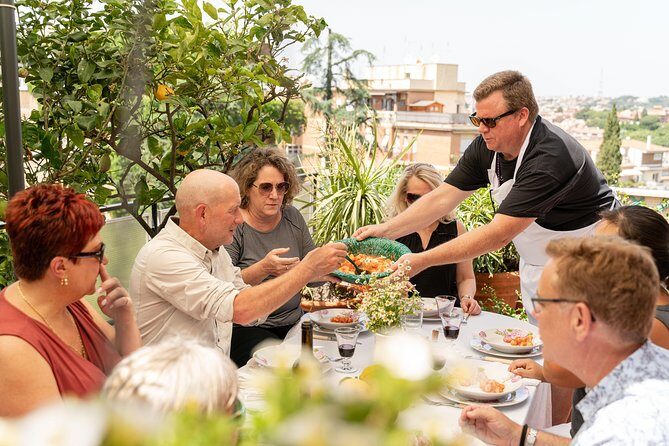
This is a key detail for value. With a maximum of 10 travelers, you’re not competing for attention. You’re more likely to get personalized guidance while cooking, and you’ll have more room to ask questions at the table.
The experience also frames the evening as a private meal experience. Even if you’re in a small shared group, the setting feels like you’re settling in with a few people instead of hosting a large wave through a restaurant-style production.
If you want an authentic meal where the host notices you as a person, not just a ticket number, this small size helps.
Who it’s best for (and who should think twice)
This is a strong match for you if:
- You want a real Milan food evening with hands-on cooking rather than a passive class.
- You like small groups and conversation.
- You’re excited about regional Italian dishes like pasta-focused mains and classic desserts.
- You enjoy learning technique, even when it’s “simple” technique.
It might be a worse fit if:
- You need a very strict schedule with zero flexibility. One review described multiple rescheduling attempts through the platform process before a final host match. It sounds like the coordination improved with the third host, but the takeaway is real: confirm details before you rely on a single fixed time.
- You have a serious allergy or a strict dietary restriction. Another guest case included discussion of a cat in the home and a vegetarian meal adjustment. The host delivered a vegetarian Italian meal, but the example highlights why you should message the operator ahead of time and confirm the kitchen plan clearly.
Timing in Milan: why 2.5 hours works so well
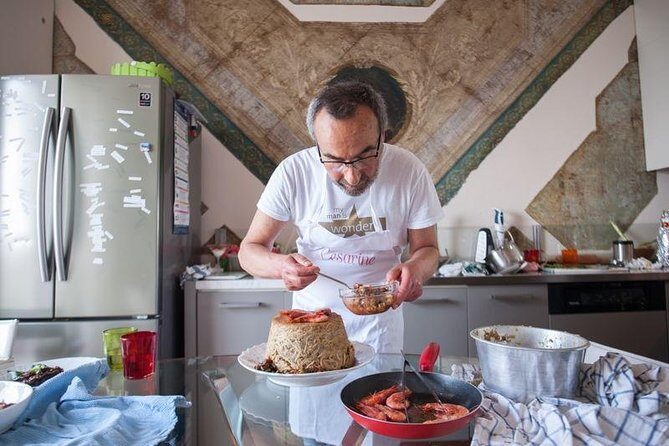
A 2.5-hour block is perfect for a city like Milan where you don’t want your evening swallowed by logistics. You get enough time to cook, eat, and talk, without turning it into a late-night ordeal.
Also, Milan is easy to navigate in general, but dinners can still get tricky when you’re balancing travel time. Because the meeting is in Milan and ends back at the meeting point, you won’t have to plan a major transfer right after dinner.
Price and value: what $102.35 really covers
At about $102.35 per person, this isn’t a cheap meal deal. But you’re not just paying for food. You’re paying for a home-based cooking lesson plus a seated 4-course dinner with local wine.
Here’s how to judge the value fairly:
- You get instruction and participation, which usually costs more than a standard meal.
- You get a full dinner, not just a sampling course.
- The group size cap helps keep the experience personal, which is harder to find at lower prices.
If your alternative is a restaurant dinner plus paying separately for a cooking class elsewhere, this often makes sense. The biggest value win is when you care about technique and regional recipes—not just eating something tasty.
Sanitary care and comfort in a home setting
The experience explicitly mentions sanitary rules and measures. You’ll find essential equipment provided, including paper towels for handwashing and hand sanitizing gel.
You’re also asked to maintain 1 meter distance when possible. If you can’t keep that distance, the guidance is to wear masks and gloves. This matters because it changes how comfortable you’ll feel in a home setting where space is naturally tighter than a large venue.
If you prefer to manage your own comfort, it’s smart to bring what makes you feel safe, even if the home provides essentials.
Real host personalities: Giuliana, Sandra, and Beatrice
One reason home dining feels different is the human factor. In the feedback, host names show up clearly, and that helps you understand the vibe.
- Giuliana and her family were praised for being gracious hosts and teaching step by step. That’s the kind of teaching style that helps if you’re not confident in the kitchen.
- Sandra was highlighted for being welcoming and hospitable, with great knowledge of Italian cooking and flavorful authentic dishes. If you love technique and want the host’s reasoning, this is a good sign.
- Beatrice served a vegetarian Italian meal in one case. That’s useful to know, but the broader lesson is: dietary needs can be accommodated, yet coordination may require a bit of follow-up if your needs are specific.
You can’t guarantee the exact host on your date, but the names give you a sense of what the experience is aiming for: warm teaching, real food, and a home-table approach.
How to get the most out of your night
This kind of dinner goes best when you show up ready to participate and ask questions.
A few practical moves:
- Come with curiosity about Milanese dishes and don’t just ask what to do—ask why.
- If you have dietary needs or allergies, confirm details clearly in advance. Don’t wait until arrival.
- Take your time during the wine pairing. The goal is to enjoy how each course changes the taste experience.
- If you’re traveling solo, this format is easier to enjoy because the group is small and conversation usually finds a natural rhythm.
And yes, bring an appetite. When the meal is built around a 4-course arc, skipping it will waste the point.
Should you book Cesarine in Milan?
I’d book this if you want a real Milan cooking-and-dinner evening with a small group, and you care about learning the rhythm behind classic dishes like pasta mains and typical desserts. The value improves when you want more than a restaurant meal—this is a ticket to understanding what you’re eating and how it’s made.
I’d think twice if you need perfect time certainty or if you have strong allergy concerns that require careful handling. The experience seems to take sanitary guidance seriously, but home environments vary, and coordination can be uneven in rare cases. If that’s your situation, send a message early and get your plan confirmed.
If you’re flexible, curious, and ready for an Italian home-table experience, this one is a strong pick.
FAQ
How long is the Cesarine dining and cooking experience in Milan?
It’s approximately 2 hours 30 minutes.
What’s included in the meal?
You’ll enjoy a 4-course meal with a seasonal starter, a pasta main (options like pizzoccheri, risotto, or lasagna), and a typical dessert (options like sbrisolona or tiramisu), plus local wines.
How big are the groups?
The maximum group size is 10 travelers.
Where does it start and end?
It starts in Milan and ends back at the meeting point.
Is the location easy to reach using public transportation?
Yes, the meeting point is near public transportation.
Is free cancellation available?
Yes, you can cancel up to 24 hours in advance for a full refund.
Does the experience consider health and sanitary precautions?
Yes. The homes provide essential sanitary equipment such as paper towels and hand sanitizing gel, and guests are asked to follow distance guidance, including wearing masks and gloves if you can’t keep distance.