REVIEW · MILAN
From Milan: Scenic Alps Day Trip with Bernina Train Ride
Book on GetYourGuide →Operated by LUCAfromITALY · Bookable on GetYourGuide
Switzerland in a single day sounds tough. This Milan-to-St. Moritz trip turns up the scenery: Lake Como stops and the Bernina Express over some of Europe’s highest rails, guided in English.
I love the balance between rail thrills and actual time on your feet—about an hour in Tirano and 30–45 minutes in St. Moritz. One thing to plan for: it’s a long 12.5-hour schedule, and food isn’t included, so you’ll want to eat smart and dress for cold rail air.
In This Review
- Key Things You’ll Remember
- From Milan to the Bernina: Why This Day Trip Feels Like a Mini Vacation
- Meeting in Milan: The 8:00 Start and the Passport Must-Haves
- Milan to Lake Como to the Valtellina Valley: Road Time That Sets the Mood
- Tirano Free Time: Where to Eat and How to Use Your Hour
- The Bernina Train Ride: UNESCO Railway Engineering in Motion
- The Highest Point Stop: Fast Views, Big Payoff
- Road to St. Moritz: 30 to 45 Minutes in the Alpine Resort World
- The Return: Another Scenic Drive Back to Lake Como and Milan
- Price and Value: Why $182 Can Make Sense for This Mix
- Who This Trip Suits (and Who Should Skip It)
- Small-Group Feel and Guide Styles: Why the Day Lands Well
- Should You Book This Bernina Train Day Trip from Milan?
- FAQ
- What time do we meet, and where in Milan?
- How long is the tour?
- Do I need a passport?
- What’s included in the price?
- Is food included?
- Who should avoid this tour?
Key Things You’ll Remember
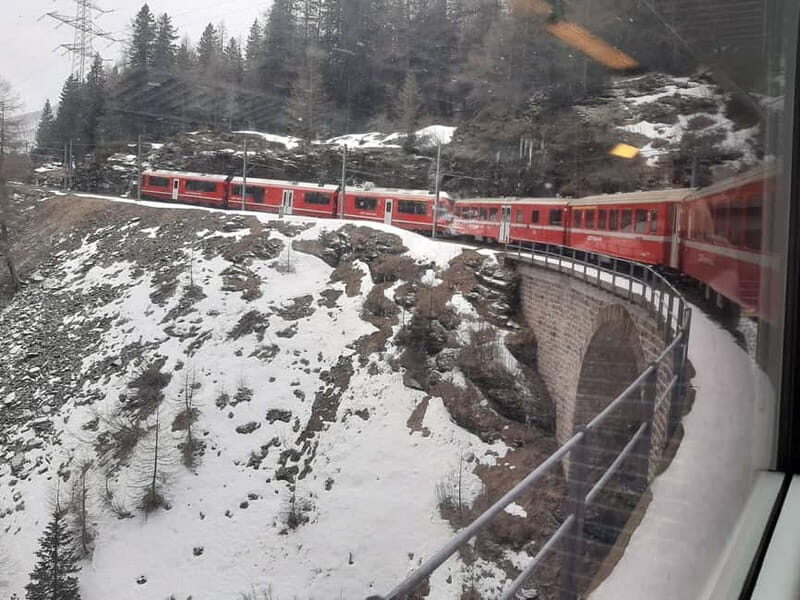
- UNESCO Bernina Railway views: highest-altitude rail route in Europe, with gorges and glaciers along the way
- Tirano break built in: roughly an hour of free time for lunch and a wander before the train peak
- A quick “top of the line” stop: a brief hop off at the highest point of the route (or Diavolezza in winter)
- St. Moritz timing that works: 30–45 minutes to see the resort center without losing the return ride
- English live guide and tight pacing: people like Sylvia, Mari, Daniel, Manuela, and Antonella are singled out for keeping it organized
From Milan to the Bernina: Why This Day Trip Feels Like a Mini Vacation
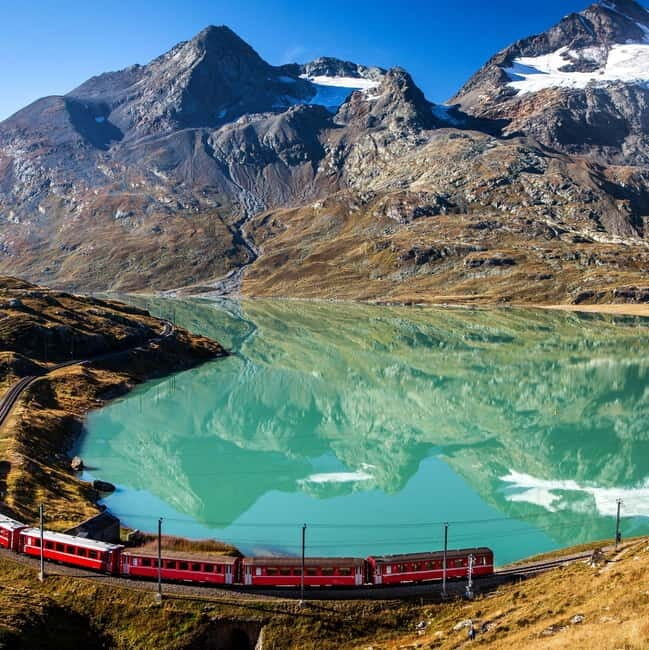
This is the kind of day trip that hits multiple Swiss “greatest hits” without making you plan like a full-time travel agent. You start in Milan, take road time for Lake Como and the Valtellina area, then shift gears to the Bernina Train for the main event: big mountain views and dramatic rail engineering.
What I like most is how the day is paced. You get guided moments where you learn what you’re looking at, then you get enough free time to actually enjoy the places—rather than feeling like you’re always rushing between windows.
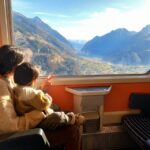
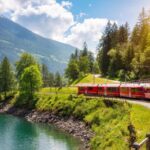
The other win is the train segment itself. The Bernina route is UNESCO-listed, and on this itinerary you’re not stuck on the flat. You’re going up. You’re crossing alpine terrain with glacier-and-gorge scenery that changes as the train climbs. It’s not just transport—it’s the attraction.
You can also read our reviews of more tours and experiences in Milan
Meeting in Milan: The 8:00 Start and the Passport Must-Haves
Your day begins at Milan Central Station. The meeting point is outside Bistrot Centrale, on the upper floor area near the track gates, at 08:00. The instructions are specific: climb the stairs to the upper floor, keep going until you’re right before the track gates, then meet your guide just outside the Bistrot Centrale entrance (facing the gates to the right, at the end of the hall).
Two practical notes matter here:
First, you’ll need your valid paper passport. This isn’t one of those “ID is fine” situations. If your passport is digital-only or wrong type, you’ll have problems.
Second, this trip isn’t short. Getting there on time isn’t optional; it protects the timing for Lake Como, Tirano, the train stop, and the St. Moritz visit.
Milan to Lake Como to the Valtellina Valley: Road Time That Sets the Mood
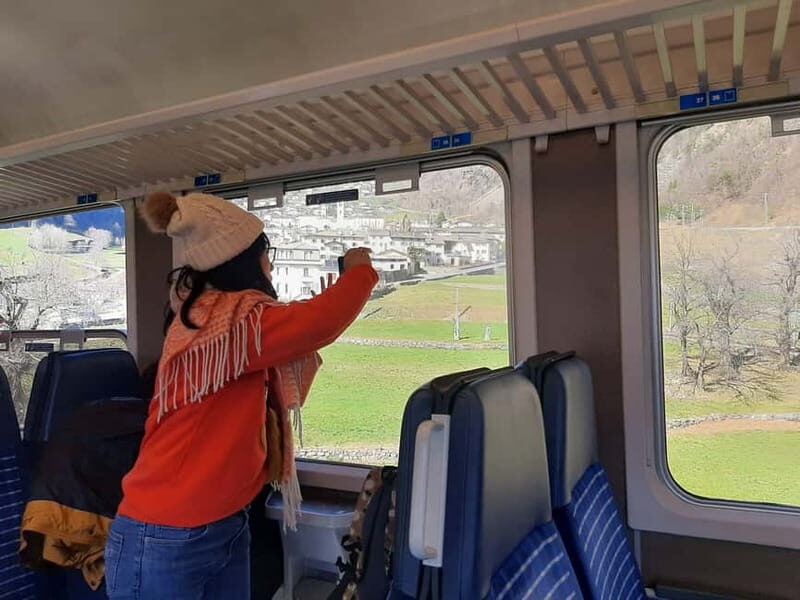
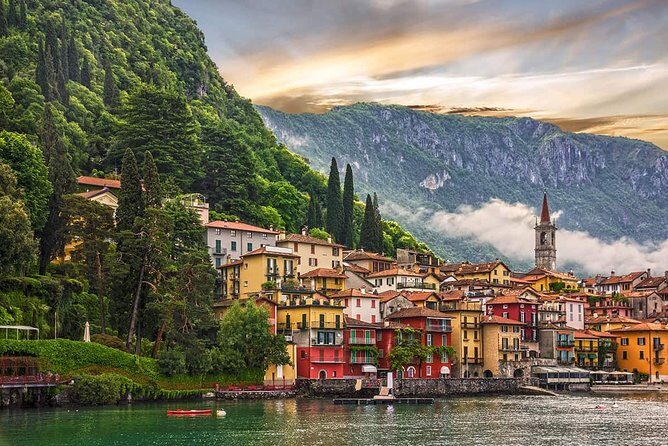
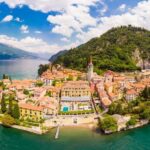
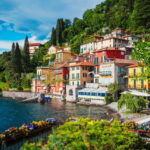
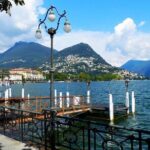
After meeting your guide, you’ll transfer by regional train or minibus to start the day. The first scenic stop is Lake Como, and if timing allows, you may take a short walk in the lakeside town.
That quick walk is useful. It helps you switch from city mode to mountain mode before the day “locks in” with the Bernina Train. Even a brief stretch of legs by the water makes the rest of the day feel more like a trip and less like a schedule.
Then you head toward the Valtellina Valley, right near the Switzerland border. This drive is part scenic road, part logistics. You might get an additional stop in a quaint town, or even at a winery or café, if timing lines up. Don’t count on a specific place, but do expect the driver and guide to try for a worthwhile break.
Keep an eye on your layering. Road air can feel warm, then you’ll be higher and colder. A light jacket is smart, and so are comfortable shoes.
Tirano Free Time: Where to Eat and How to Use Your Hour
You’ll get about one hour of free time in Tirano right before boarding the Bernina Train. This is the moment I think is most underrated on the itinerary.
Why? Because you’re not just chasing views. You’re resetting. You’ll want a real lunch, not a snack you regret later when you’re sitting on a train and the scenery is too good to ignore.
Practical advice for Tirano:
- If you can, eat earlier in the hour so you’re not sprinting back to the pickup timing.
- Wear a jacket that doesn’t crowd your comfort—train platforms and stations can be chill, even when the sun is out.
- Take photos, but also look up and around. Tirano is your staging point before the climb.
This is also where the day’s “feel” changes. Before Tirano, you’re seeing lakes and valley towns from the road. After Tirano, the Bernina route takes over.
The Bernina Train Ride: UNESCO Railway Engineering in Motion
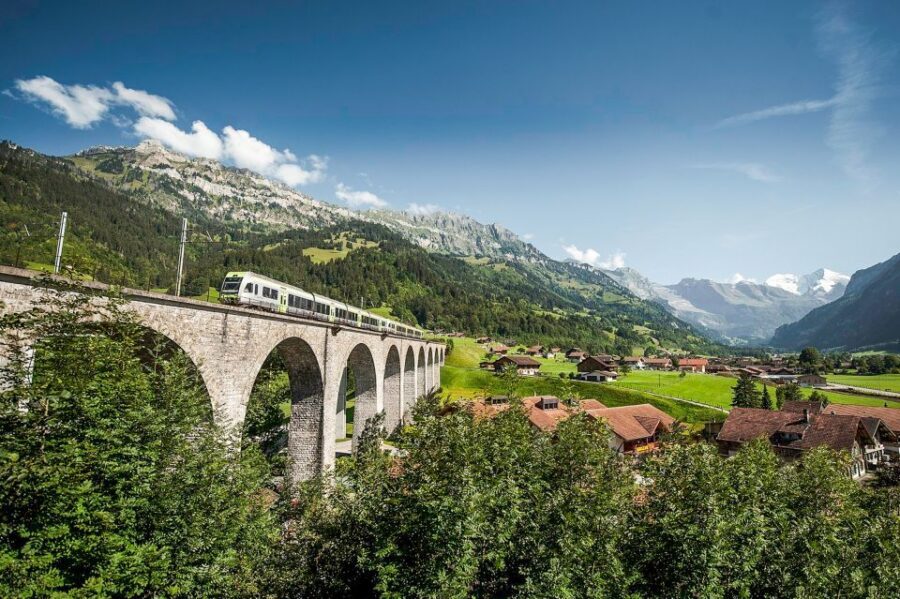
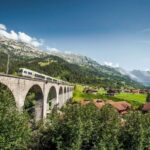
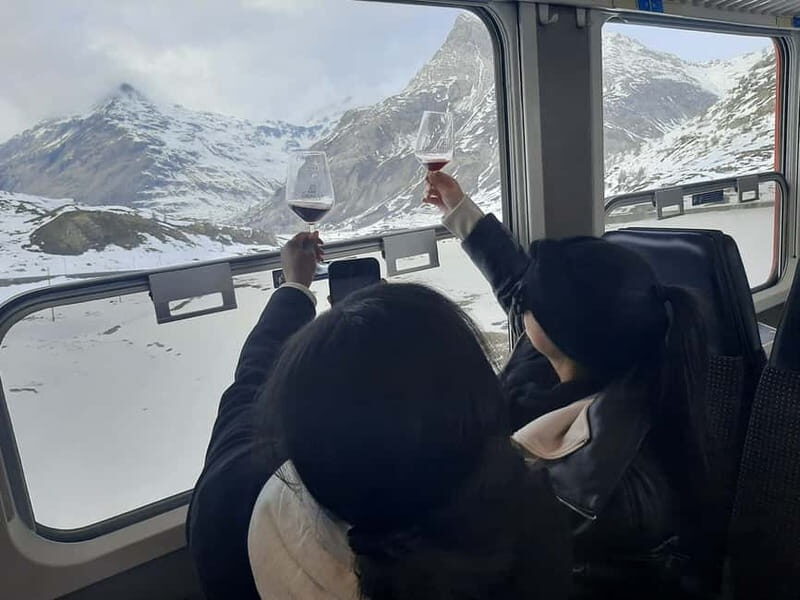
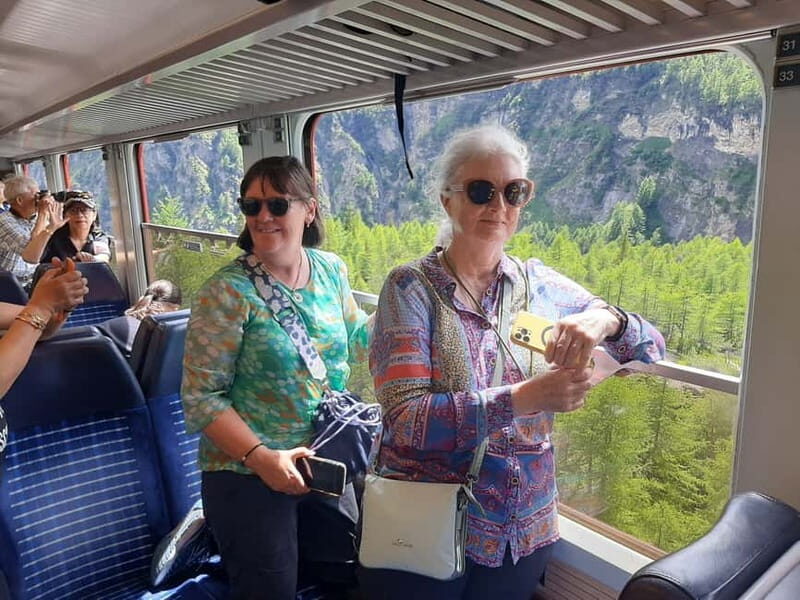
Now for the main act. You board the Bernina Train for panoramic mountain scenery, including romantic gorges and glacier views as the route climbs. The Bernina is famous for its engineering—this itinerary leans into that by giving you the kind of ride where the train itself feels like part of the show.
You’re riding on the highest-altitude rail route in Europe, and that matters. At altitude, the air feels sharper and the scenery gets more dramatic. You start noticing how the terrain shapes the track, and you get a real sense of why this line is UNESCO-listed: it’s not only beautiful, it’s a feat of design.
Also, don’t underestimate how much a guided day helps here. An English-speaking guide keeps the ride from becoming just sightseeing. When someone explains what you’re seeing—valley shapes, glacier remnants, or why the line threads the mountain the way it does—you get more out of every mile.
Keep in mind: food and drinks aren’t included. So if you want something to sip or snack during the train, plan for it ahead of time during your earlier stop.
The Highest Point Stop: Fast Views, Big Payoff
After the panoramic riding, you’ll hop off the train for a quick stop at the highest point of the route. In winter, the stop may instead connect with Diavolezza railway station.
Either way, this is a short break—think quick photos, quick air, quick orientation. The point is not a long hike. It’s more like a visual exclamation point at the height of the day.
What to do in your short stop:
- Put your camera away for a moment and look around. The scale of the mountains at this altitude can mess with your sense of distance.
- Dress for cold. Even if you started in mild weather, the top-level views often come with wind and temperature drop.
- If it’s snowy or icy, slow down on any steps or uneven surfaces.
This stop is one of the strongest moments because it snaps everything into focus: you’ve been traveling through mountain terrain all day, and now you’re at the point where the whole route makes sense.
Road to St. Moritz: 30 to 45 Minutes in the Alpine Resort World
Once you’re back on the minivan, you continue to St. Moritz. You’ll have about 30–45 minutes to explore.
That’s not a lot of time, but it’s enough for the essentials: see the resort center vibe, walk a bit, and take in the alpine peaks framing the town. St. Moritz isn’t trying to be a “do everything” destination on this itinerary, and that’s okay. It’s a signature stop, and the time is designed to protect your return travel.
How to use your time well:
- Prioritize a viewpoint and one stroll, not multiple detours.
- If you’re traveling in a group, set a meeting point before you spread out.
- Again: dress warm. Mountain towns can feel colder than you expect.
If you like a day where you get taste-level exposure to several places, this is a sweet spot. If you want hours of free wandering and museums, you’ll probably want a separate overnight in the area.
The Return: Another Scenic Drive Back to Lake Como and Milan
On the way back, you’ll enjoy another road segment that goes through the scenic route back toward Lake Como, then returns to Milan. The day ends back at the meeting point in Milan.
This return phase matters because it gives you a second look at the countryside after the train high point. You also get the benefit of closing the loop. You start at a lake, you climb into the alpine heart of Switzerland, you touch St. Moritz, and then you come back down toward the familiar—without needing to manage connections yourself.
It’s still a long day, though. If you’re prone to travel fatigue, pack accordingly: water when you can, a light snack if you’ve got it, and a jacket that won’t make you miserable when the weather shifts.
Price and Value: Why $182 Can Make Sense for This Mix
At $182 per person, you’re paying for a bundle: a guided day in English, transportation by minivan or minibus, and your Bernina Train ticket. Food and drinks are not included, so lunch becomes your personal spend.
So is it worth it? For most people, the value comes from two things:
1) You’re not just buying a train ticket. You’re getting the road segments from Milan, plus the guide’s help with timing and smooth transitions.
2) You’re getting multiple stops in one day—Lake Como, Tirano, Bernina route peak moment, and St. Moritz—without the headache of ticketing, station navigation, and scheduling.
If you’re the kind of traveler who enjoys a plan with built-in highlights, this is a good use of a day. If you prefer slow travel and you’d rather travel at your own rhythm, you might find the schedule brisk. But for a first taste of the Bernina line and St. Moritz, this format is hard to beat.
Who This Trip Suits (and Who Should Skip It)
This day trip is a strong fit for:
- People who want big alpine scenery without planning multiple day trips
- Travelers who like guided explanations during transit, not just at fixed walking stops
- Anyone comfortable with a long day and cool-weather clothing
It’s not suitable for:
- Children under 12
- Pregnant women
- People with heart problems or pre-existing medical conditions
- People with low level of fitness
Also, you should be prepared for weather swings. Bring a jacket, and wear comfortable shoes. In summer, plan for a light sweater or jacket. In winter, bring a heavy jacket, good shoes, scarf, and gloves.
Small-Group Feel and Guide Styles: Why the Day Lands Well
A recurring theme in the experience is how guides make the pacing feel manageable. Names like Sylvia, Mari, Daniel, Manuela, and Antonella show up with the same general pattern: they keep things organized, explain what’s worth noticing, and handle the timing so you don’t feel lost.
I like that approach because this route has “moving parts.” You’re switching transport modes, there are short free-time windows, and the best views are time-sensitive. A good guide helps you know what to do when you have only minutes—especially during the highest point stop and the quick St. Moritz visit.
If you’re the type who worries you’ll spend half your day coordinating, you’ll appreciate the guided structure here.
Should You Book This Bernina Train Day Trip from Milan?
Book it if you want a full alpine day with real highlights: Lake Como, Tirano, the UNESCO Bernina Train route, a highest-point stop, and a taste of St. Moritz—handled with transportation and an English live guide. The itinerary is built for people who want memorable scenery without logistics stress.
Skip it if you need a long, slow, unpacked travel day. This is 12.5 hours with multiple transitions, and food isn’t included, so it’s best for travelers who can handle a structured day and cold moments on the move.
If you’re choosing based on “what’s the main event,” pick the Bernina Train ride. That’s the heart of the day.
FAQ
What time do we meet, and where in Milan?
You meet at Milan Central Station at 08:00, outside the Bistrot Centrale entrance on the upper floor near the track gates.
How long is the tour?
The duration is 12.5 hours. Starting times can vary, so check availability for the schedule that matches your travel day.
Do I need a passport?
Yes. Valid paper passports are required for each passenger.
What’s included in the price?
The price includes a tour guide, transportation by minivan or minibus, and the Bernina Train ticket.
Is food included?
No. Food and drinks are not included, so you’ll need to budget for meals during free time stops.
Who should avoid this tour?
It’s not suitable for children under 12, pregnant women, people with heart problems, people with pre-existing medical conditions, and people with a low level of fitness.