REVIEW · MILAN
Intimate Small-Group Bernina UNESCO Scenic Train on Swiss Alps
Book on Viator →Operated by LUCAfromITALY · Bookable on Viator
Milan to the Bernina is a long day, but worth it. I like the small-group vibe (max 18) and the payoff of a real Bernina Train ride into the Swiss Alps. The main catch is time and motion: it’s a minimum 13-hour round trip with some stairs and plenty of bus/train time, plus twisty mountain roads.
You’ll start at Milan Central and move through three different worlds—Lake Como, the Valtellina valley, and then the red train cutting through rugged alpine terrain. Guides like Luca, Silvia, Paola, and Ilaria (and drivers such as Mario) come with a practiced flow, keeping you on schedule so you don’t waste the day. If you’re sensitive to cramped seating or you need lots of bathroom breaks on demand, plan ahead.
In This Review
- Key highlights at a glance
- Milan to Lake Como: the start that quickly changes your mindset
- Lake Como stop: small town time without the heavy crowds
- Valtellina Valley break: where the scenery turns more rugged
- Tirano: lunch freedom plus the climb to the Bernina station
- Boarding the Bernina Train: the moment the day turns alpine
- Getting off at the highest point: Ospizio Bernina vs Diavolezza
- From the summit to St. Moritz: short time, big atmosphere
- St. Moritz pacing tips: make the most of the hour
- Why the return is mostly ground travel (and why that matters)
- The practical value of the price you’re paying
- What to pack for Ospizio Bernina or Diavolezza
- Who should book this day trip, and who should skip it
- Should you book it from Milan?
- FAQ
- What time does the tour start in Milan?
- How long is the day trip?
- Is lunch included?
- Where does the Bernina Train ride end?
- How big is the group?
- Do I need a passport?
- What kind of walking and stairs should I expect?
- What’s the weather clothing recommendation?
- What if the Bernina Train has issues due to weather?
Key highlights at a glance
- Max 18 people keeps this from feeling like a cattle-car tour.
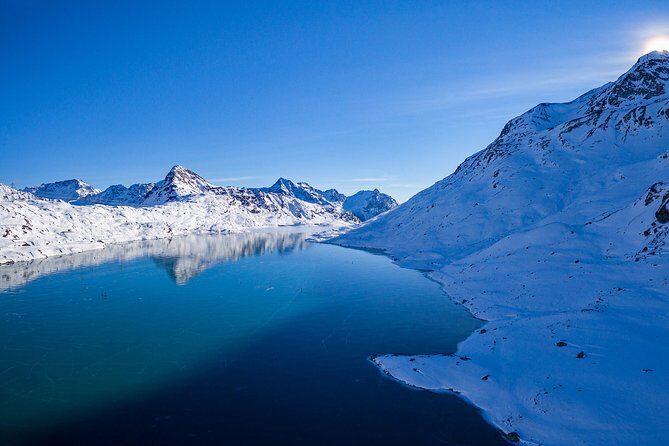
- Bernina Train drop-off changes by season: Ospizio Bernina in summer, Diavolezza in winter.
- Short, timed stops at Lake Como, Tirano, and St. Moritz keep the day focused on the Alps.
- Real high-alpine views from bridges, viaducts, and the highest point of the ride.
- Passport required for everyone, even though you start in Italy.
Milan to Lake Como: the start that quickly changes your mindset
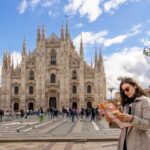
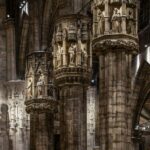
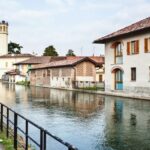
The day kicks off at 8:00 am at Centrale (Piazza Duca d’Aosta). From there, you head to Lake Como by regional train or minibus, depending on the departure setup that morning. Either way, it’s a smooth warm-up: sit back, get oriented, and watch the scenery shift from city into lake country.
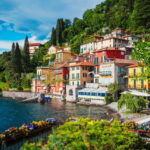
You’ll have a short walking moment in a small town on the water. It’s only about 30 minutes, and you should assume there may be stairs. Think of it as a taste of Como without the long slog and without turning the whole trip into a city-walk marathon.
You can also read our reviews of more tours and experiences in Milan.
Lake Como stop: small town time without the heavy crowds
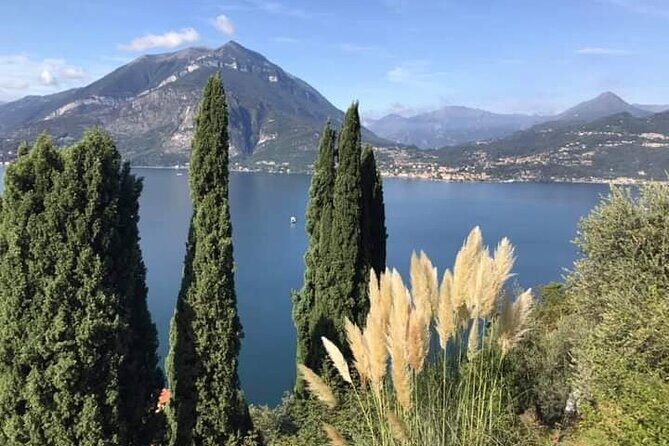
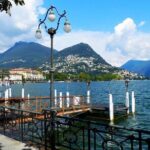
This isn’t a long boat-and-brochure tour. Instead, you get a half-hour walk plus a chance to breathe in the lake air and grab photos before the day moves inland. That matters because the Bernina portion is the main event, and the schedule is built to protect it.
If you want a leisurely day on Lake Como, you may still need a separate trip. But for a one-day Alpine hit from Milan, this timing is smart. You’re using Lake Como as a scenic breather, not as your whole vacation.
Valtellina Valley break: where the scenery turns more rugged
After Lake Como, you drive along part of the shoreline and then into the Valtellina valley. Expect mountain roads and a more dramatic setting, with a quick stop either in a small town or at a winery or café. This is the spot where you can reset, stretch, and grab a snack without derailing the schedule.
The value here is psychological as much as scenic. You go from postcard lake views to a corridor of valleys and ridgelines, which sets up the moment you finally board the train. If you’re prone to motion sickness, this is also where you should settle your comfort game before the day’s longer stretches.
Tirano: lunch freedom plus the climb to the Bernina station
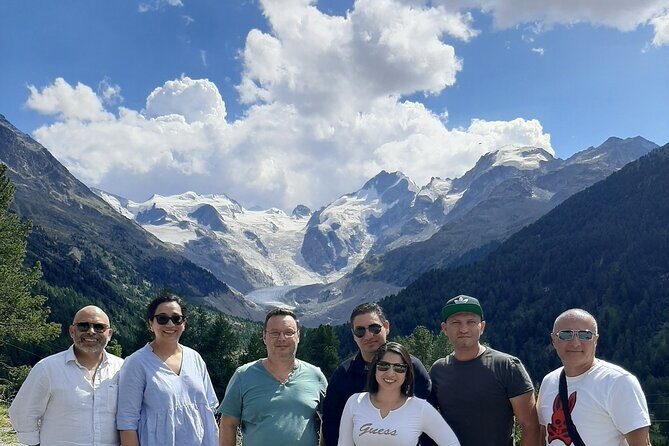
Tirano is your next big stepping stone. You’ll arrive by minibus, then there’s a bit of walking with stairs to reach the Bernina station area. You’ll have about an hour of free time, and your lunch is on your own.
I like this structure because it keeps you from eating on a tight group timeline. You can choose a quick bite, or simply use the time to regroup before the big rail moment. The one caution: since the day is long, stairs and stop-and-go pacing add up, so wear shoes you’d actually trust on uneven pavement.
Boarding the Bernina Train: the moment the day turns alpine
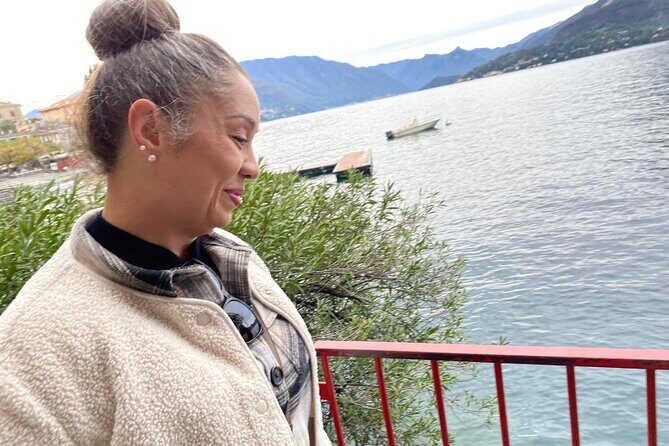
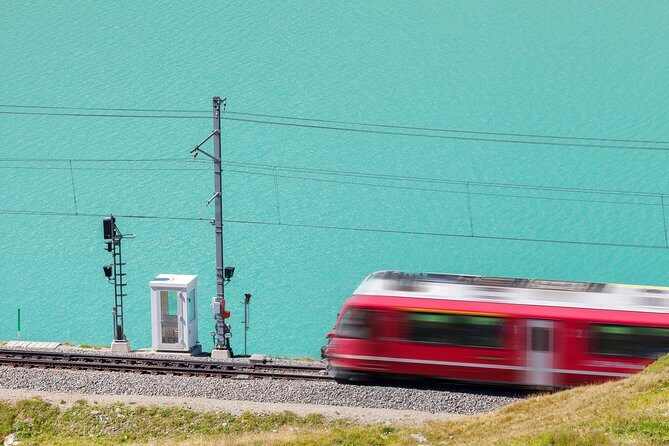
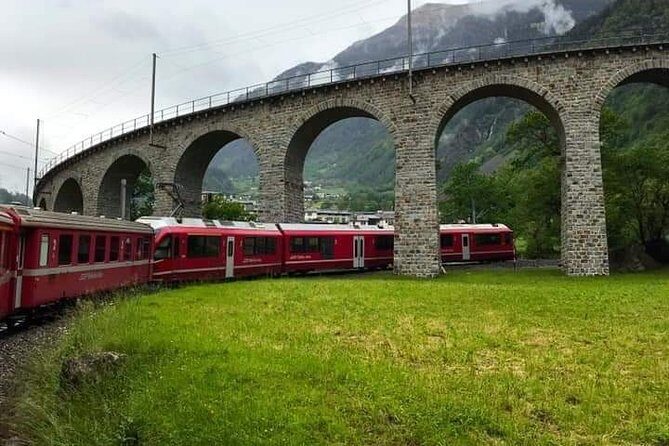
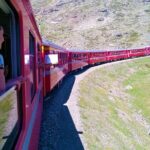
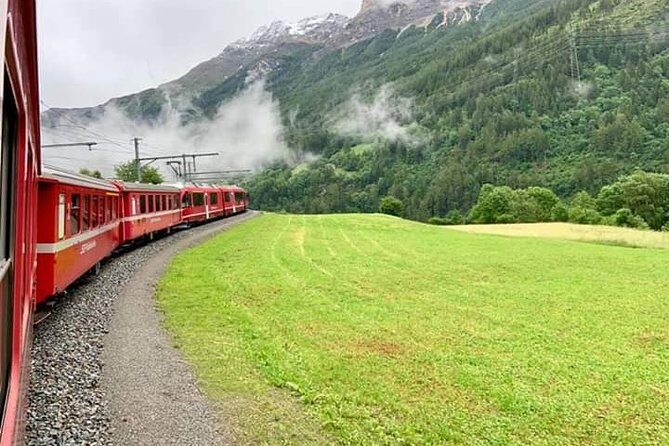
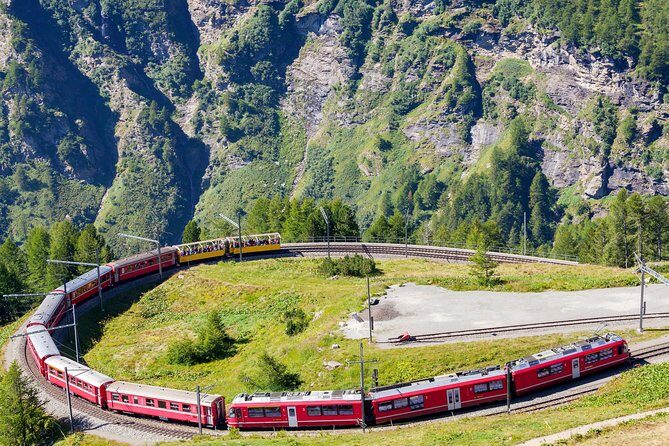
Then comes the heart of the day: the Bernina Train ride on the Bernina Express railway. This is why the whole itinerary exists. From the moment the little red train starts moving, you’re treated to sweeping views through rugged terrain.
The ride is famous for dramatic engineering. Along the way you’ll pass high into the hills and cross bridges and viaducts, and the terrain looks rugged but scenic. For many people, the “wow” isn’t one single view—it’s the fact that the scenery keeps changing every few minutes as the train climbs.
Getting off at the highest point: Ospizio Bernina vs Diavolezza
You disembark at either Ospizio Bernina (summer) or Diavolezza (winter). This is important because it affects the feel of the alpine air at the top and how you’ll experience that final stretch.
- In summer, Ospizio Bernina is the high stop.
- In winter, the train reaches Diavolezza instead.
Either way, you’re getting the high-altitude payoff in a way that’s hard to replicate in a normal day trip. You’re not just watching mountains from the road; you’re riding the line that goes right at them.
From the summit to St. Moritz: short time, big atmosphere
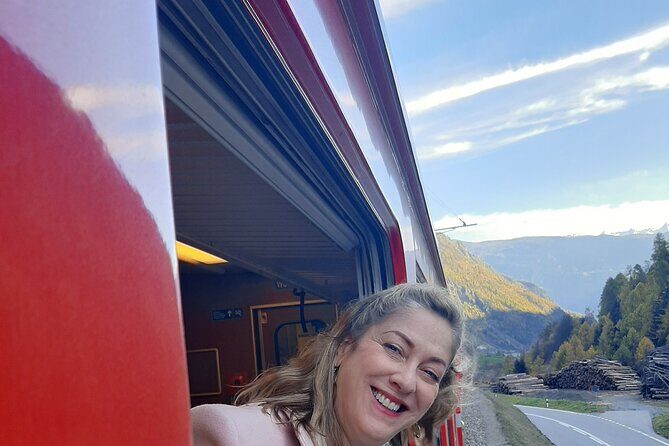
After the train, you travel by coach or minibus toward St. Moritz. You get shopping and walking time, but it’s not long. Expect a brief stroll (about 10 minutes) along a small alpine lake area, then stairs to connect up toward the escalator and into the town.
You’ll have roughly 30 minutes to explore St. Moritz’s sloping downtown. This is enough time for a look, some photos, and a quick browse, but it’s not enough time to do “everything” if you’re the slow-and-savor type.
One reality check I respect: St. Moritz can be closed or quieter between seasons. So if you’re going during shoulder season, think of your visit as a visual walk and a warm drink stop, not a full-day restaurant plan.
St. Moritz pacing tips: make the most of the hour
Given the short window, I’d plan your St. Moritz strategy before you arrive. Pick what you want most: scenic photos, a quick shop loop, or a warm break. With limited time, it’s easy to lose 15 minutes just deciding what to do.
Also, keep in mind the day’s physical demands. You’ve already done walking (with possible stairs) on Lake Como and then again around the Bernina station in Tirano. St. Moritz adds more steps, so it’s a good idea to go into it with shoes that are stable and not slippery.
Why the return is mostly ground travel (and why that matters)
Your trip back to Milan is partly regional train and partly driving, with the schedule built so you return the same day. The total return time includes a break and brings you back to Milan Central in a block of about 3 hours for that last leg (as part of the overall day).
This is where your comfort planning pays off. Many people find the day long mainly because of time on buses. That doesn’t mean it’s poorly organized; it means this is a “see the Bernina” day trip from Milan. Distance does what distance does.
So if you’re the kind of traveler who needs constant movement or you hate sitting for long stretches, this isn’t a light outing. But if you accept the bus time as the price of getting to a top-tier rail experience, the return feels like part of the adventure, not a punishment.
The practical value of the price you’re paying
At $211.63 per person, this isn’t a bargain, especially for a day. But it’s also not just a ticket to ride a train. You’re paying for a small group (max 18), an English-speaking guide, ground transport from Milan to the Como area and beyond, and the Bernina Train ticket itself.
You’re also getting a schedule that protects the one element most people care about: the rail ride. A cheaper version often cuts the rail time or adds more chaos. Here, the day is structured so you reach the high point and still get a real taste of St. Moritz.
A smart way to think about it: this price buys you the whole corridor experience with one team running the clock. When you’re traveling far from Milan, that coordination is worth real money.
What to pack for Ospizio Bernina or Diavolezza
Weather is a big deal on this route. The instructions are clear: bring a light sweater or jacket in summer. In winter, bring a heavy jacket, good shoes, scarf, and gloves.
I’d also add a practical layer mindset. Even if you start the day in relatively mild conditions, you can climb into colder air on the Bernina line. Good shoes matter because you do short walks with stairs at more than one stop.
And because the day is long, consider your comfort small-stuff: a layer you can remove, something to keep you warm while you’re waiting, and anything that helps with motion comfort if needed on twisty roads.
Who should book this day trip, and who should skip it
This works best if you want one focused Alpine day rather than multiple stops you barely see. If you care about the Bernina Train experience and you don’t mind a long itinerary, you’ll likely feel satisfied by the mix.
It’s also a good fit for people who prefer small groups. With up to 18 travelers, you’re more likely to get personal attention, and the guide can manage photo moments and timing without rushing everyone into one mass.
On the other hand, it’s not ideal if you’re dealing with medical limitations that make long days harder. The tour calls for moderate physical fitness, with walking and stairs. It also notes that frequent bathroom stops may not be guaranteed, and some parts of the day involve twisty mountain roads.
Children can go, but they must be with an adult, and the minimum age is 12. Everyone also needs a valid passport for the day.
Should you book it from Milan?
If your goal is to add a serious Swiss-Alps rail moment to your Italy trip, this is a strong choice. The day is built around the Bernina Train and the highest point stop, and the rest of the schedule exists to get you there smoothly from Milan.
Book it if you:
- want a small-group day with an English guide
- are excited by trains, bridges, and high-alpine views
- can handle a minimum 13-hour day with stairs
Skip it if you:
- need lots of flexible time to roam slowly
- dislike long bus stretches
- struggle with stairs or long seated travel
If you match those conditions, you’ll come away with one of those day-trip memories that feels like it belongs to a much longer trip.
FAQ
What time does the tour start in Milan?
It starts at 8:00 am at Centrale FSPiazza Duca d’Aosta, 20124 Milano MI, Italy. The day ends back at the meeting point.
How long is the day trip?
The duration is listed as 12 hours 45 minutes (approx.), and it notes it’s a minimum 13-hour round trip from Milan Central.
Is lunch included?
Lunch is not included. You’ll have free time in Tirano for your own lunch.
Where does the Bernina Train ride end?
Depending on season, you get off at Ospizio Bernina (summer) or Diavolezza (winter), which is the highest point stop for that time of year.
How big is the group?
It’s a small group of up to 18 people.
Do I need a passport?
Yes. The information says each passenger has to carry a valid passport.
What kind of walking and stairs should I expect?
There are short walks at multiple stops and you should expect stairs. The tour recommends moderate physical fitness, and bathroom stops are not guaranteed frequently.
What’s the weather clothing recommendation?
Summer calls for a light sweater or jacket. Winter calls for a heavy jacket, good shoes, scarf, gloves, and cap.
What if the Bernina Train has issues due to weather?
The tour requires good weather. If conditions are unsafe or the Bernina Train is not operating or only partly operating, they may cancel with a refund or operate only a partial ride and you may not reach St. Moritz.