REVIEW · MILAN
Milan: Highlights and Secret Treasures walking tour
Book on Viator →Operated by World Travel Guide · Bookable on Viator
Milan has a quiet side most tours miss. This 3-hour walk strings together big-name sights and smaller, story-filled stops, so you come away understanding what you just saw instead of just collecting photos. I like the tight route and clear pacing that covers lots of ground without feeling like a sprint.
I also really enjoy the small-group feel. You’ll have an English guide, with English-French-Italian language support from the guide at your disposal, and recent groups have been led by guides such as Elisa and Alexa, who keep the conversation moving. You’ll get time to ask questions while you’re standing in front of the architecture.
One thing to plan around: some stops require separate admission tickets. Even though several churches are free, a good chunk are ticketed, and that can change how much time you spend at each place if lines or ticket timing get messy.
In This Review
- Key takeaways before you go
- A 3-hour Milan highlights walk that actually gives you bearings
- Piazza Fontana: your “start reading Milan” moment
- Santuario di San Bernardino Alle Ossa and Ca’ Granda: contrast with purpose
- Torre Velasca and Piazza Missori: the city’s center with sharp edges
- Chiesa di Santa Maria presso San Satiro and the secret-sense effect
- Piazza San Sepolcro and Piazza Affari: ancient and money—side by side
- Chiesa di San Maurizio al Monastero Maggiore: the Renaissance-style highlight
- Piazzale Luigi Cadorna and the walk to Sforzesco Castle
- Price and value: what you’re paying for, and what to budget extra
- Timing, weather, and how to prepare like a local
- Should you book this Milan Highlights and Secret Treasures walking tour?
- FAQ
- How long is the Milan Highlights and Secret Treasures walking tour?
- How much does the tour cost?
- Where does the tour start and end?
- What time does the tour begin?
- What languages are available for the guide?
- Are tickets included for all stops?
- Is this a private tour?
- Is there mobile ticketing?
- What if the weather is bad?
- Is free cancellation available?
Key takeaways before you go
- A 3-hour highlight route that covers fountain, churches, a central skyscraper, and Sforza courtyards
- Small-group pacing with time for questions, not a rush-through script
- Free-and-ticket-mix stops, so you can budget without surprises
- Piazza Affari and its provocative monument, plus key sights around the finance district
- Ended at Castello Sforzesco so you finish in one of the most useful places to continue your day
A 3-hour Milan highlights walk that actually gives you bearings
This tour is built for people who want to understand Milan quickly. You start near the historic center and end at Castello Sforzesco, so the route works like a map you can keep using after the walking stops. The total time is about 3 hours, with short visits at each location.
I like that you’re not stuck in one zone. You move from old-school landmarks (fountains, churches) to modern Milan signals (a central skyscraper, the finance district), and then land back in fortress territory. That mix helps your brain connect what you’re seeing today to what Milan has been for centuries.
There’s also a real practical upside: it’s offered in English, with guides speaking English-French-Italian available. If you’re the kind of person who likes context while you walk, this format fits.
The only catch is that the experience leans on good weather. On rainy or miserable days, you may need a different date, so it’s worth booking when your schedule has a little flexibility.
You can also read our reviews of more walking tours in Milan


Piazza Fontana: your “start reading Milan” moment
The walk begins at Piazza Fontana. This is the kind of opening stop that helps you switch from tourist mode to city-observer mode, because it points you toward Milan’s older layers. The centerpiece here is the most ancient fountain in Milan, and the whole square sets a historical tone for what comes next.
Even if you’ve seen Milan photos online, this start can surprise you. Most people head straight for grand facades and forget to notice the smaller markers of age and continuity. Starting at a fountain keeps your eyes oriented to the city’s public spaces, not just its buildings.
Time at the first stop is about 10 minutes, so you’re not waiting around. It’s just enough to get the story and then move.
One practical note: the stop is in the meeting-point square, so make sure you arrive a few minutes early. You’ll want to get your bearings before the group starts moving.
Santuario di San Bernardino Alle Ossa and Ca’ Granda: contrast with purpose
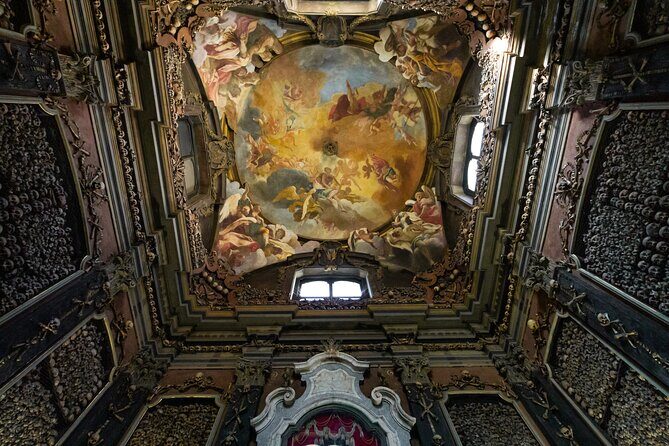
Next up is Santuario di San Bernardino Alle Ossa, where the focus is on San Bernardino. This is the type of place that changes your mental picture of a city, because it’s not the typical “must-see” postcard. The entry here is free, and you’ll have about 15 minutes to take it in.
Then you shift to Ca’ Granda for another 15-minute stop. It’s a big institutional presence in the route, and pairing it right after a smaller, unusual church space gives you a strong contrast. The structure of the tour makes this work: one stop tweaks your perspective, the next shows you Milan in a more formal, civic light.
A small planning consideration: Ca’ Granda is ticketed (admission not included), so factor in that you might need to purchase separately or spend time aligning with access rules. If you’re tight on time later in the day, check your follow-up plans.
Torre Velasca and Piazza Missori: the city’s center with sharp edges

After Ca’ Granda, you reach Torre Velasca, described as the most central skyscraper in Milan. You’ll get about 5 minutes there, which is short, but it’s meant as a quick orientation stop. Milan’s skyline details matter, and this location helps you connect the modern city to the older street pattern around it.
Right after that comes Piazza Missori, where you’ll see the remainings of San Giovanni in Conca Church. Time here is about 10 minutes, and the “remainings” angle is key. You’re not just seeing what’s still standing—you’re learning how Milan layers eras. That’s one reason walking tours like this can be more rewarding than a single landmark visit.
Both Torre Velasca and Piazza Missori are not included for admission, so don’t assume entry is automatic at every photo spot. Some viewpoints and courtyards can still be helpful for photos, but your exact access depends on what the stop requires on the day.
Chiesa di Santa Maria presso San Satiro and the secret-sense effect
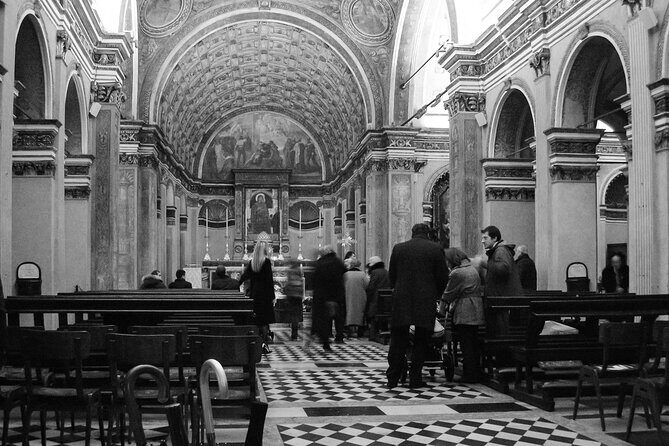
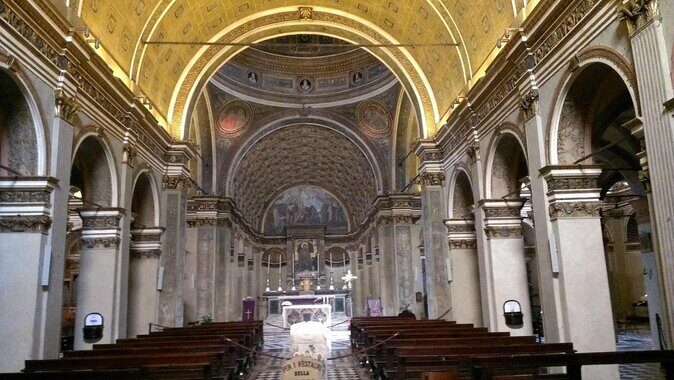
The tour then heads to Chiesa di Santa Maria presso San Satiro, with about 20 minutes on site. This stop is free, which is a win, and it’s also a smart placement in the route. By this point, you’ve had enough contrast (fountain to church to skyline to ruins) that a church stop feels like a reset.
I like that this is one of the longer stops. It gives you time to slow down and notice details you might normally walk past. Even when you’re not inside a museum-style building, churches often reward careful looking.
This is also where the “secret treasures” idea becomes real. You’re not only ticking major attractions; you’re learning how Milan uses smaller spaces to communicate meaning. If you enjoy architecture and how religious buildings reveal city priorities over time, this is a strong mid-tour moment.



Piazza San Sepolcro and Piazza Affari: ancient and money—side by side
At Piazza San Sepolcro, you’ll connect to the old Roman Forum of Mediolanum and the Ambrosiana library. This is a stop that can feel like a time machine, even if you only get about 10 minutes. The value here is not lingering; it’s getting the story so the place clicks when you’re standing there.
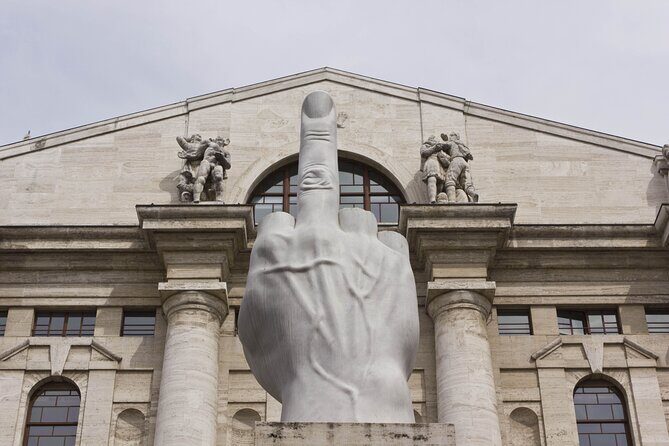
Then the route shifts to Piazza Affari, the business and financial district. You’ll have about 10 minutes there, and one of the most talked-about visuals is a provocative monument—the famous finger referenced in the experience description. It’s a fun cultural contrast: a city that respects ancient roots still likes to comment, sometimes loudly, on modern power.
Piazza Affari is not included for admission, so the main value is your guided context and your time to see the square up close. If you’re a person who likes street-level symbolism, this stop will land well.
Chiesa di San Maurizio al Monastero Maggiore: the Renaissance-style highlight
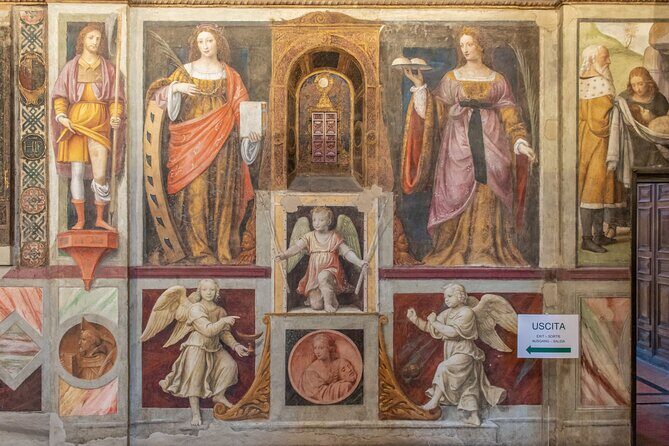
This is one of the tour’s star stops: Chiesa di San Maurizio al Monastero Maggiore, often called the Sistine Chapel of Milan. You’ll spend about 20 minutes, and the admission is free.
This is the perfect kind of stop to anchor the tour’s second half. After ancient forum talk and modern finance imagery, you get pulled back into art-focused detail. Free admission here is a real cost-saver, and it’s a good moment to take your time.
Also, this is where the guide’s storytelling matters most. If you enjoy hearing how art and architecture fit together, you’ll get more from this stop than you would with a quick self-guided look.
As always with churches, check how much space is open to visitors on the day—access rules can shift, and time on site can be affected by ongoing policies.
Piazzale Luigi Cadorna and the walk to Sforzesco Castle
The tour continues to Piazzale Luigi Cadorna, described as the most colourful train station. The time here is about 5 minutes and the admission is not included. Think of it as a quick scene-setting stop that gives you a modern, human side of Milan before you hit the fortress finale.
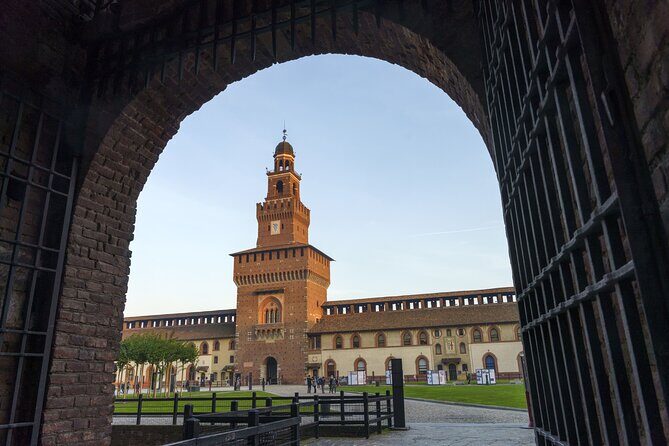
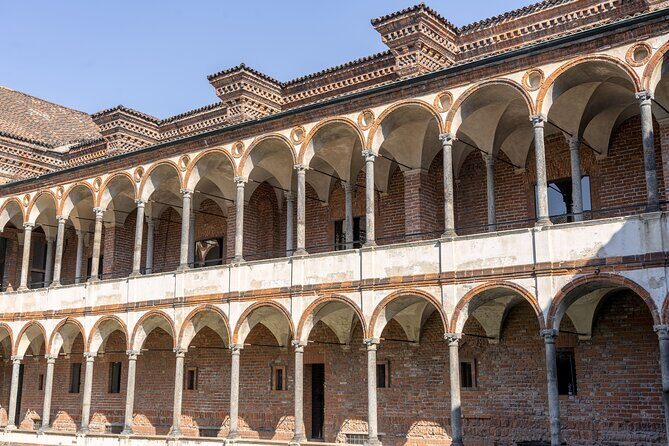
Finally, you end at Castello Sforzesco in three courtyards. The tour includes time to go around and through the three courtyards, and it’s framed as the residential palace of the most legendary Renaissance family. This end point is practical: it’s a strong place to keep exploring on your own after the tour finishes, because you’ll already understand its place in the city.
The Castello stop is free, so it also helps the budget work in your favor. You finish in a location that’s easy to connect to for museums, snacks, and the rest of your Milan day.
Price and value: what you’re paying for, and what to budget extra
The price is $119.21 per person, for about 3 hours with a guide and taxes included. That price can feel high or fair depending on how you plan to visit Milan. What makes it more reasonable here is the structure: you’re getting a guided route that hits multiple major areas in one shot, plus the chance to ask questions as you walk.
Also, it’s offered as a private tour/activity for only your group. That often means less crowd chaos and more personal interaction than a big bus-style format.
Now the budget part you should not ignore: admission isn’t included for many stops. From the route, ticketed stops include Piazza Fontana, Ca’ Granda, Torre Velasca, Piazza Missori, Piazza San Sepolcro, Piazza Affari, and Piazzale Luigi Cadorna. Free stops include Santuario di San Bernardino Alle Ossa, Chiesa di Santa Maria presso San Satiro, Chiesa di San Maurizio al Monastero Maggiore, and Castello Sforzesco.
So, you’re not just paying for the guide—you’re also paying for a mix of guided interpretation plus some on-the-ground ticketing you’ll handle separately. If you hate ticket-line uncertainty, this mix might feel annoying. If you like knowing exactly what you’ll see, it’s usually manageable.
One more value angle: the experience description and guide style put an emphasis on less obvious finds. In real conversations about this route, people highlight that guides can steer you toward top local food stops like a great bakery and gelato, which can be worth more than a few extra minutes at a landmark.
Timing, weather, and how to prepare like a local
You can choose a morning or afternoon tour time, which is handy in Milan where plans often depend on lighting and your next museum reservation. The provided start time listed here is 10:00 am, with the meeting at Piazza Fontana.
This is a walking tour, so wear comfortable shoes. Even though each stop is short, you’ll still cover enough distance that flat, supportive footwear pays off fast.
Weather matters. The experience specifically notes good weather requirements, which usually means rescheduling if conditions are bad. If you’re traveling in shoulder season or winter, plan to keep one backup slot open.
Also, bring a little patience for admission handling. Since several locations require separate tickets, you’ll want to keep your group moving smoothly and be ready to pause for purchases when needed. If you’re the kind of planner who double-checks everything, you’ll feel at ease here.
One note on access: some related underground or restricted areas can be impacted by changing rules. If a stop mentions underground elements, you may find that access depends on current conditions, so don’t treat every possibility as guaranteed.
Should you book this Milan Highlights and Secret Treasures walking tour?
Book it if you want a fast, guided route that links Milan’s ancient traces, Renaissance art, and modern city signals in one coherent walk. It’s a strong choice for first-timers because you end at Castello Sforzesco, a practical launchpad for the rest of your day. It’s also a good fit if you like churches, courtyards, and city symbolism, not just museum checklists.
Skip it if you hate ticket logistics. With multiple stops marked as admission not included, you’ll want to budget for extra entry costs and accept that access rules can shift.
Overall, I’d call this a smart value when you treat it as orientation plus interpretation: you’re buying a guided storyline, and you’re using the route to decide what to revisit later on your own.
FAQ
How long is the Milan Highlights and Secret Treasures walking tour?
It’s approximately 3 hours.
How much does the tour cost?
The price is $119.21 per person.
Where does the tour start and end?
It starts at Piazza Fontana, 20122 Milano MI, Italy, and ends at Sforzesco Castle, Piazza Castello, 20121 Milano MI, Italy.
What time does the tour begin?
The start time listed is 10:00 am.
What languages are available for the guide?
The tour is offered in English, and the guide is available in English, French, and Italian.
Are tickets included for all stops?
No. Some stops are free, and others require admission tickets not included.
Is this a private tour?
Yes. It’s described as a private tour/activity, meaning only your group participates.
Is there mobile ticketing?
Yes, it includes a mobile ticket.
What if the weather is bad?
The tour requires good weather. If it’s canceled due to poor weather, you’ll be offered a different date or a full refund.
Is free cancellation available?
Yes. You can cancel up to 24 hours in advance for a full refund.