REVIEW · MILAN
Milan: Pinacoteca Ambrosiana and San Sepolcro Crypt Ticket
Book on GetYourGuide →Operated by Veneranda Biblioteca Ambrosiana · Bookable on GetYourGuide
Two floors, two time periods in Milan. This combo ticket pairs the Pinacoteca Ambrosiana with the Codex Atlanticus reading room, plus the Crypt of San Sepolcro right afterward. You get major Italian Master paintings and drawings in a calm, museum-sized setting instead of a giant crowd-control circuit.
My favorite part is the library experience. In that 17th-century reading room, the atmosphere makes Leonardo’s ideas feel less like textbook info and more like a working mind at work. I also love how you can take your time here: there’s enough to slow down without needing a full half-day commitment.
The main catch is the crypt. It’s not a wheelchair-friendly space, and the crypt visit is shorter and more architectural than flashy. If you were hoping for a huge, dramatic underground show, plan your mindset for a quieter, historical walk instead.
Key things I’d pencil into your day
- Leonardo and Raphael highlights: the Musician, plus Raphael’s School of Athens cartoon/cartone
- The reading room and Codex Atlanticus: drawings that connect art to science
- Crypt under Piazza San Sepolcro: a medieval hypogean church built into ancient Milan
- A manageable pace: long enough to enjoy, short enough to fit into a tight itinerary
- You can add audio/app guidance: download it and keep listening after
- The crypt has barriers: wheelchair users should plan for Pinacoteca only
In This Review
- Pinacoteca Ambrosiana and San Sepolcro: a smart one-day Milan combo
- Start at Piazza Pio XI 2: walking into the Pinacoteca Ambrosiana experience
- Leonardo, Raphael, Caravaggio: what to seek (and how to pace it)
- The library reading room and Codex Atlanticus drawings
- Crypt of San Sepolcro: walking under the layers of Milan
- Timing: how not to miss the last crypt entry
- Audio/app help and optional add-ons in the crypt
- Value at about $25: why this ticket feels like a smart buy
- Who this tour works best for (and who should reconsider)
- Small practical considerations that actually matter
- Should you book this Milan ticket?
Pinacoteca Ambrosiana and San Sepolcro: a smart one-day Milan combo
Milan can feel like it’s all Duomo selfies and speedy shopping. This ticket gives you a different kind of trip: big-name art, real primary-source thinking in the library, and then a walk under the city.
The best reason to do both stops in one go is the emotional shift. Pinacoteca is about making sense of masterpieces by looking closely. Then the crypt turns your attention to time itself—ancient stones, an underground church, and a physical reminder that the city keeps building over earlier worlds.
And the pricing is hard to argue with. For about $25, you’re buying entry to two separate attractions that are usually listed as separate experiences. The value comes from the pairing: world-class art above ground, and a historical Milan layer below it.
Start at Piazza Pio XI 2: walking into the Pinacoteca Ambrosiana experience
Your day begins at Piazza Pio XI 2, at the Pinacoteca Ambrosiana. The ticket includes admission and lets you skip the ticket line, which matters in Milan when schedules are tight.
From the moment you enter, the museum feels built for looking. Reviews consistently point out that it’s not overwhelming in size, which is a big plus if you don’t want to sprint from room to room. You’ll find a mix of paintings and drawings, and the way works are presented helps you compare styles and eras without feeling lost.
Plan on roughly 1.5 hours for the Pinacoteca. That’s a comfortable window for reading wall text, pausing for the famous works, and not turning yourself into a human stopwatch.
You can also read our reviews of more tours and experiences in Milan
Leonardo, Raphael, Caravaggio: what to seek (and how to pace it)
The Pinacoteca Ambrosiana is one of those Milan museums where the headlines are real. You’re not just getting a few “name-brand” pieces—you’re getting a strong concentration of major Italian and European Masters.
Here are the works you should seriously prioritize:
- Leonardo da Vinci’s Portrait of the Musician
Seeing Leonardo in person is different from seeing a reproduction. The brushwork and the presence of the face make it feel more human than famous. If you only stop for five seconds, you’ll miss what’s special.
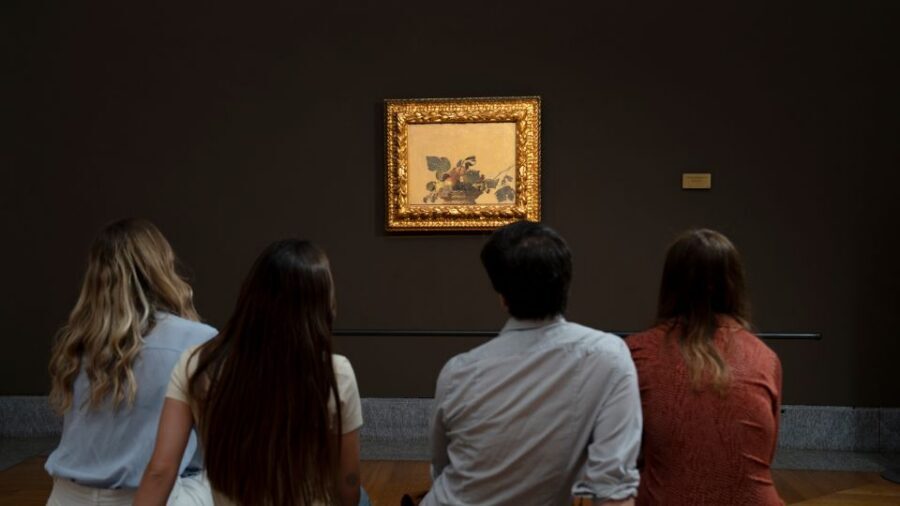
- Caravaggio’s Basket of Fruit
This one hits fast. The lighting and realism bring a sharp, almost immediate drama compared to more polished Renaissance sweetness. It’s a great reset point when you’ve been looking at drawings and religious art for a while.
- Raphael’s School of Athens (the Carton/Cartone)
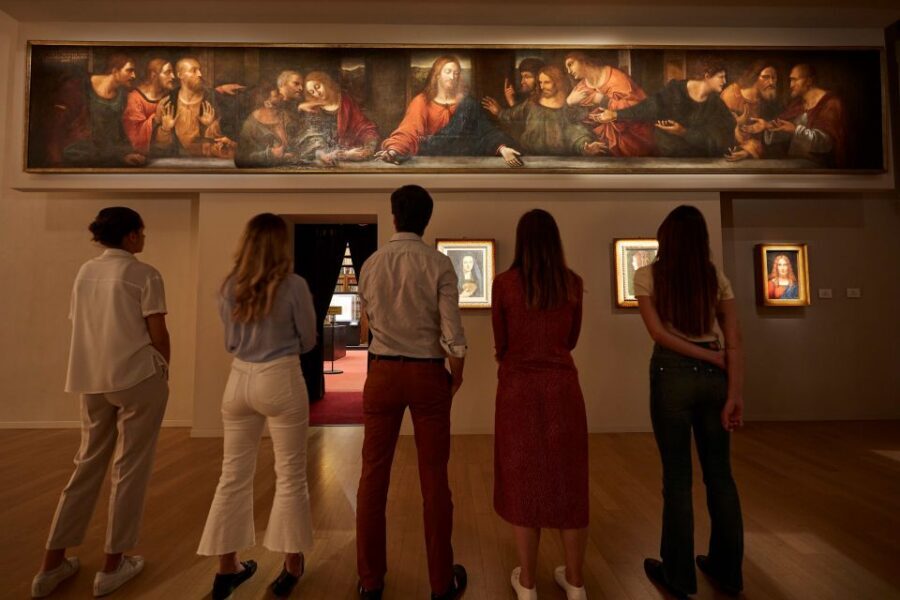
This is one of the biggest “why come” moments. The scale and concept of the cartoon make it feel like a step in the creation process, not just the finished painting. If your eyes like composition, architecture, and faces in motion, you’ll probably want extra time here.
- Brueghel’s Vase of Flowers
This works well after the big figures. It rewards close looking—like a still-life puzzle with color and detail doing most of the talking.
- Other Italian Masters and Flemish painters
The museum also offers additional works by artists you’ll recognize once you’re in front of them. That matters because it keeps your visit from becoming a one-work checklist.
How to pace it: I’d treat the museum as three passes. First pass, find the big names. Second pass, linger where you felt the strongest reaction. Third pass, fill the gaps with nearby rooms so the overall story connects.
The library reading room and Codex Atlanticus drawings
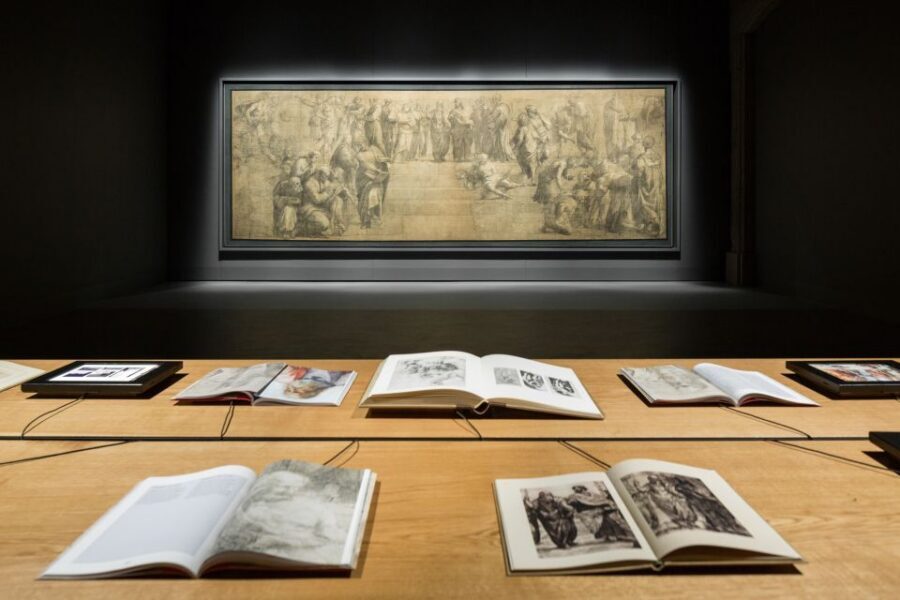
If you’re coming to Milan for art plus ideas, this is the part that makes the ticket feel worth it.
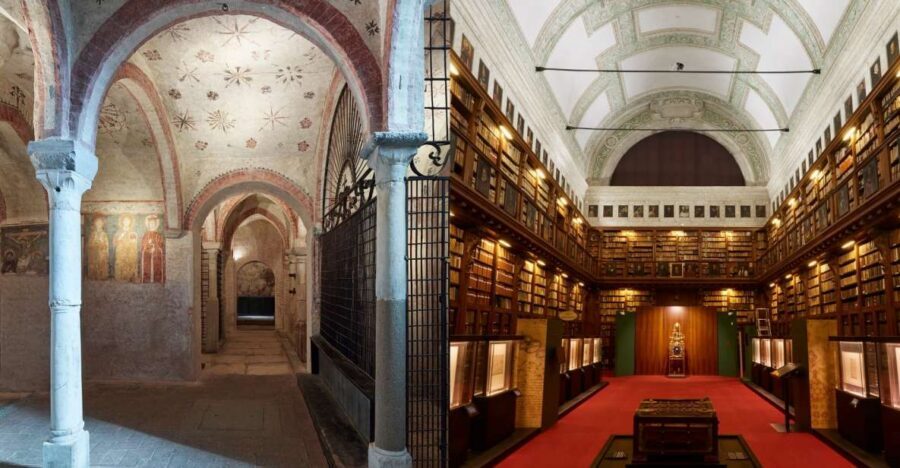
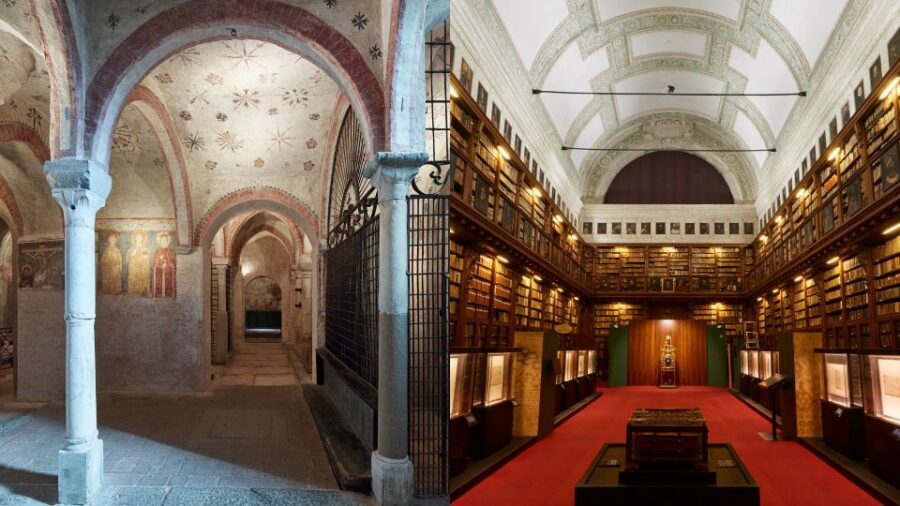
The 17th-century reading room is a calm, serious space, and it changes how you experience what you’re seeing. Instead of only asking what a painting looks like, you’re pushed toward questions like how thinking becomes drawing becomes design.
The star is the Codex Atlanticus exhibition, with original drawings tied to Leonardo. That’s the key detail: you’re not just looking at art; you’re looking at Leonardo’s way of recording observations and turning them into visual thinking.
A detail that makes the library stop especially satisfying is the pacing. People often appreciate that they can stay and contemplate without being rushed. And because the library experience is physically different from the gallery rooms, it breaks up the day in a helpful way.
Crypt of San Sepolcro: walking under the layers of Milan
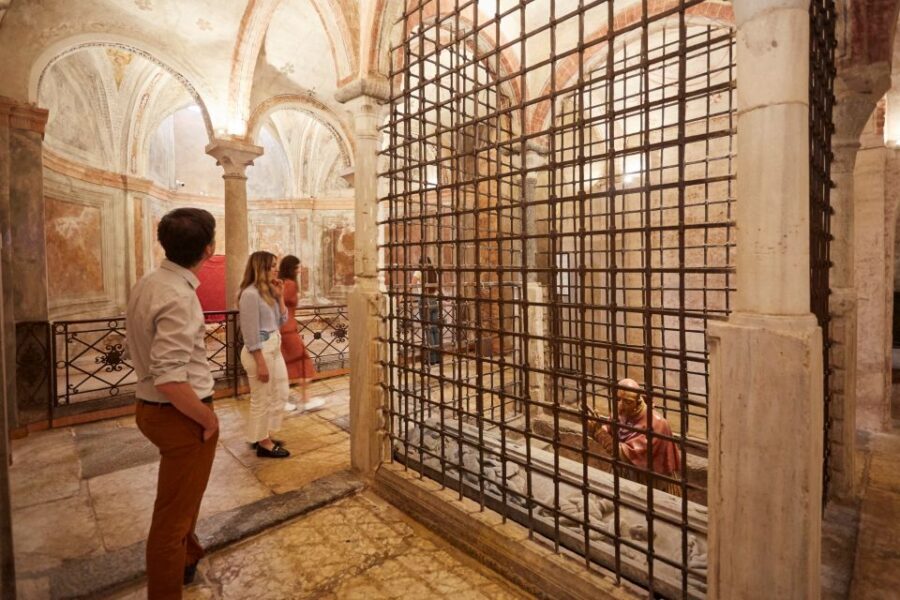
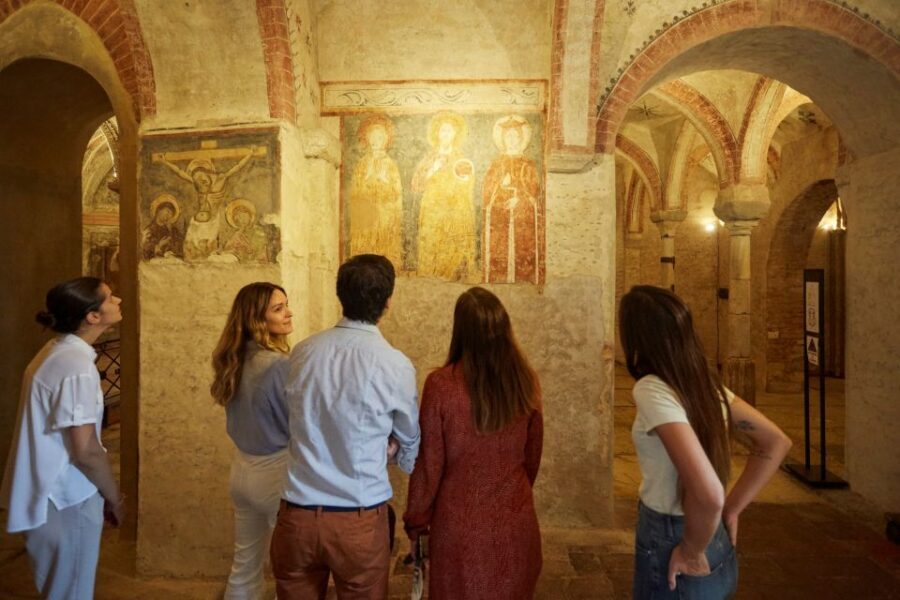
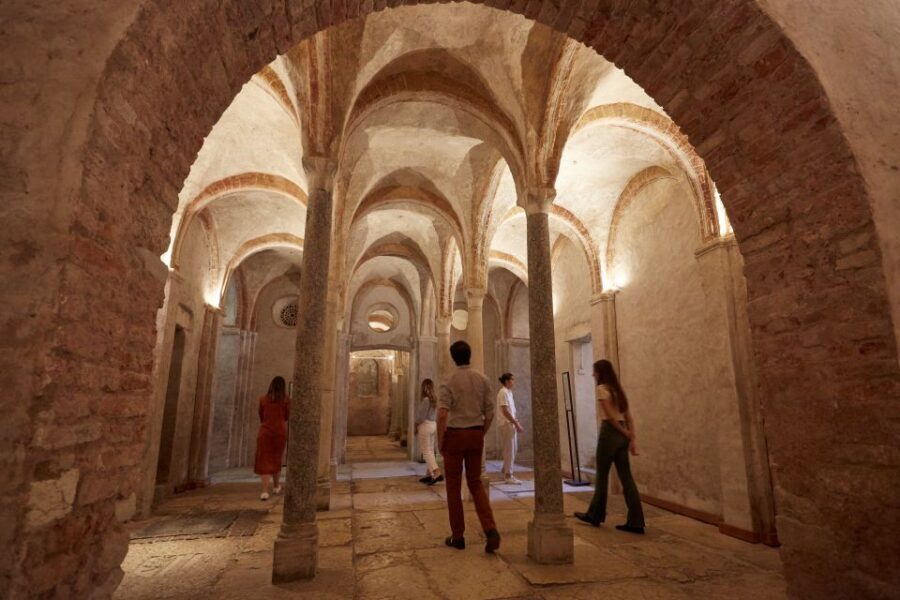
After Pinacoteca, you exit into Piazza San Sepolcro, where the crypt entrance is located. The crypt is a medieval hypogean church, and it’s tied directly to the ancient city beneath your feet.
The most concrete detail to know is that the crypt’s pavement uses ancient stones from Mediolanum, old Milan. That means you’re literally stepping on remnants of the earlier city, which is a nice way to make history feel less abstract.
What to expect: a darker, quieter space. It won’t feel like a museum hall with the same kind of “look at me” lighting. Instead, it’s more of a guided-in-your-own-head experience where the architecture does most of the work.
Also, slow down for the ceiling. One of the repeat themes in feedback is that the crypt feels like it has a hidden wow factor upward. If you only glance at the space and walk through fast, you’ll miss what makes it memorable.
Even though it’s short—plan 30–40 minutes—it works well as the “final chapter” of your Pinacoteca day. The art you saw above ground connects to people who built, studied, and re-used knowledge across centuries. The crypt gives you the city’s physical version of that idea.
Timing: how not to miss the last crypt entry
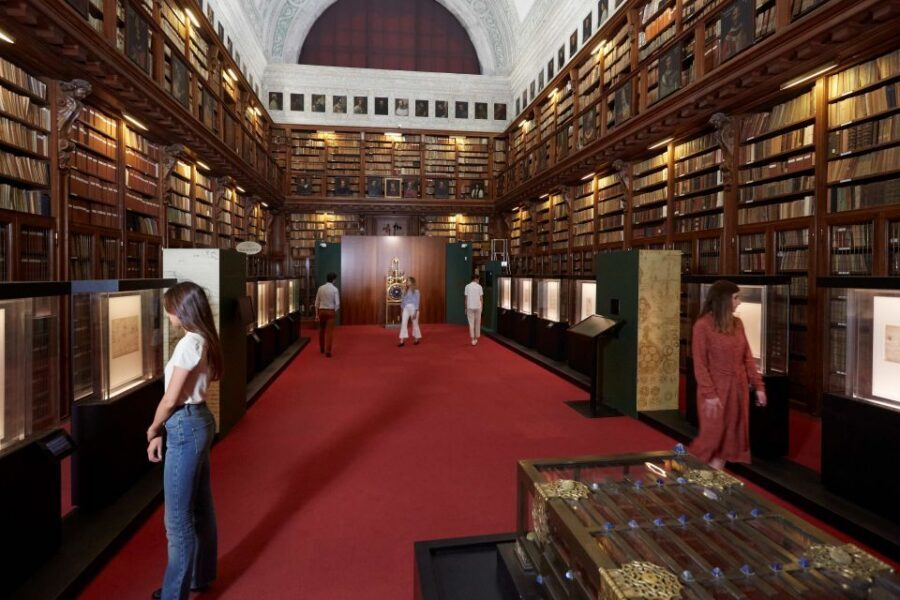
This is the part you should plan for before you arrive.
- Pinacoteca: about 1.5 hours
- Crypt: 30–40 minutes
- Last admission to the crypt: 5:30 PM
- Crypt closes at 6:00 PM
So yes, you want to finish the Pinacoteca with enough buffer to get into the crypt before the final entry window. A good rule: don’t be “almost done” with Pinacoteca at 4:30 PM unless you’re very fast.
If you’re the kind of person who always adds extra time for paintings, keep your schedule conservative. The crypt window is short, and you don’t want your underground stop to turn into a frantic sprint.





Audio/app help and optional add-ons in the crypt
This experience leans on self-paced guidance. The highlights note that you can download the app and listen even after your visit. That’s useful because you can keep the works and context fresh as you move through Milan afterward.
Some people also choose to add an audio guide for a small extra fee. If you like short explanations that keep you from getting lost, it can be worth it. The big upside is control: you decide what to spend time on instead of sticking to a strict group rhythm.
In the crypt, there’s also the possibility of an optional VR experience at the entrance (for a fee). I’d treat this as a “maybe” add-on. If you like tech-enhanced context, it could help the crypt feel less like a small room and more like an entire historical setting.
One practical note: audio can be hit or miss depending on your phone and your patience with app menus. If you’re sensitive to clunky playback, consider bringing headphones you trust and double-checking volume before you start major rooms.
Value at about $25: why this ticket feels like a smart buy
Let’s talk value in a way that’s actually useful.
At $25 per person, you’re not just paying for one museum. You’re buying:
- Pinacoteca Ambrosiana entry, including rooms built around major paintings and the library reading room
- Crypt of San Sepolcro entry, where you get a Milan timeline you can literally walk through
- A skip-the-line benefit, which reduces wasted time
Most Milan art days are expensive once you start stacking tickets. This one is efficient. It’s also efficient emotionally: the museum and the crypt reinforce each other. Art makes you notice human creativity. The crypt makes you notice human continuity—stone reused, cities layered, places rebuilt.
That’s why people consistently rate this experience highly for value. It doesn’t feel like you’re paying for something you’ll barely touch. You can actually enjoy both components without turning it into a rushed checklist.
Who this tour works best for (and who should reconsider)
This ticket fits best if you:
- Love Italian Masters, especially Leonardo and Raphael
- Want a museum day that’s not an all-day marathon
- Prefer quiet concentration to loud group pressure
- Like seeing the process side of art, not just the finished painting
You might want to reconsider if:
- Your mobility needs strong step-free access (the crypt has architectural barriers)
- You’re expecting a huge underground spectacle with lots of time slots and space to wander
- You get annoyed by audio apps that don’t feel perfectly polished
For wheelchair users: the crypt is the main problem. The Pinacoteca itself has many wheelchair-accessible rooms, but the crypt is not fully accessible. If your priorities include full accessibility, you’ll likely want to plan Pinacoteca only.
Small practical considerations that actually matter
A few rules and real-world details can save you stress:
- No backpacks, large bags, luggage, or baby strollers
Keep your carry-on simple. This matters more than you’d think because you don’t want to spend time trying to figure out storage.
- Lighting and room-to-room comfort
The museum presentation is generally well done, but you may find some lighting that doesn’t flatter every painting. If a work looks darker or harder to read, give it a minute from a different angle.
- The crypt is short
The crypt doesn’t take a long time, so if you’re expecting a full second museum, you’ll want to adjust your expectations. That’s also why pairing it with Pinacoteca works so well.
- The crypt can feel small in the layout
When it’s not busy, the experience can feel quick. The upside is you can slow down and look carefully without crowds pressing around you.
Should you book this Milan ticket?
Book it if you want a strong art-and-history day that doesn’t eat your whole schedule. The Raphael School of Athens cartoon, the Codex Atlanticus in the reading room, and the underground walk in the Crypt of San Sepolcro make a surprisingly cohesive pair. At around $25, it’s also priced like a practical option, not a luxury add-on.
I’d pass or at least re-plan if mobility access is your top issue, since the crypt has architectural barriers. And if you’re mainly chasing huge “wow” production values underground, remember: this is more about standing on old stones and reading the space with your eyes.
If your plan includes the Duomo area anyway, this works nicely. It’s close enough that you can layer it into a broader Milan day without turning it into a transportation headache.