REVIEW · MILAN
Milano City Escape: “The tenant of the Duomo”
Book on GetYourGuide →Operated by BelPaese Express · Bookable on GetYourGuide
A mystery near the Duomo keeps you moving. Milano City Escape: The tenant of the Duomo turns central Milan into a phone-driven treasure hunt with riddles, tasks, and a storyline that actually fits the setting. You’re not following a lecturer—you’re figuring things out as you go, with a map and a web app to guide your next move.
What I like most is the simple format: it’s built for a fun walk where art-city exploring turns into a game you can control. I also like the tone of the story—something about an hermit and a shack made from building scraps by the cathedral—because it gives the route a reason to exist, not just a list of stops. One thing to consider: the experience can involve moving between points fairly quickly, and not every “stop” feels like a full riddle.
In This Review
- Key takeaways before you play
- Turning the Duomo area into a playable story
- The self-guided format: how the app keeps things moving
- What the mission is actually about: finding the tenant of the Duomo
- The 3-hour walk: planning your timing and your energy
- Clues that work best when you look carefully
- Where the value shows up: group price and smartphone freedom
- Customer support and real-world usability
- When you’ll enjoy this the most (and when you won’t)
- Practical tips to make the mission feel smooth
- Is it worth $40? A value check that fits your trip style
- Should you book Milano City Escape: The tenant of the Duomo?
- FAQ
- How long is Milano City Escape: The tenant of the Duomo?
- Is the experience guided by a live person?
- What do I need to play?
- What’s included with the ticket?
- What languages is the experience available in?
- When will I receive the game code?
- Can I play at any time after purchase?
- Is it wheelchair accessible?
Key takeaways before you play
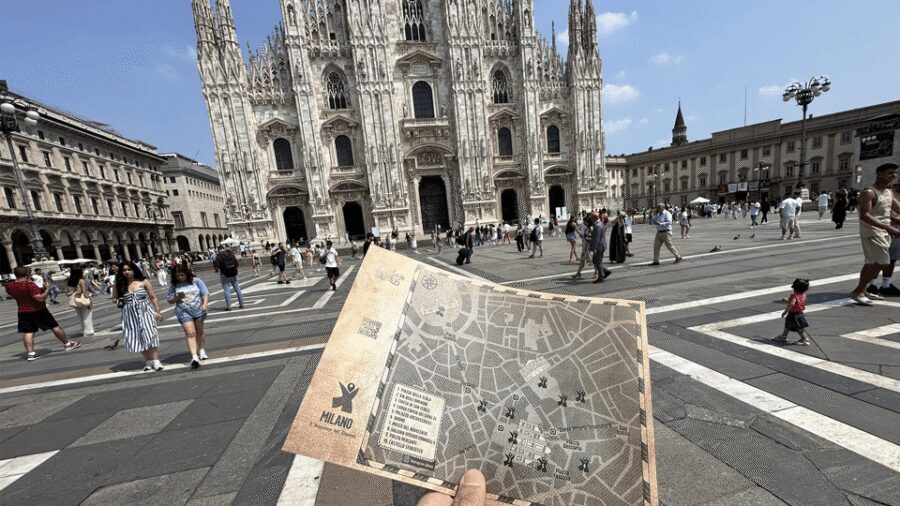
- Self-guided, no guide on site means you won’t wait around for a group schedule
- 3 hours from first activation keeps it punchy and doable for a half-day
- Smartphone + web app + map is the core system, so battery matters
- Duomo-area story hook gives the clues context instead of random trivia
- Clue style can be tricky (like distinguishing footprints vs handprints)
- Route pacing may feel jumpy if you prefer point-to-point strolling
Turning the Duomo area into a playable story
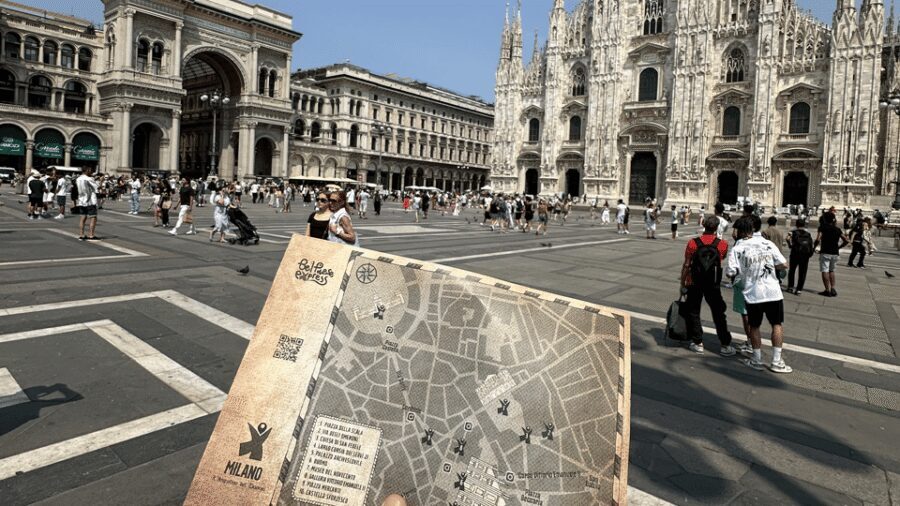
This isn’t a museum-style tour. It’s a city challenge built around the idea that Milan has secrets you can uncover with the right questions. The starting point is strongly tied to the Duomo area—especially the background idea of construction work and the notion of a humble shack built from scraps nearby.
That matters because Milan can feel huge and busy, even if you love it. A game format gives you a path through the noise. Instead of deciding where to go, you’re given a mission flow: solve, move, check the next prompt, and keep going. It’s a way to see the same neighborhoods with less effort and more curiosity.
You can also read our reviews of more city tours in Milan



The self-guided format: how the app keeps things moving
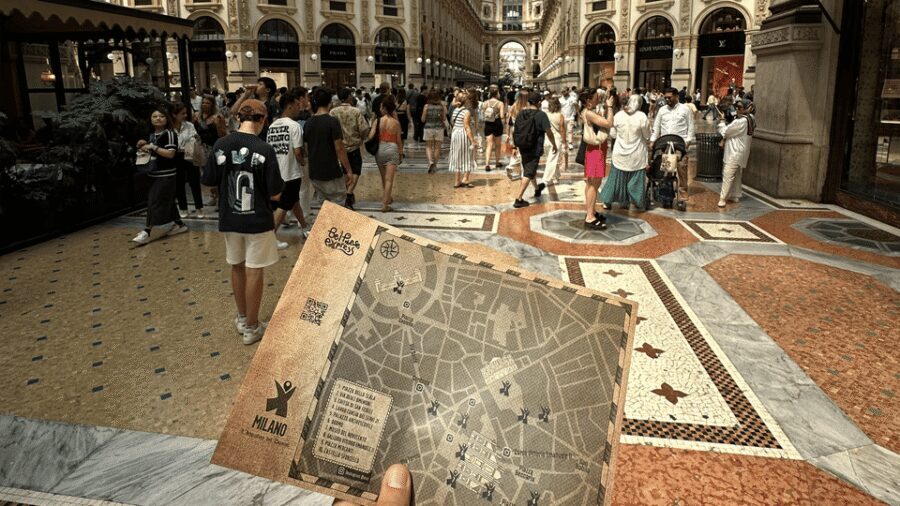
You’ll need your smartphone, plain and simple. The experience is self-guided—no guides, no supervisors trailing behind you. That has two practical effects.
First, you get freedom. If you’re quick at puzzles, you’ll walk faster. If you’re slower (or you’re taking breaks for photos), you can pace yourself and still stay within the 3-hour window. Second, you’re fully responsible for your progress. If you miss a step or you get stuck on a clue, there’s no in-person person to rescue you instantly—so it helps to move carefully and read prompts twice.
The bundle includes web app access, a map, and a final prize. The map is especially important because treasure hunts live or die by wayfinding. Even if the clues are good, a confusing route can kill the vibe. Here, the app’s mapping support is the main tool to connect each clue point into a coherent walk.
What the mission is actually about: finding the tenant of the Duomo
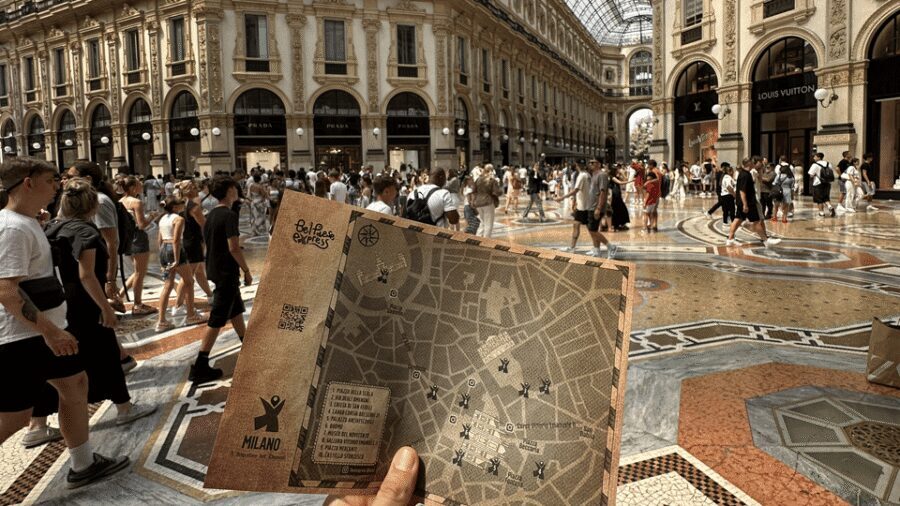
The story is the fun part you can carry while walking. During construction near Milan Cathedral, an hermit built a humble shack from building scraps right by the Duomo. Then, one night, someone destroyed it—and now there’s no trace of that poor man.
Your job is to follow the mission prompts to find what’s left of the story. Expect the typical treasure-hunt rhythm: riddle-type questions, location prompts, and “go look for this” instructions that connect to the narrative. The experience markets it as something like a 2.0 treasure hunt for “art cities and Italian villages”—but in Milan, that means you’ll be using city details, not just postcard landmarks.
If you like detective games, this setup clicks. You’re not just sightseeing. You’re scanning, comparing, and making sense of what you find.
The 3-hour walk: planning your timing and your energy

The experience is valid for 3 hours from first activation. That’s a helpful constraint because it means you can treat it like a structured half-day activity instead of an open-ended commitment.
Still, manage your expectations about pace. One piece of feedback I’d take seriously is that the route can feel like it requires travel between far-apart points instead of a relaxed sequence. If you prefer a slow stroll where you can linger at each spot, you might feel the pressure to keep moving to stay on track.
Here’s a practical way to handle that: start earlier rather than later, and don’t activate the game too close to your next reservation. If your mission starts late, you may feel rushed when you’re trying to finish within the 3-hour window.
Clues that work best when you look carefully
Treasure hunts sound easy until you hit a clue that depends on precise visual cues. In feedback from a German reviewer, there was confusion around clue wording—specifically the difference between footprints and handprints. That’s a great example of what you should watch for.
So when you’re playing, take a second before you move on:
- Read the clue prompt and look for the exact kind of evidence it references.
- If something looks similar, check again. Prints are a classic trap.
- If you’re not sure, try one interpretation first, then compare it with what the next prompt demands.
Also, not every “stop” may feel like a full puzzle. Some moments can be more like a direction to go to a place and then observe what’s there. That doesn’t make the game bad—it just shifts what kind of activity it is. Some people want only brain-teasers; others enjoy a mix of puzzles and exploration. This one leans toward exploration with puzzle elements.






Where the value shows up: group price and smartphone freedom

Let’s talk money in a way that helps you decide. It costs $40 per group up to 4 for about 3 hours. That pricing structure is why it can be a strong deal: you’re paying for the experience setup, not for individual tickets. If you’re traveling as a couple, family, or a small friend group, the per-person cost drops quickly.
The value gets even better because you don’t need extra add-ons. You already bring the main tool—your smartphone—and the game provides access, a map, and the ending prize. Compare that to traditional tours where you pay more and still spend time waiting for a group to stay together.
That said, if you’re traveling solo or you’ll be the only one interested in puzzles, you might feel like it’s less efficient. The format is best when at least two people can split tasks—one reads clue text, the other scans the area.
Customer support and real-world usability

One Italian review mentioned customer service was very helpful when needed. That’s a big deal for self-guided games, because the only problems that matter are the ones that break the flow—like a code issue, app access confusion, or trouble understanding a clue step.
You should expect the game to run smoothly, but it’s smart to remember: this is app-based. If your phone battery is low or your connection is unstable, it can slow you down. Bringing a charger or a power bank is a small step that protects your fun.
When you’ll enjoy this the most (and when you won’t)

This experience fits best if you like:
- Interactive walking where you do something instead of just looking
- Couples and families who enjoy light problem-solving together
- People who want flexibility because there’s no live guide schedule
- Anyone who’s already seen some major Milan sights and wants a different way to explore the center
It’s less ideal if you:
- Hate puzzles or don’t want to stop and think
- Need step-by-step directions with no uncertainty
- Prefer routes that feel like a calm straight line with minimal walking pressure
Also, because the clues can involve fine details, you’ll have more fun if you’re willing to slow down for a moment and look closely rather than rushing forward.
Practical tips to make the mission feel smooth
Here are the small choices that can make a big difference.
Bring enough battery. The whole experience depends on your phone and the web app.
Give yourself a buffer. The provider suggests you book at least 2 hours before you plan to play. That’s not just for scheduling—it can help you avoid last-minute tech problems.
Don’t wait to start. The game code is sent within 24 hours of the start of the experience. If you’re planning a busy day, start early enough that you’re not stuck waiting for the code.
Read clues twice. If you’re scanning for prints or small markers, speed leads to mistakes.
Expect some movement between points. If you hate hopping around, plan for faster walking pace than a typical slow sightseeing stroll.
Is it worth $40? A value check that fits your trip style
Price alone isn’t the point. The real question is: do you want this kind of activity?
If you want a standard guided walk, you’ll probably prefer something with a human guide interpreting the city for you. But if you want a structured game that makes you walk and look, this can be a great fit—especially for groups up to 4.
The biggest value drivers are:
- Self-guided freedom (you don’t wait for a guide or a pacing script)
- Group pricing (shared cost across up to four people)
- Smartphone + map setup (less logistical planning on your side)
- 3-hour constraint (easy to fit into a Milan day)
If, on the other hand, you dislike treasure hunts and you only tolerate them as a novelty, you may find the “route-jumpiness” and the occasional clue ambiguity frustrating.
Should you book Milano City Escape: The tenant of the Duomo?
Yes, I think you should book it if you’re traveling with people who enjoy solving small mysteries and you want a fun, low-pressure way to explore Milan’s center without a formal guide leading you step-by-step.
I’d pass or swap to a different style of activity if you strongly prefer slow, scenic point-to-point wandering, or if puzzle details feel like work. The experience is built to move. When it clicks, it’s playful and satisfying. When it doesn’t, it’s mainly because you wanted a calmer walk or clearer “this is the answer” clues.
FAQ
How long is Milano City Escape: The tenant of the Duomo?
The experience is valid for 3 hours from first activation.
Is the experience guided by a live person?
No. It’s self-guided, without the presence of guides or supervisors.
What do I need to play?
You’ll need a smartphone to access the mission through the web app.
What’s included with the ticket?
Included items are web app access, a map, and a final prize.
What languages is the experience available in?
It’s available in ITA and ENG.
When will I receive the game code?
You’ll receive the game code within 24 hours of the start of the experience.
Can I play at any time after purchase?
You can buy today and play whenever you want.
Is it wheelchair accessible?
Yes, the experience is wheelchair accessible.