REVIEW · MILAN
Milano: Degustazione caffè di qualità dalla moka al filtro
Book on GetYourGuide →Operated by Il Cafetero Specialty Coffee · Bookable on GetYourGuide
Coffee tastes different when you see the brew.
This Milan experience is built like a guided tasting maze: you start with coffee origins and end by comparing how three brewing methods change what you taste. It is not about drinking faster. It is about learning what each cup is doing and why.
I love the single-origin focus, with three different coffees chosen from producers on African, South American, and Asian continents. I also like the hands-on comparison of Moka, V60, and Chemex—so you can taste differences instead of guessing what happened in the cup.
One possible consideration: since you are tasting coffee on its own, if you mostly drink milk-based coffee, the first sip can feel like a bigger jump than you expect. If you show up curious, though, it clicks quickly.
In This Review
- Key highlights you will care about
- A 2-hour coffee reset in Milan
- The single-origin plan: why it beats random sampling
- Moka: Italian tradition, and how technique changes the cup
- V60: understanding filter coffee without the confusion
- Chemex: design you can recognize, aroma you can taste
- Water breaks and dessert pacing that keeps your palate honest
- Learn it for home: what you should try next
- Price and value: does $35 make sense?
- Group size, languages, and who this fits best
- Should you book this Milan coffee tasting?
- FAQ
- How long is the coffee tasting in Milan?
- How much does it cost per person?
- What coffee and brewing methods are included?
- Is dessert included, and is there a vegan option?
- How big is the group?
- What languages are available for the instructor?
- Can I cancel for a full refund?
- Is there a way to pay later?
Key highlights you will care about
- Three single origins, one tasting flow so you learn what changes when you change the coffee
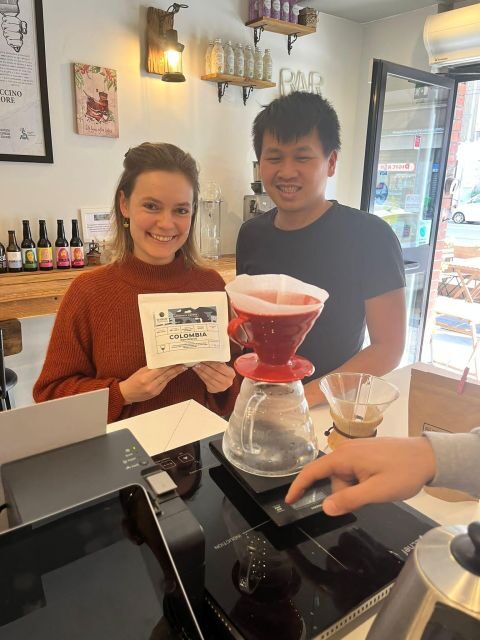
- Moka, V60, and Chemex side-by-side to connect method to taste
- Water breaks between tastings that help your palate reset
- Dessert included, with a vegan option to keep the experience enjoyable
- Small group capped at 6 for more back-and-forth questions
- Home tips you can actually use to repeat the process later
A 2-hour coffee reset in Milan
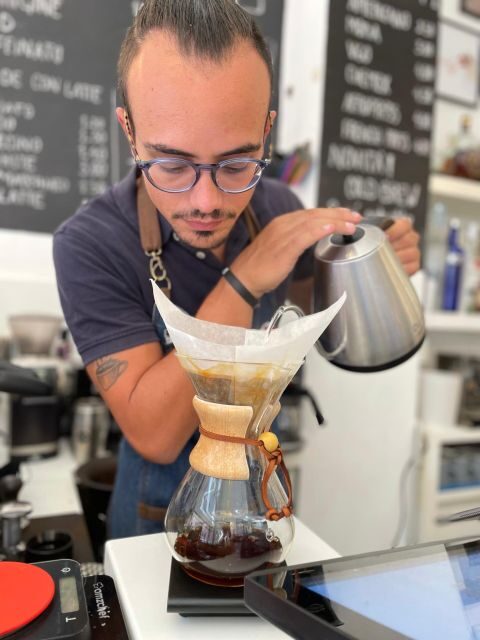
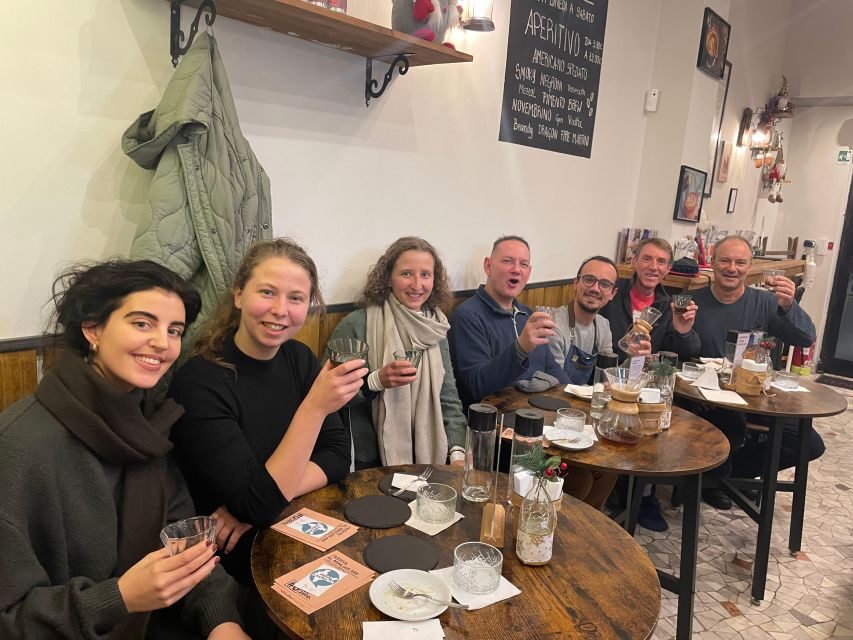
In Milan, you can find plenty of coffee bars. This one is different. You sit down for a tight, two-hour learning session that walks you from origin to extraction—without turning it into a lecture. The goal is simple: by the time you finish, you should be able to taste the difference in the cup and explain why it happened.
I like that the hosts (Ivone and Federico) keep things friendly and human. Their vibe matters, because coffee tasting can feel intimidating if you think you need a perfect palate. You do not. What you need is attention, and a willingness to taste without defaulting to milk, sugar, or habit.
The format also makes the whole thing feel approachable. You will go method by method—Moka first, then V60, then Chemex—so your brain gets a clean comparison. And with water between tastings, you are not stuck trying to judge Coffee #2 with Coffee #1 still coating your tongue.
You can also read our reviews of more tours and experiences in Milan.



The single-origin plan: why it beats random sampling
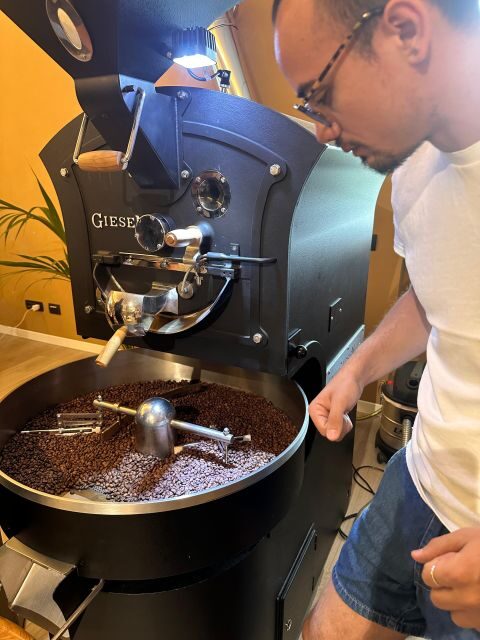
The tasting starts with something that sounds straightforward but actually helps a lot: you try three single origins. That means each coffee comes from specific producers or plantations, and the exact selection depends on seasonality and availability.
Why this matters for you: single-origin coffee is where you notice patterns. If you tasted only blends, you might get overwhelmed by everything happening at once. Here, you can focus on the coffee itself first—then watch how the brew method changes the experience.
You are also sampling across continents (Africa, South America, and Asia). Even if you do not know the origin details at first, you can still compare the overall cup character and how it responds to each brewing style. That’s the kind of learning that sticks, because it turns taste into something you can remember next time you shop for beans.
And yes, you will also get sweets or biscuits during the tasting, including vegan and gluten-free options. That is not just a nice extra. It helps keep your energy stable while you taste three different extractions back to back.
Moka: Italian tradition, and how technique changes the cup
Moka is the symbolic Italian coffee method in this session. You start here for a reason: it anchors you in tradition before you jump into more modern extraction approaches.
What you will do is not just drink it. You will learn how Moka has changed over time, and how to use it to bring out the coffee’s aromatic and natural qualities. The key idea for you is that the method is not just a tool—it shapes the cup. And Moka has its own personality because of the way it extracts.
A practical benefit: once you understand what you are doing with Moka (at least at the concept level), you can stop treating it like a black box that only works when someone else is in the kitchen. Instead, you can recognize the impact of technique and make small changes with intent.
Also, because you are tasting single origins, you will notice whether the coffee stays itself through the Moka method—or whether the method pushes it into a different direction. That’s exactly the comparison you want on a first coffee deepening experience.
V60: understanding filter coffee without the confusion
Next up is the V60, one of the best-known pour-over methods loved by baristas and showing up in more Italian coffee shops. This is the part where the tasting gets extra useful if you care about making better coffee at home.
The focus here is comparison and clarity: you will understand the difference between American coffee preparation and filter coffee preparation. That line matters because a lot of people think they are similar. In practice, the results can land very differently, and the reasons are tied to method and how extraction happens.
With V60, you will also learn preparation techniques and get tips for implementing them later at home. You do not need to own a V60 right away to benefit. Even if you use something else, you can carry the lessons about what makes filter coffee feel distinct.
And because you tasted the same types of single origins earlier, this is not a random taste test. You can match the coffee identity against the new extraction style. That is how you build real understanding instead of just collecting new favorite coffees.
Chemex: design you can recognize, aroma you can taste
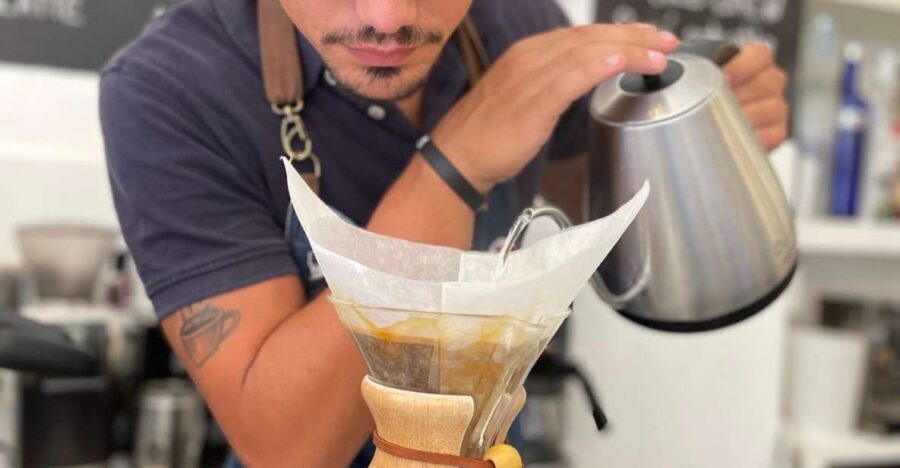
Then comes the Chemex. It is easy to spot by design, and that’s part of the story here: it gives you a visual cue for the experience you are about to taste.
In this session, the Chemex step is described as a way to taste a very aromatic coffee. More important than the word aromatic is the method comparison: you can learn how the extraction changes what reaches your palate.
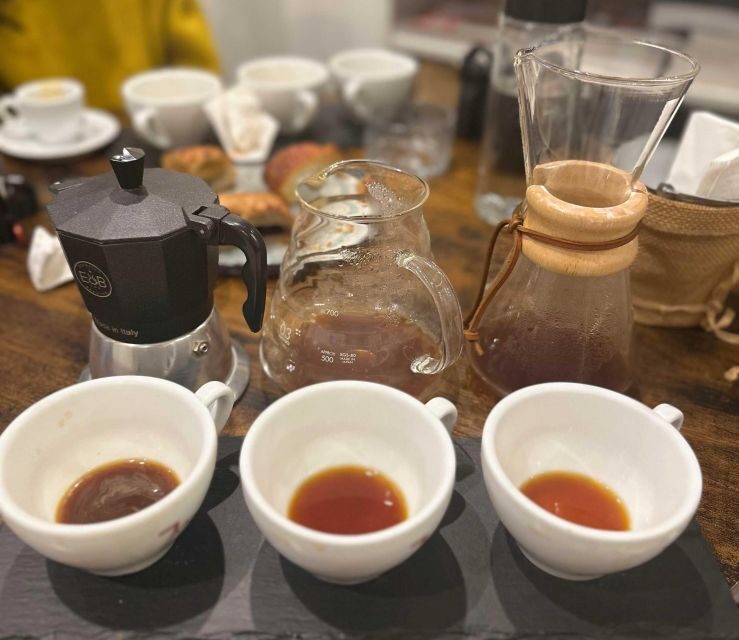
At this stage, you are no longer learning coffee basics from scratch. You are running a full comparison across the three methods:
- Moka as the Italian tradition anchor
- V60 as the filter-focused pour-over lens
- Chemex as the aromatic, design-driven extraction experience
If you pay attention here, you will start recognizing patterns, like when a method makes the coffee feel more present versus when it feels more defined or clean. The hosts guide you through what to look for so you are not just guessing.




Water breaks and dessert pacing that keeps your palate honest
A small detail that makes a big difference: you get a lot of water between one coffee and another. That’s not just for comfort. Water resets your palate so Coffee #3 does not get judged through the flavor memory of Coffee #2.
This matters because coffee tasting can turn into a blur if you skip resets. With water breaks, you can focus on the differences the moment they show up. The tasting becomes a sequence you can follow, not a pile of cups you try to compare later.
And then there is dessert: sweets or biscuits of your choice are included, with vegan options available. It gives you a normal-life break in the middle of the learning. You do not leave feeling deprived or over-serious.
Learn it for home: what you should try next
The best part of a tasting is what you can repeat. This experience includes tips for implementing the brewing methods at home, so the value is not trapped in the two-hour session.
From what you learn across the three methods, you should come away with a simple habit: change one variable at a time. When you compare Moka to V60 to Chemex with the same coffee, you see how method drives extraction and flavor. That concept is something you can apply to your kitchen without needing to copy exact recipes.
You will also understand the purpose behind each method:
- Moka as a traditional Italian approach with its own behavior
- V60 as a filter pour-over style built for method awareness
- Chemex as an aromatic method you can recognize by design
If you already brew at home, you will likely notice where you are guessing. If you do not, you will probably feel motivated to pick a single method and practice it until it feels consistent.
And there is a practical perk at the end: a special discount on coffee beans. If you tasted coffees that actually made sense to you, that discount turns the experience into a chance to keep going after you get home.
Price and value: does $35 make sense?
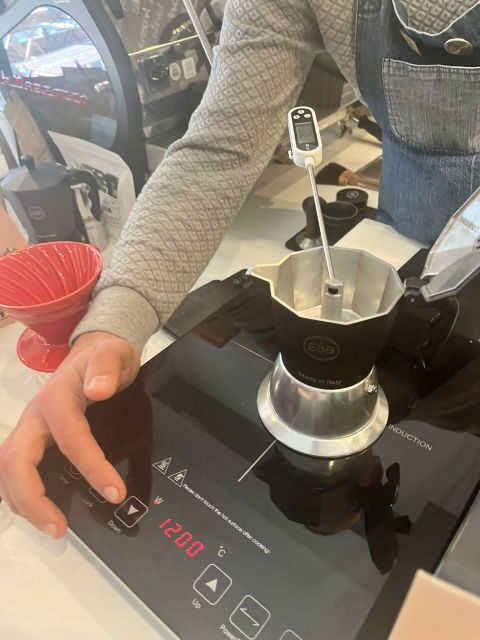
At about $35 per person for a 2-hour session, this is priced in the sweet spot for specialty experiences that include tasting, teaching, and food. You are not just paying for coffee drinks. You are paying for:
- three single-origin coffees
- three extraction methods (Moka, V60, Chemex)
- water between tastings
- sweets or biscuits with vegan options
- home-brewing tips
- a discount on beans afterward
So the value is not only about the cost of coffee. It is about the conversion from taste to skill. Many coffee workshops charge more and still leave you with vague memories. Here, the structure is clear: origin and method, side-by-side, in a small group.
Also, small-group format matters. With a limit of 6 participants, you are more likely to get your questions answered in the moment. That improves your learning quality, which is where the money actually pays off.
Group size, languages, and who this fits best
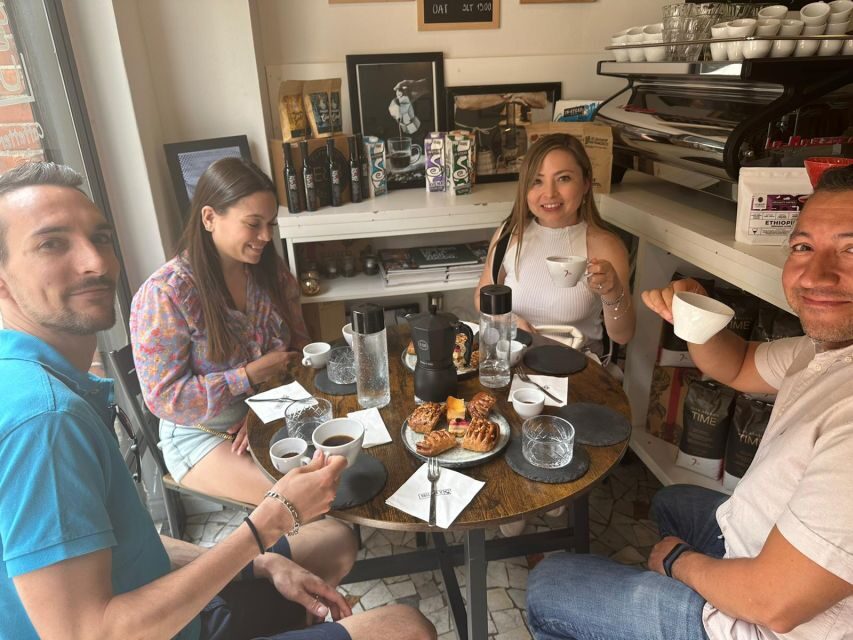
This is run as a small group capped at 6, with an instructor speaking English, Italian, and Spanish. That makes it easier if you want to ask questions rather than just listen to a one-way talk.
Who I think should book it:
- Coffee lovers who only drink espresso-style or milk drinks and want to learn what coffee tastes like on its own
- Beginners who feel they do not know enough and want a friendly, guided way to start
- People planning their Milan trip and want a memorable food-and-drink experience beyond the usual walking-tour routine
- Anyone who actually wants to brew at home afterward, not just collect photos
Who might hesitate:
- If you dislike tasting coffee without milk and sugar, you could feel a little out of your comfort zone at first.
- If you want a long, slow, cafe-style experience, two hours can feel tight. This is meant to be focused.
The good news is the tone is not snobby. The hosts keep it friendly and explain things in a way that helps you follow along—even if you are starting from scratch.
Should you book this Milan coffee tasting?
I would book it if you want a fast, structured way to level up your coffee understanding. The combo of single-origin tastings plus three brewing methods gives you something most coffee experiences skip: a real comparison you can remember. Add in water resets, dessert with vegan choice, and the chance to pick up beans afterward with a discount, and you get a solid value package.
You should probably skip it only if you are determined to stick to milk-based coffee and do not want to taste black coffee on its own. Otherwise, this is one of those rare activities that turns a small habit—how you brew—into real knowledge you can use again at home.
FAQ
How long is the coffee tasting in Milan?
The experience lasts 2 hours.
How much does it cost per person?
The price is $35 per person.
What coffee and brewing methods are included?
You taste three single origin coffees, brewed using Moka, V60, and Chemex.
Is dessert included, and is there a vegan option?
Yes. Sweets or biscuits are included, and there is a vegan option.
How big is the group?
The group is small, limited to 6 participants.
What languages are available for the instructor?
The instructor speaks English, Italian, and Spanish.
Can I cancel for a full refund?
You can cancel up to 24 hours in advance for a full refund.
Is there a way to pay later?
Yes. You can reserve now & pay later.