REVIEW · MILAN
Milano Walking Tour with Audio and Written Guide by a Local
Book on Viator →Operated by Walking Cap · Bookable on Viator
Milan can feel like a lot at once, so this self-paced plan helps you pace it right. You get an audio guide plus a digital written guide for one main route through the city’s most famous sights, with practical notes along the way.
I particularly like the mix of stops: you move from big-name icons like Castello Sforzesco and the Duomo to quieter, stranger places like San Maurizio and San Bernardino. The other thing I like is the built-in value-add—food tips and local restaurant advice at the end—so your day ends with something more than just sightseeing photos.
One drawback to keep in mind: the Duomo ticket isn’t included, and the digital guide needs a smartphone with internet to work properly.
In This Review
- Key takeaways before you go
- Value and practical reality: what this tour is really like
- Price and logistics: how much it costs once you’re there
- How the walk fits together (start to finish)
- Stop-by-stop: Castello Sforzesco to Piazza della Scala
- Stop 1: Castello Sforzesco (about 25 minutes)
- Stop 2: Santa Maria delle Grazie (about 25 minutes)
- Stop 3: Basilica di Sant’Ambrogio (about 25 minutes)
- Stop 4: Chiesa di San Maurizio al Monastero Maggiore (about 20 minutes)
- Stop 5: Duomo di Milano (about 1 hour 30 minutes)
- Stop 6: Santuario di San Bernardino alle Ossa (about 20 minutes)
- Stop 7: Galleria Vittorio Emanuele II (about 15 minutes)
- Stop 8: Piazza della Scala (about 15 minutes)
- What makes the guide part worth it (audio, text, and local tips)
- When you should be careful: the one device-dependent piece
- Who this suits best
- Should you book this Milan walking route?
- FAQ
- How long is the Milano Walking Tour with Audio and Written Guide?
- What does the tour cost?
- Which languages are available?
- Do I need to buy tickets for the stops?
- Do I need internet on my phone?
- Where does the tour start and end?
Key takeaways before you go
- Audio + text in English and multiple other languages so you can follow without guesswork
- All stops are free except the Duomo, which makes budgeting simpler than many guided days
- Ends at Piazza della Scala, right where you can reset and grab a solid meal near the center
- Smartphone-required digital access, so plan to have data or reliable Wi‑Fi
- Designed for real walking time (4 to 5 hours) without cramming every museum inside
Value and practical reality: what this tour is really like
This is not a sit-in-a-bus kind of Milan experience. It’s a structured walking route with a digital guide you access on your phone, plus an audio layer you can play through your speakers or headphones. That matters because Milan rewards people who slow down just enough to read details, look up at facades, and walk at human speed.
The price is also refreshingly low: $7.83 per person for a guided route that covers multiple major landmarks for about 4 to 5 hours. The math works out because most stops don’t charge an admission fee—only the Duomo can involve a paid ticket on your end. If you’re trying to see the core Milan experience without paying for multiple separate paid entrances, this kind of route can be a smart use of your time.
You should go into it with one clear mindset: you’re following a plan, not joining a live escort at every corner. That’s a plus if you like flexibility, but it also means you’ll need to be a little responsible with your phone and attention. If you hate dealing with apps, internet access, or device battery life, pick a different style of tour.
You can also read our reviews of more walking tours in Milan

Price and logistics: how much it costs once you’re there
Base price aside, here’s the part that can change your final day: the Duomo admission ticket. The guide notes that it’s not mandatory, but it’s priced from 6€ to 30€ depending on what you choose to do. That’s a wide range, so I’d treat the Duomo like this:
- If you mostly want the exterior views and the main cathedral area, you may be fine skipping paid access.
- If you want a specific paid area inside or a more elevated view, you’ll likely pay for that add-on separately.
Everything else on the route is listed as free entry. That’s rare for a lineup this famous, and it helps keep the day from ballooning.
Also note the timing shape of the day. The route gives you short visits—often 20 to 25 minutes—then gives Duomo a long block (about 1 hour 30 minutes). That’s smart. The Duomo deserves it, and you don’t want to speed through it like a checklist item.
Finally, the group size is capped at 99 travelers, and the meeting point is easy to find. That cap mostly matters for organization around the digital access and route flow; in practice, you’ll experience it like a self-guided walk.
How the walk fits together (start to finish)
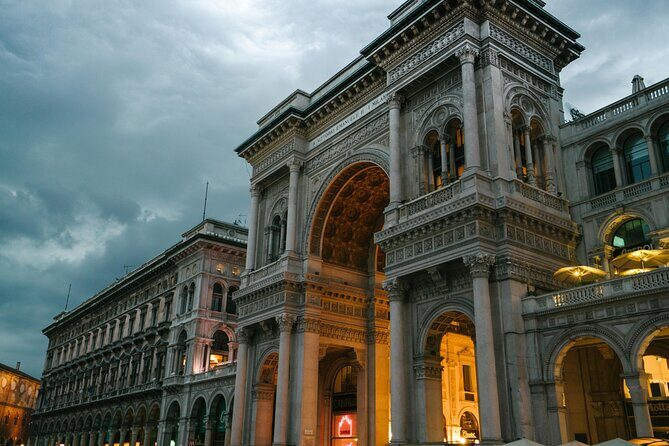
You begin at Sforzesco Castle, Piazza Castello. The tour ends at Piazza della Scala. That matters because Piazza della Scala sits close to the Duomo area, so you’re finishing your day near more sights and (best of all) places to eat.
The route is built like a gentle arc through central Milan. You start in the Sforza zone, head toward one of the city’s most iconic church landmarks, then move into Romanesque and Renaissance highlights, and finally end by working your way to the Duomo and the theatre square area.
Even if you wander a little, the guide is structured enough that you can correct your direction quickly. When a day in Milan feels chaotic, having a clear walking spine helps you get oriented fast.
Stop-by-stop: Castello Sforzesco to Piazza della Scala
Stop 1: Castello Sforzesco (about 25 minutes)
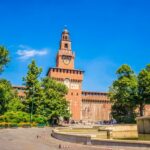
Castello Sforzesco is Milan’s heavyweight castle. It’s not just a pretty fortress—it’s a layered monument with centuries of building, destruction, and renovation. That long timeline is what makes the area worth slowing down for.
Practical value: this is a great first stop because it sets the tone for how Milan changed over time. You’ll also get a central landmark that’s easy to use as a mental map anchor. If your feet are still waking up, this is a comfortable place to start.
You can also read our reviews of more guided tours in Milan


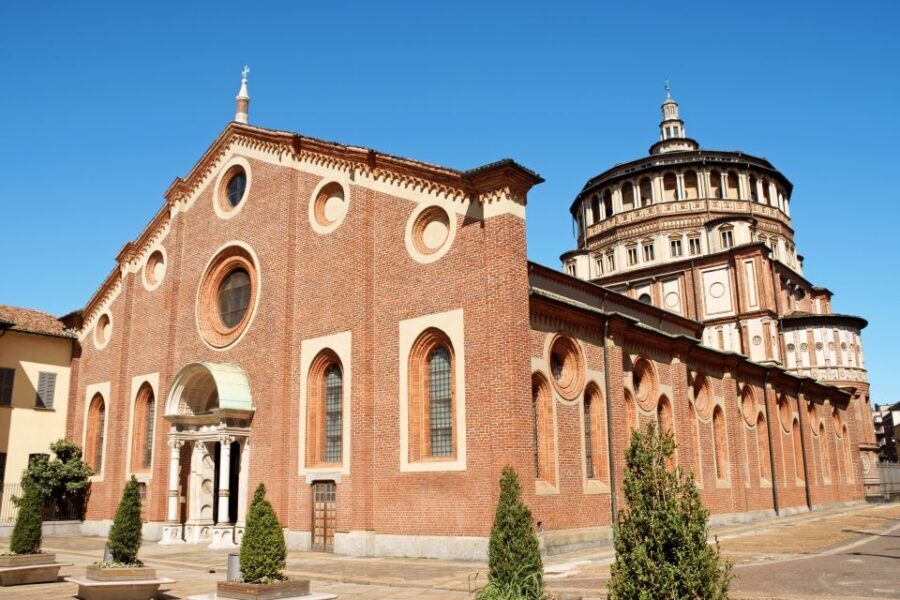
Stop 2: Santa Maria delle Grazie (about 25 minutes)
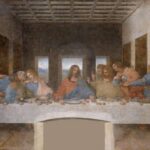
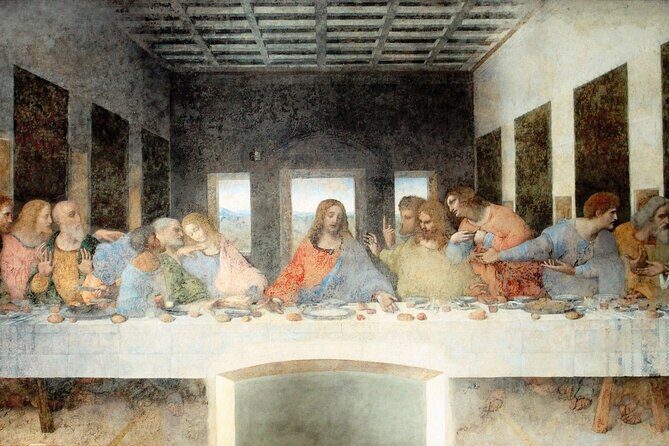
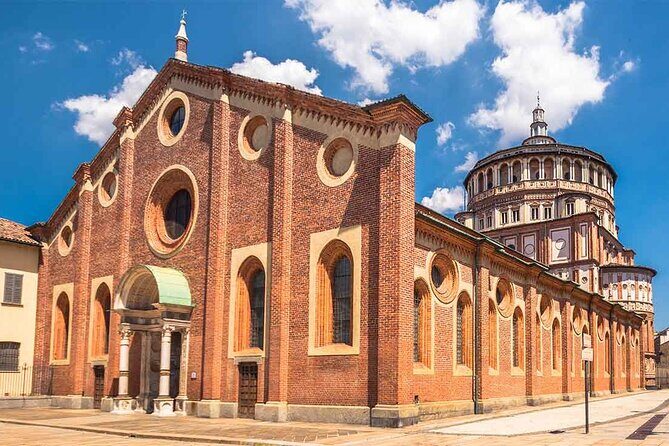
Santa Maria delle Grazie is famous for its architectural style and for being tied to Leonardo da Vinci. The refectory is where the Last Supper exists, and the guide emphasizes one key reality: to actually see the Last Supper, you need to book about a week in advance.
Here’s the best way to plan: treat this stop as your architecture-and-history moment. If you’ve booked the Last Supper viewing separately, you’ll feel organized. If you haven’t, don’t let that stop you from appreciating the church area and the story.
The route being listed as free admission helps you visit without paying extra for the church itself. The paid part, if you want it, is a separate booking.
Stop 3: Basilica di Sant’Ambrogio (about 25 minutes)
Basilica di Sant’Ambrogio is dedicated to a revered saint and is an important example of Romanesque style. Milan can feel Renaissance-and-baroque heavy as you move around, so this stop gives you a change of pace.
Practical value: Romanesque churches often reward you more than you expect. Even in a short visit, you can notice structure and style cues that make the place feel older and sturdier than the city’s flashier buildings.
Stop 4: Chiesa di San Maurizio al Monastero Maggiore (about 20 minutes)
San Maurizio is often compared to the Sistine Chapel of Milan because of the decorative cycle and its strong artistry. The guide also notes that the work has influences connected to the Leonardo school.
This is where the route starts to feel more personal. Big monuments are impressive, but smaller, highly decorated churches are where you get those “wait, look at that” moments—even if you only spend 20 minutes.
If you’re the type who likes detail, this stop is a good payoff. If you’re rushing, set a small goal: pick one panel or one section and spend time on it instead of scanning everything.
Stop 5: Duomo di Milano (about 1 hour 30 minutes)
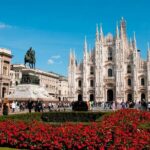
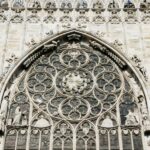
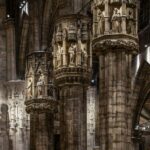
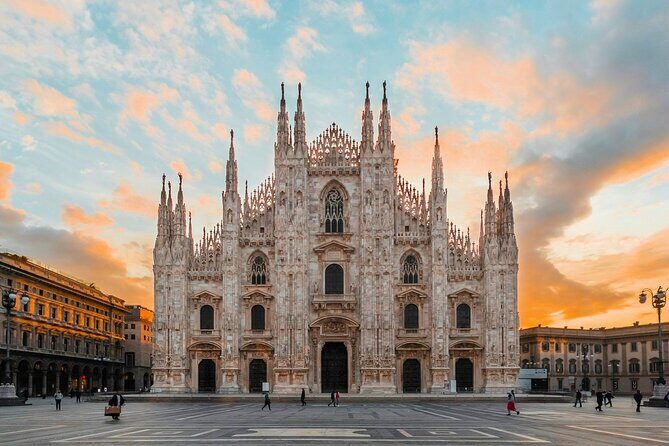
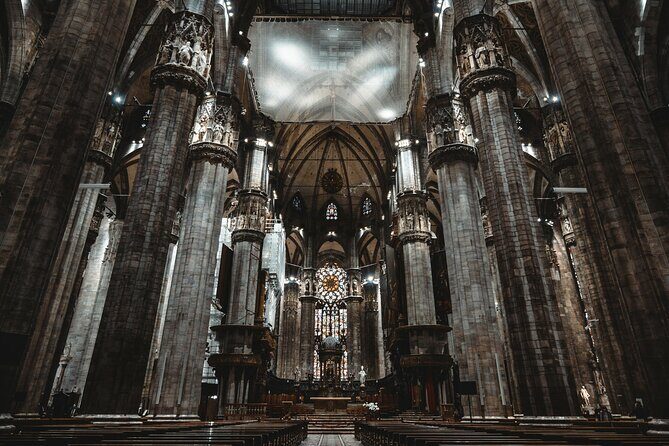
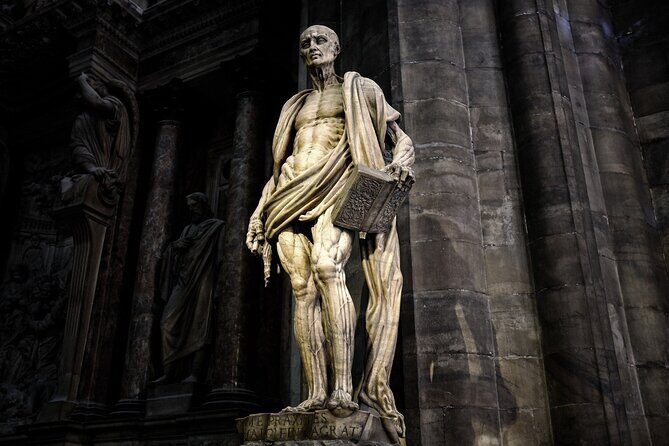
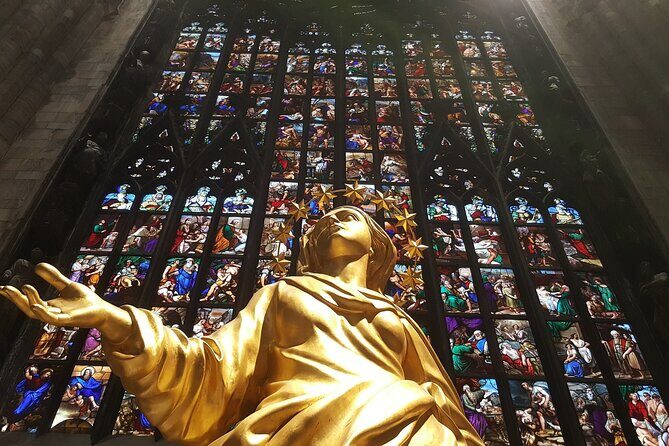
The Duomo is Milan’s visual centerpiece. Construction began in 1386 under Gian Galeazzo Visconti, and it took five centuries to complete, with changes and modernizations along the way. That long build explains why it feels busy in texture: it’s a collage of time periods.
The guide gives you the longest stop here for a reason. If you only do quick photos, you’ll miss how the cathedral “reads” from different angles. Give yourself time to look up and slow down in at least one spot where the details line up nicely.
Budget note: the Duomo ticket is not included in the tour price. It’s listed as 6€ to 30€ if you decide you want paid access. You can still enjoy the cathedral area without that additional cost—just make sure you know what you want before you arrive so you’re not making decisions on the spot.
Stop 6: Santuario di San Bernardino alle Ossa (about 20 minutes)
This is one of those stops where the guide basically tells you: if you’re easily put off, skip it. The church is described as strange, and it’s close enough to the Duomo area that you can include it without turning your day into a detour.
Practical value: it adds variety. Milan is full of art and architecture, but this is a different kind of visual impact. You don’t need to love the subject matter to appreciate why it exists as part of the city’s identity.
Stop 7: Galleria Vittorio Emanuele II (about 15 minutes)
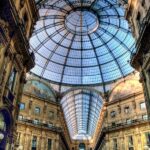
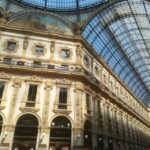
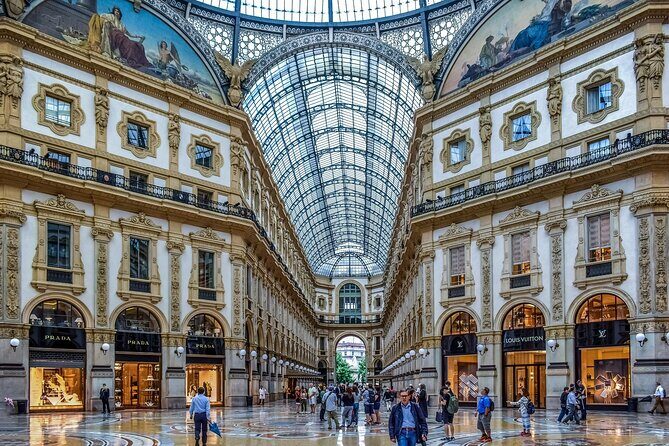
Galleria Vittorio Emanuele II is a classic: it connects Piazza del Duomo with Piazza della Scala and is described as the oldest active shopping gallery in Italy. Even if you don’t shop, it’s a useful walking corridor because it’s shaded, visually dramatic, and helps you move between major squares.
Practical value: it’s a “reset in style” moment. You get a breather from staring at facades and you still feel like you’re in a central Milan atmosphere.
Stop 8: Piazza della Scala (about 15 minutes)
You finish at Piazza della Scala, linked to the famous La Scala theatre. The guide frames the square as part of how the city made a more functional, welcoming space for the theatre and its surroundings.
This is a great place to end because you’re right near the Duomo zone again, and it’s ideal for turning your walk into a real meal. The experience includes best advice for local restaurant with authentic food, so you’re not left guessing where to go next.
What makes the guide part worth it (audio, text, and local tips)
A lot of “walking tours” fail because they just repeat what you can read on a sign. This one aims to do something better: it pairs a route with audio and written guidance plus extra context like monuments, history, curiosities, and personal anecdotes.
The multi-language setup matters too. It’s offered in English and also includes Spanish, Italian, German, and French in the digital materials. That’s useful if you travel with someone who prefers another language, or if you want to cross-check terms as you walk.
And I like that the experience includes restaurant direction at the end. That’s where many self-guided routes fall apart. You’ve done the hard part (the walking). Now you want help spending your time and money well.
One more thing: the guide is built for listening either through headphones or your phone speakers. That flexibility is handy on windy streets or if you want to keep one ear free for the city noise.
When you should be careful: the one device-dependent piece
Everything depends on your phone. You’ll need a smartphone with an internet connection to use the digital guide, and the access details are shared in your voucher. The confirmation is received at booking time, but the practical point is this: don’t plan to save your activation for the last minute at the meeting point.
Also, make sure your battery is decent. A 4 to 5 hour day plus audio playback can drain a phone faster than you expect.
I also appreciate that the company’s support approach is straightforward. In a past support explanation, Matteo from Walking Cap clarified that the access info is sent by mail + WhatsApp + voucher, so you don’t need to chase an information desk on the day. If you ever get stuck, you’ll want to contact support rather than assume a physical counter will fix it.
Who this suits best
This route is a good fit if:
- you want Milan highlights without paying for many paid entrances
- you like a plan but want flexibility in pacing
- you only have one afternoon and want a coherent spine through the center
It may not suit you if:
- you hate phone-based navigation and audio
- you’re expecting a full live guide experience at every stop
- you plan to do everything inside the Duomo and haven’t budgeted the additional ticket
Should you book this Milan walking route?
Book it if you want a high-value, low-cost walking plan that hits major sights and still gives you practical local guidance—especially if your goal is to see Milan’s key monuments and then eat well right after.
Think twice if you’re the type who needs constant human explanation, or if your phone reliability is questionable. The route rewards preparation: charge your device, confirm your digital guide access before you start, and decide ahead of time whether you’ll pay for Duomo access.
If you want a day that feels organized but not rigid, this is a smart way to experience central Milan without overspending.
FAQ
How long is the Milano Walking Tour with Audio and Written Guide?
It takes about 4 to 5 hours.
What does the tour cost?
The price is $7.83 per person.
Which languages are available?
The tour is offered in English, and the audio/text guide includes multiple languages such as Eng, Esp, Ita, De, Fr.
Do I need to buy tickets for the stops?
Most stops are listed as free. The Duomo ticket is not included (from 6€ to 30€), and it’s noted as not mandatory.
Do I need internet on my phone?
Yes. You need a smartphone with an internet connection to use the digital guide. The instructions to activate it are provided in your voucher.
Where does the tour start and end?
It starts at Sforzesco Castle, Piazza Castello and ends at Piazza della Scala.