REVIEW · MILAN
Private Milan Canals and Navigli Neighborhood Guided Tour
Book on GetYourGuide →Operated by TUI Musement · Bookable on GetYourGuide
Milan’s canals tell stories you can walk through. On this private guided stroll, you move from the ancient heart of Basilica di Sant’Eustorgio to the Navigli docks, where the canals link daily life, legends, and Milan’s working past.
I love that it’s truly private and paced for questions, not a rushed group shuffle. You’ll also get a focused stop at the Ark of the Magi and the Portinari Chapel, plus a walk through classic Navigli lanes like Vicolo dei Lavandai. One thing to consider: expect a fair amount of walking, about 2 to 2.5 km, so plan on comfortable shoes.
In This Review
- Key highlights to look forward to
- Navigli canals: why this part of Milan feels different
- Meeting in Piazza Sant’Eustorgio and starting with Basilica di Sant’Eustorgio
- The Ark of the Magi and how legends connect to place
- Portinari Chapel: the included entrance that makes the tour feel complete
- Navigli canals on foot: from dock walk to canal network stories
- Vicolo dei Lavandai and the courtyard of a Milanese banister house
- How the private 2-hour format works for pacing
- Price and value: what $147.27 buys you in Milan
- Who should book this Navigli canal tour
- Should you book this private Milan Canals and Navigli Neighborhood guided tour?
- FAQ
- How long is the Navigli canals tour?
- How much walking should I expect?
- Where does the tour start and where does it end?
- What sights do we visit during the walk?
- Is the Portinari Chapel entrance fee included?
- Do I get help hearing the guide while walking?
- Is it wheelchair accessible, and what should I bring?
- What is the cancellation and payment flexibility?
Key highlights to look forward to
- Private guide, local voice for a 2-hour Milan walkthrough you control by your pace and questions
- Ark of the Magi at Basilica di Sant’Eustorgio, tied to the legend of the three Magi
- Portinari Chapel with guided time and included entrance fees
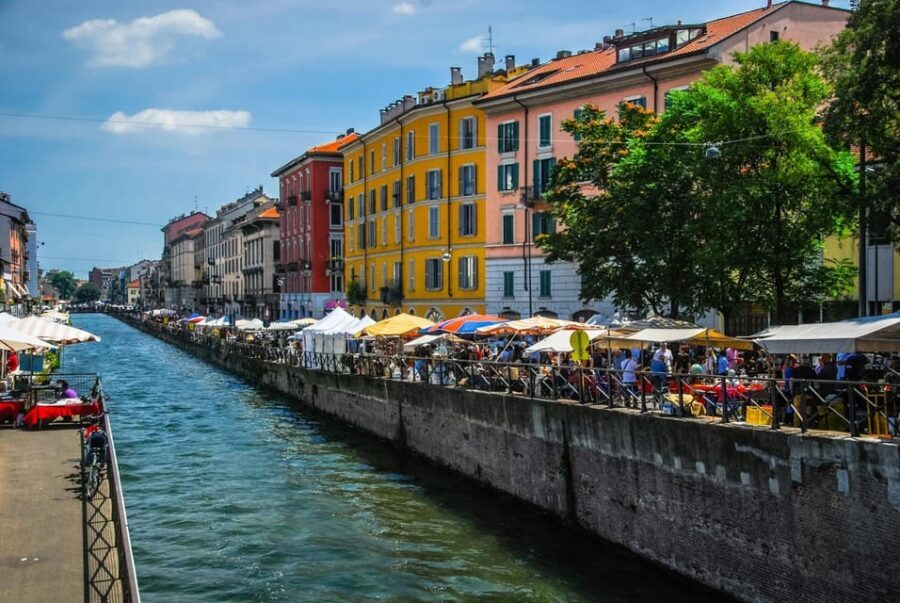
- Canal stories in real places, along the route toward Naviglio Pavese and Naviglio Grande
- Vicolo dei Lavandai plus a look at the courtyard of a typical Milanese banister house
- Headsets for larger groups (7+ guests) so you can hear the guide clearly during the walk
Navigli canals: why this part of Milan feels different
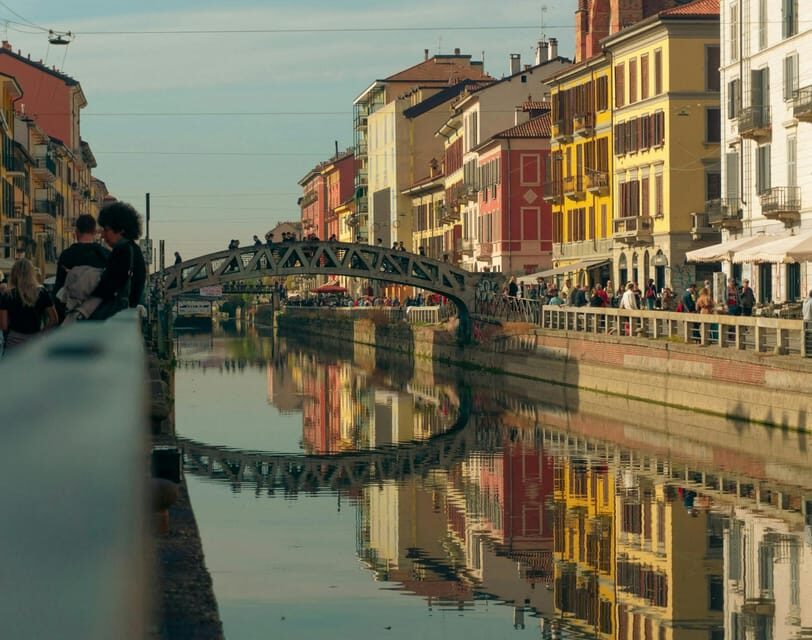
Central Milan is all monuments and wide streets. Navigli is the opposite. This area trades grand views for human-scale scenes: canal edges, old stone corners, and that easy feeling that people actually live here, not just pass through.
What makes the area so much fun on a guided walk is the way the guide stitches it together. You don’t just see canals. You hear how the canal network shaped commerce over time, and how the neighborhood’s culture shows up in traditions like music and even sports. That local context is what turns a pretty waterfront into a place with personality.
I also like that the tour doesn’t treat Navigli like a postcard-only district. You start with deep roots at Basilica di Sant’Eustorgio, then move forward in time toward the canals and the working-history neighborhood of Ticinese. The result feels like Milan in chronological order, told at walking speed.
You can also read our reviews of more guided tours in Milan



Meeting in Piazza Sant’Eustorgio and starting with Basilica di Sant’Eustorgio

Your tour starts at Piazza Sant’Eustorgio, 3, in front of the Basilica of St. Eustorgio. Aim to arrive about 10 minutes early. Your guide will be holding a TUI sign, so you can spot them quickly and settle in without hunting.
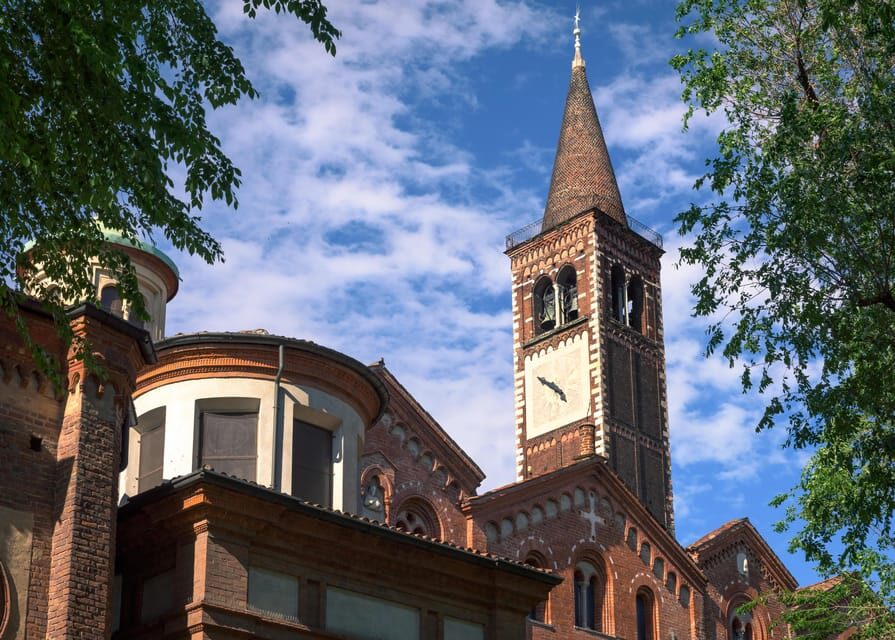
The first major stop is Basilica di Sant’Eustorgio. This matters because it anchors your Navigli walk in an older Milan story. The basilica is described as a 4th-century Christian church, and that early-date context sets the tone right away: you’re not starting with canals as decoration. You’re starting with a landmark that shaped local identity long before the neighborhood was a leisure magnet.
Inside, you focus on the Ark of the Magi, which is described as a large sarcophagus. According to legend, it holds the relics of the three Magi. Whether you look at it as religious history, legend, or both, it’s the kind of detail that makes the rest of the tour click. It gives you something concrete to carry with you as you move toward the canals and the later layers of Milan life.
Practical tip: basilicas mean stone floors and steady walking, so keep your shoes supportive. You’ll be glad later when the route turns into longer sidewalk stretches.
The Ark of the Magi and how legends connect to place

The Ark of the Magi stop is one of the best parts because it’s specific. Instead of vague “this is old” talk, you get a named object tied to a named story: the three Magi and their relics, held in a large sarcophagus within the basilica.
Why this is valuable on a canal tour: it trains your brain to notice continuity. After this, you’ll be more alert to the way canals and neighborhoods reflect different eras of the city. The guide’s explanations later about commercial activity from the Middle Ages to the 19th century won’t feel like random facts. They’ll feel like the next chapter in a timeline you just started.
If you’re the type of traveler who likes your sightseeing with a narrative thread, this early legend-and-landmark combo is a win. And because it’s a private setting, you can ask for clarification as you go, rather than waiting your turn.
Portinari Chapel: the included entrance that makes the tour feel complete
After Basilica di Sant’Eustorgio, you move to the Portinari Chapel. This is not just a quick peek. You get a guided visit here that lasts about an hour, and entrance fees to the Portinari Chapel are included.
That hour is a gift because chapel visits can otherwise feel rushed, especially in busy cities. With dedicated time, you can actually slow down enough to take in details and understand what you’re seeing. The guide’s narration helps you connect the chapel to the larger Milan story you’re already tracking from the basilica.
Even if you’re not a “church art” superfan, I think this stop is worth it because it gives you contrast. Navigli later is water, bridges, daily life, and neighborhood lanes. The Portinari Chapel gives you the dense, contained, reflective side of Milan—history you can’t hear from the canal edge.
One drawback to flag: chapel focus means you’ll likely be standing and looking for stretches of time. Again, shoes and pacing matter.
Navigli canals on foot: from dock walk to canal network stories

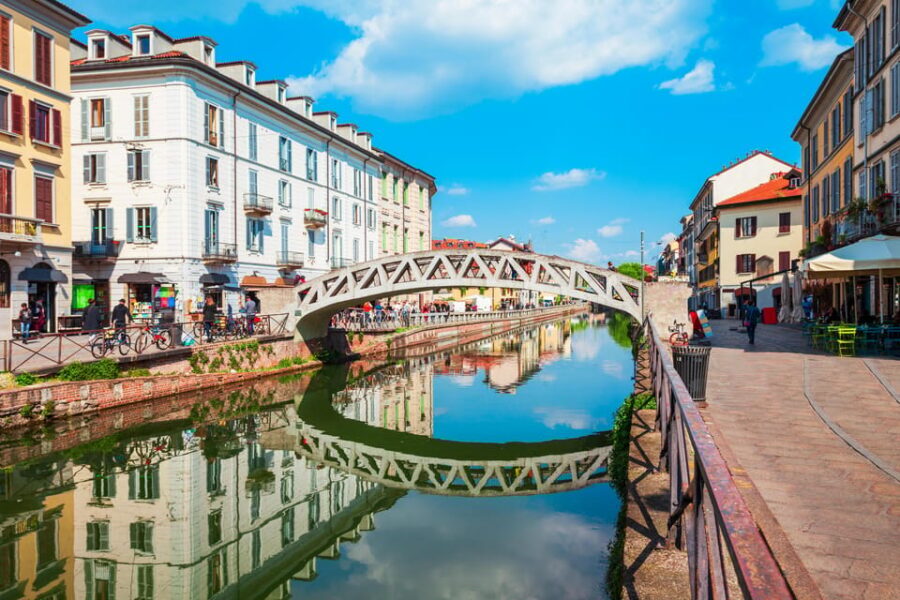
The best part of this tour, if you’re excited by atmosphere, is the move from the basilica area into the Navigli canals walk. This is where the neighborhood tone shifts. The route includes a walk along a new dock toward Naviglio Pavese and Naviglio Grande.
As you go, the guide explains the canal network in plain terms—how it worked and how it supported Milan’s economy. You’ll hear about commercial activities from the Middle Ages to the 19th century, so the canals stop being abstract. They become infrastructure, something that mattered to daily trade and movement.
Another reason I like this stretch: the guide brings in Leonardo da Vinci’s contribution. The tour description doesn’t spell out the exact technical details, but it does frame da Vinci as part of the canal conversation. That gives you a stronger sense that Milan’s water story isn’t only local—it also touches big-name thinking about engineering and city function.
You’ll also get cultural context tied to the Ticinese district: faces of yesterday and today, plus musical traditions and sports. That combination helps explain why Navigli has a reputation for lively culture without turning the tour into a nightlife pitch. It’s more like cultural weather—what people here do, not just what visitors take photos of.
If you like walking tours that teach you how a neighborhood works, this canal section is the core.
You can also read our reviews of more private tours in Milan






Vicolo dei Lavandai and the courtyard of a Milanese banister house
Near the end, you visit Vicolo dei Lavandai—also known as the Alley of the Laundress. This is one of those stops that feels small on a map and huge in character.
The tour description highlights “washerwomen’s tricks of the job,” plus a visit to the courtyard of a typical Milanese banister house. Taken together, this is more than a cute lane name. It’s a window into everyday labor in a canal-connected city.
Why it lands well on a guided tour: it turns architecture and alleyways into explanations. Instead of just seeing an old courtyard, you connect it to why laundry belonged near water. You get the sense that people used these shared spaces for practical work, not only for beauty.
Also, this final stretch helps you leave with a stronger mental picture of Navigli. You don’t just remember canal views. You remember courtyards, alley textures, and the working details that made the neighborhood function.
How the private 2-hour format works for pacing

This is a 2-hour private guided walking tour. “Private” here is not a marketing word. It changes how the experience feels. You can move at a steady rhythm, stop for questions, and spend extra time where you’re most interested (as long as the group stays together).
The walk covers about 2 to 2.5 km. That’s not a marathon, but it’s enough that you’ll notice it by the end. I’d treat it like an active city stroll: plan for a bit of stamina, but don’t plan for a sit-down break every block.
Audio support helps too. If the group has 7 guests or more, you’ll use headsets so you can listen clearly from a distance. For private groups smaller than that, you may not need them, but the headset option is a smart inclusion for day-to-day city noise.
Languages are English, French, German, and Italian. If you’re choosing between tours, language availability matters for getting the story right, not just hearing the basics.
Price and value: what $147.27 buys you in Milan
At about $147.27 per person for a 2-hour private experience, you’re paying mainly for two things: a dedicated guide and the time inside key sights like the Portinari Chapel.
What you get that supports the price:
- A private guide for the full 2-hour window
- Entrance fees to the Portinari Chapel included
- A headset option for group sizes of 7+ (helpful in real walking conditions)
- A guided canal-area walk that ties together infrastructure, culture, and local stories
What you don’t get:
- Food and drinks
For me, the value argument is strongest if you care about context. If you only want canal photos, you could wander on your own. But if you want the legend-to-history-to-neighborhood thread, the guide is doing the heavy lifting. And because you start at Basilica di Sant’Eustorgio and end back at the meeting point, you’re not wasting time figuring out the best order.
If you’re traveling with a group that can justify private attention, this price can feel reasonable. If you’re solo and you’re comfortable with self-guided discovery, you might compare against cheaper walking options. But if your ideal Milan day includes someone translating the city into meaningful stories, this one makes sense.
Who should book this Navigli canal tour
This tour fits best if you:
- Want a neighborhood experience with a story thread, not just sightseeing stamps
- Enjoy walking tours where the guide explains how places worked historically and culturally
- Like canal areas and are curious about why Navigli has its distinct character
- Prefer private pacing and a chance to ask questions
- Want a mix of big landmark history and small alley-scale details like Vicolo dei Lavandai
It’s also a solid pick for travelers who plan to spend more than one day in Milan and want something that feels off the main route. Starting at Basilica di Sant’Eustorgio gives you a different angle on the city than a typical “duomo and done” day.
Should you book this private Milan Canals and Navigli Neighborhood guided tour?
I’d book it if you want Milan with context—religious history at Basilica di Sant’Eustorgio, a guided Portinari Chapel visit, then canal stories and everyday-labor details like Vicolo dei Lavandai. The private format is a big part of the appeal because it keeps the narration focused and personal.
Skip it only if you strongly dislike walking 2 to 2.5 km in one go, or if you’d rather explore Navigli at your own speed with no guided explanations. If you’re aiming for that “learn while you look” kind of afternoon, this tour is one of the more satisfying ways to see Navigli as more than scenery.
FAQ
How long is the Navigli canals tour?
The tour lasts 2 hours.
How much walking should I expect?
It involves a fair amount of walking, about 2 to 2.5 km.
Where does the tour start and where does it end?
You meet in front of the Basilica of St. Eustorgio, at Piazza Sant’Eustorgio, 3, and the tour ends back at the meeting point.
What sights do we visit during the walk?
You start at Basilica di Sant’Eustorgio, then visit Portinari Chapel, explore the Navigli district with canal-area walking, and finish with Vicolo dei Lavandai and the courtyard of a typical Milanese banister house.
Is the Portinari Chapel entrance fee included?
Yes. Entrance fees to the Portinari Chapel are included.
Do I get help hearing the guide while walking?
You’ll have headset audio if there are 7 guests or more, so it’s easier to listen clearly.
Is it wheelchair accessible, and what should I bring?
The tour is wheelchair accessible. Bring comfortable shoes since it involves a fair amount of walking.
What is the cancellation and payment flexibility?
You can cancel up to 24 hours in advance for a full refund, and you can reserve now and pay later to keep your plans flexible.