REVIEW · MILAN
Sato Code Escape Room across Varese
Book on Viator →Operated by Sato Code · Bookable on Viator
Clues turn Varese streets into your game board. The Sato Code escape room is built as a city walk, using your phone to guide you through the old town under the story of The Angelus Key. You start at Piazza Monte Grappa and work your way toward Piazza San Lorenzo, with the whole puzzle experience lasting about an hour.
I love how it turns sightseeing into active problem-solving, and you’re not just looking at pretty corners and calling it a day. The game also uses two-phone teamwork, since each player gets different info in the Sato Code app. One thing to consider: it needs internet on every phone, plus charged batteries, so don’t show up with a dying device.
In This Review
- Key Highlights at a Glance
- A City-Wide Puzzle Walk in Varese (Monte Grappa to San Lorenzo)
- How the Sato Code App Works on Two Phones
- The Angelus Key Storyline and Why It Adds More Fun Than Facts
- Where You’ll Walk: Feeling the Route Without Needing a Map
- Phone Prep: Internet, Battery, and Smooth Teamwork
- Price and Value: Why $12.04 Can Be a Smart Use of Your Time
- Who This Escape Room Suits Best (and Who Might Want a Different Plan)
- Difficulty, Ages, and the Reality of Getting Stuck
- Timing in Varese: When You Can Play
- Getting the Most From It: Simple Tactics Before You Start
- Should You Book Sato Code Escape Room Across Varese?
- FAQ
- Where does the Sato Code escape room in Varese start?
- Where does the experience end?
- How long does it take?
- Is it available in English?
- How many people do we need to book?
- Does each person need a smartphone?
- Do the phones need internet?
- Is it suitable for children?
- What are the opening hours?
- Is free cancellation available?
Key Highlights at a Glance

- City-walk format instead of a single room: You move across Varese, not just from one locked door to another.
- Different info per phone: Each player has pieces only their device can reveal, so you’ll actually collaborate.
- Story-driven route: The plot, The Angelus Key, gives the walk a purpose while you solve puzzles.
- English-friendly: The experience is offered in English, which helps if you’re not up for Italian puzzle-reading.
- Works well for groups of two and beyond: Minimum is 2 participants, and you can make it a fun “who’s better at logic” matchup.
A City-Wide Puzzle Walk in Varese (Monte Grappa to San Lorenzo)
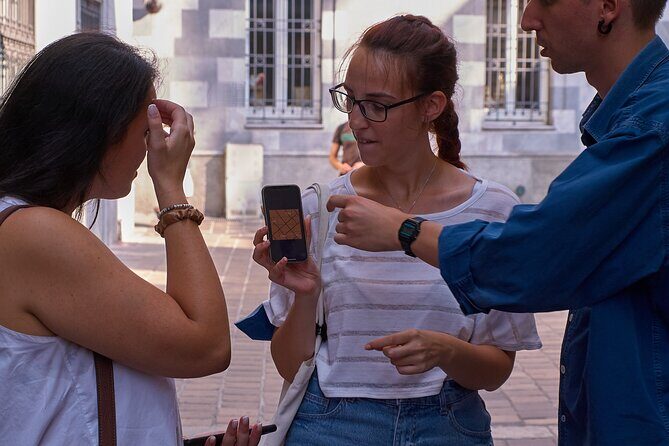
This is not a walking tour where someone tells you facts while you drift along. It’s closer to a moving puzzle game that makes you notice the city in a new way. You’ll be walking across Varese’s older streets, starting at Piazza Monte Grappa and finishing back at the same meeting point.
The route itself feels like the “bones” of a city outing: you’ll get yourself oriented, then the app nudges you from clue to clue. The best part is that it doesn’t ask you to memorize a lot of history. Instead, it gives you a reason to keep moving and thinking, which is a great change of pace from museum days.
Also, it’s nicely time-contained. At about 1 hour, it fits into an afternoon without taking over your whole day. For a city visit, that matters: you can still do a proper sit-down after, or pair this with a short walk for pure pleasure.
You can also read our reviews of more tours and experiences in Milan.



How the Sato Code App Works on Two Phones

This experience is a team game with a simple rule: you need at least two players, and each person needs a phone. The Sato Code app is key. It shows different information to each player, so one person can’t just carry the group by reading everything.
That design changes the vibe. You’ll be talking. You’ll be comparing what you see. You’ll be trading ideas like, okay, that number means something, and wait, your screen says something else. It’s a good mental exercise that doesn’t require you to be a math genius—more like a careful, pattern-spotting mindset.
And yes, you need internet on every phone. If only one device has connectivity, you’ll need to use a hotspot. That’s not a minor point. Poor signal can make a puzzle feel broken instead of challenging, so plan for it like you would for any phone-based activity.
I also like that the app approach keeps the pacing steady. There’s no waiting for a guide to catch up to you mid-sentence. You and your partner move at a natural walking pace while the game progresses.
The Angelus Key Storyline and Why It Adds More Fun Than Facts
The game’s storyline is called The Angelus Key, and it’s built to give your walk meaning while you solve puzzles. The storyline isn’t trying to teach you Varese’s full cultural background in 60 minutes. Instead, it aims to make the route feel like a mission.
That’s a smart trade. When you’re in a new city, you can get hit with too much information too fast. Here, you get a clear job: follow the app’s prompts, solve what it asks for, and keep the team moving. That job creates momentum, and momentum makes a place feel lighter and more playful.
If you enjoy escape games, this format is especially satisfying. The fun comes from figuring things out yourself, and if you’re lucky you’ll reach the end without needing outside help. One of the nicest things about the feedback I’ve seen is that people often end up completing it through teamwork and persistence, even when some parts feel tricky.
Where You’ll Walk: Feeling the Route Without Needing a Map

You’ll begin at Piazza Monte Grappa. From there, the game has you heading toward Piazza San Lorenzo, wandering through the old town along the way. The exact puzzle prompts control how long you spend near each section, so the route becomes part sightseeing, part game board.
Here’s what you should expect from the walking itself:
- You’ll cover enough distance to feel like you did something, not just a quick loop.
- You’ll spend time in the kind of streets and squares that make Italian cities feel walkable and human-scale.
- You may stop and stand still a few times while you compare phone info.
Because the experience is puzzle-led, you don’t need to pre-plan a detailed route map. Still, you should show up ready to walk—this is a moderate-movement activity. Comfortable shoes are a must. Even if the distance sounds small, you’ll be doing a stop-and-go routine, and that’s harder on your feet than a smooth, continuous stroll.
One practical note: the activity ends back at the meeting point. So you’re not solving your way to a random neighborhood exit. You get the satisfaction of completion and then you’re right back where you started.
Phone Prep: Internet, Battery, and Smooth Teamwork
Phone-based experiences rise or fall on setup. For Sato Code, there are three things to get right before you start.
First: download and be ready with the Sato Code app on each phone used. If one device doesn’t have the app, the whole team model breaks.
Second: internet required on every phone. If your mobile data is unreliable in parts of the route, bring the ability to share a connection. Using a hotspot is explicitly part of the plan if only one phone has internet access.
Third: fully charged smartphones. You don’t want to run a battery down mid-puzzle while you’re trying to figure out logic steps. Charged devices also reduce the stress of stopping early.
If you’re traveling with someone who’s less comfortable with apps, you’ll probably be okay. Feedback I’ve seen highlights that the app can be user-friendly even for older family members. Still, I’d recommend you do one quick test together before you begin—open the app, confirm it loads, then start.
And because tickets are sent by SMS, keep an eye on your phone that day. You’ll want the message available when it’s time to confirm or access your info.






Price and Value: Why $12.04 Can Be a Smart Use of Your Time

At about $12.04 per person, this isn’t trying to compete with big-ticket attractions. It’s priced more like a low-pressure, high-fun activity—especially for couples or small groups who want something different from standard sightseeing.
The value comes from combining two things for one price:
- You get a structured activity (the game).
- You also get a walking experience across the city without needing to plan a route yourself.
At roughly one hour, it’s also a low-commitment experiment. Even if you start mid-afternoon and you’re tired from museums, it can still feel doable because the time box is short. And if you’re the kind of traveler who likes interactive tasks, the app-driven format turns “time spent in the street” into something that feels earned.
What I’d watch for is your team readiness. This is not a solo activity, and it needs two working phones with internet. If your group is missing a device or one person’s phone is unreliable, the value drops fast. For the full experience, come prepared.
Who This Escape Room Suits Best (and Who Might Want a Different Plan)
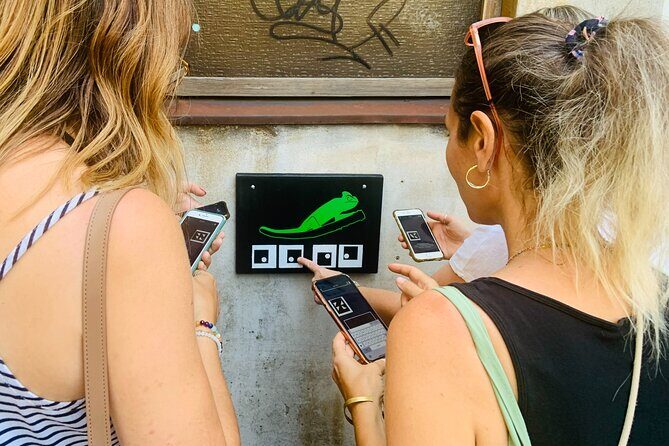
This works best if you like puzzles and you don’t mind walking while you think. It’s designed for adults, with a recommendation of active participation from age 16 due to puzzle difficulty.
That said, the experience can work for families if everyone involved genuinely wants a challenge. One family-style approach I’ve seen includes kids as young as 12 (and a younger sibling), and the general takeaway was that they enjoyed it—especially because the app was easy to use. So while the puzzle difficulty is real, it’s not automatically a deal-breaker for families who are comfortable with problem-solving.
For couples, it’s a strong match. Doing logic puzzles together in public can be surprisingly bonding, and the app’s split-information model keeps you from feeling like one person is doing all the work.
If you’re traveling with a friend group, it can also be a fun way to break up a sightseeing day. Just know that the core requirement stays the same: at least two players and one smartphone each.
If your group includes members who get frustrated quickly with phone apps or low internet, consider what kind of day you want. This is meant to be fun through effort, not fun through smooth tech.
Difficulty, Ages, and the Reality of Getting Stuck

Escape rooms live in that sweet spot where you want a challenge, but you also want a fair shot at solving it. Here, the recommendation leans toward teenagers and adults because the puzzles can be difficult.
In practice, that means:
- You should expect some head-scratching.
- You might have stretches where you’re not sure what the app wants.
- Team communication matters a lot.
The good news is that several people have reached the end without extra help. That suggests the game is built so that teamwork and persistence can carry you through.
There’s also a split in difficulty perceptions. Some people found parts easy enough, while others found it more demanding. That’s normal for escape-style games and depends on your puzzle comfort level. If you’re new to escape rooms, be ready to take your time and talk it out instead of sprinting.
Comfort counts too. Wear shoes you can stand and move in. A moderate physical fitness level is recommended, mainly because you’re walking the city route while solving. It’s not described as a strenuous hike, but it is active.
Timing in Varese: When You Can Play
The game runs Monday through Sunday from 8:00 AM to 11:30 PM. That wide window helps you pick a time that fits your day, whether you’re starting early for sightseeing or winding down later.
This is also where planning helps. Even though the experience can be booked at different times, you’ll typically want to reserve ahead. The average booking happens about 13 days in advance, which hints that popular slots go first.
If you can, choose a time when you’re not rushing between landmarks. Phone puzzles go better when your team isn’t already stressed about getting somewhere else.
And if you have to adjust plans, there is free cancellation with a full refund if you cancel at least 24 hours before the start time. After that cutoff, you won’t get your money back.
Getting the Most From It: Simple Tactics Before You Start
You’ll have a better time if you treat this like a team sport, not a solo reading assignment.
Try this:
- Assign roles quickly: one person can focus on what the app shows right now, while the other watches for changes or additional prompts.
- Communicate findings fast. If you wait too long to compare, you can lose the thread of what each phone is telling you.
- Keep your phone settings in mind. Since internet is required, avoid switching to airplane mode or battery-saver tricks that limit data.
- Start with charged phones and stable connectivity. It’s the easiest way to protect the fun.
The route encourages you to notice parts of Varese you might otherwise walk past. That’s the hidden benefit: after solving, you’ll look at the streets differently. You’ll recognize patterns and corners because you earned them through the puzzle.
Should You Book Sato Code Escape Room Across Varese?
Book it if you want an interactive, phone-guided game that also doubles as a walk through Varese’s old town. The split-information teamwork is the main reason it works, and the one-hour time frame makes it easy to fit into a sightseeing plan.
Skip it if your group can’t reliably manage two smartphones with internet and good battery life. In that case, the puzzles might feel more like tech trouble than fun problem-solving.
Also consider your group’s patience for challenges. With a teen-and-adult recommended difficulty level, it’s best for people who enjoy thinking while they walk. Families can enjoy it too, especially if kids are comfortable with puzzles and the app.
If that sounds like you, this is a solid value play at about $12.04 per person—a playful way to spend time on the streets of Varese while leaving with a real sense of completion.
FAQ
Where does the Sato Code escape room in Varese start?
It starts at Monte Grappa Square, Piazza Monte Grappa, 21100 Varese, Italy.
Where does the experience end?
The activity ends back at the meeting point.
How long does it take?
It lasts about 1 hour.
Is it available in English?
Yes, the experience is offered in English.
How many people do we need to book?
You need a minimum of 2 participants.
Does each person need a smartphone?
Yes. Each player needs one smartphone, and the Sato Code app is required for the game to work.
Do the phones need internet?
Yes. Internet is required on every phone. If only one phone has internet, you can use a hotspot.
Is it suitable for children?
It’s not recommended for children under 16 unaccompanied, because the puzzles could be too difficult. Families who enjoy escape rooms may still be able to participate.
What are the opening hours?
It runs daily, Monday through Sunday, from 8:00 AM to 11:30 PM.
Is free cancellation available?
Yes. You can cancel up to 24 hours in advance for a full refund.