REVIEW · MILAN
Milan: Bicycle Tour Live Tourist Guide 3 hours and half
Book on Viator →Operated by City Guided Tour · Bookable on Viator
Bike lanes make Milan feel like a movie.
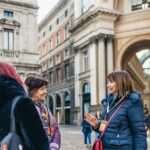
This 3.5-hour small-group ride is a fast way to see the main sights in one loop, with short stops so you actually learn what you’re passing.
I love that you’re not stuck in a long walking line or trying to piece the city together on your own. Two of the best wins for me are the use of a bike plus a helmet and the guide-led stops that keep the ride feeling purposeful instead of random.
One thing to think about: the route mixes moving bike time with brief stops, so it’s not a slow sightseeing crawl. Also, the cathedral and Scala are viewed from the outside here, since admission isn’t included for those.
In This Review
- Key highlights you’ll feel on this Milan bike tour
- Why this Milan bike tour works for a first visit
- Meeting point, gear, and what the ride feels like
- Milan skyline orientation: the quick big-picture start
- Brera District: palaces, artists, and a neighborhood with ideas
- Arco della Pace and Parco Sempione: neoclassical Milan in two scenes
- Castello Sforzesco: why this fortress still drives the city’s story
- Basilica di Sant’Ambrogio and Roman-era traces: spiritual layers and older stones
- Darsena and waterways: where Milan slows down a bit
- Piazza Affari and Piazza Mercanti: finance meets medieval governance
- Duomo area and Galleria Vittorio Emanuele II: icons from the street and arcade side
- Piazza della Scala: the theater and Palazzo Marino from the outside
- Price and value: what $58.87 really buys you
- What the best guides do (and why names like Katia, Emilio, Simon matter)
- Practical expectations: small-group pacing and real street conditions
- Who should book this Milan bicycle tour
- Should you book the Milan bike tour?
- FAQ
- How long is the Milan bicycle tour with a live guide?
- How many people are in the group?
- Is the tour offered in English?
- What’s included in the price?
- Are tickets for the Duomo or La Scala included?
- What fitness level do I need?
- Where do I meet, and where does the tour end?
Key highlights you’ll feel on this Milan bike tour
- Small group size (max 8 travelers) makes it easier to stay together and get your questions answered
- English live guide with a pace that fits different cycling abilities
- Flat, efficient route through central Milan so you cover more than a walking tour
- Quick photo/learning pauses at big-name stops like Castello Sforzesco and Duomo area landmarks
- A focus on neighborhoods, not just monuments, from Brera to the Darsena canal district
Why this Milan bike tour works for a first visit
Milan can feel like two cities at once: old stone, sharp modern edges, and a lot happening street-level. This bike tour gives you an easy, time-efficient way to get your bearings. In about 3 hours 30 minutes, you’ll move through central sights and multiple districts without turning your day into an endurance test.
The tour’s small-group setup matters more than it sounds. With a maximum of 8 people, you’re not constantly waiting for stragglers, and the guide can respond to what you care about—whether that’s big landmarks or the quieter “how did this place change?” stories.
I also like that the sightseeing is broken into short, focused stops. Instead of staring at one spot for ages, you get a few minutes to understand what you’re looking at, then you roll on. That rhythm is ideal when you’re trying to fit a lot into one short afternoon or morning.
You can also read our reviews of more guided tours in Milan

Meeting point, gear, and what the ride feels like
You meet at Via Lecco, 18, 20124 Milano MI and the tour ends back there. It’s handy that the meeting area is near public transportation, because you’re not relying on a complicated plan just to get started.
You’ll have the bicycle and helmet provided, plus a live tourist guide. That combo is a big deal for first-timers. You don’t have to hunt down rentals, and you can focus on biking and listening instead of logistics.
From the way the ride is described, you should expect a moderate fitness level. The pace works well for people who want a confident city cycle, and it’s generally a good match if you’re comfortable on two wheels in traffic conditions. One practical caution: like any shared street route, you’ll want to stay aware when there are strollers, pedestrians, or slower movers around.
Milan skyline orientation: the quick big-picture start
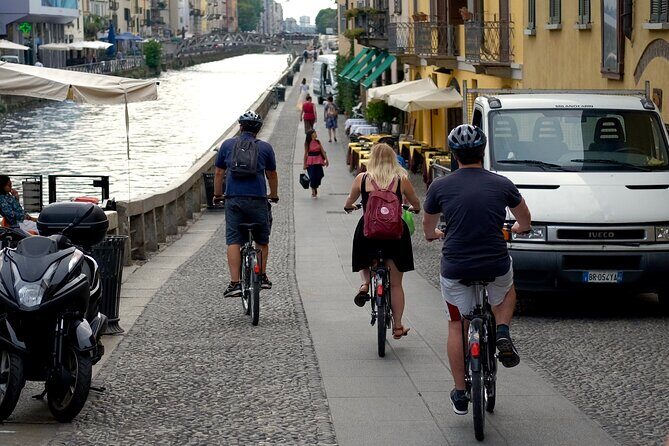
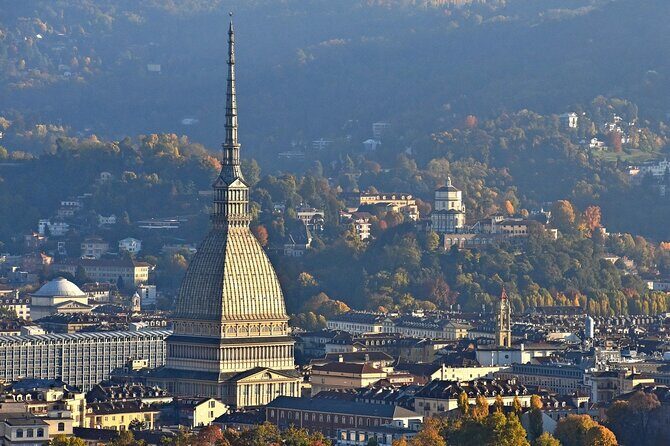
The tour begins with a Milan Skyline stop. Even if it’s just a short moment, it’s a smart setup: you get a sense of where you are before the ride starts carving through neighborhoods.
Think of this as your “okay, now I get the geography” checkpoint. Milan is wide, and landmarks can be far apart on foot. Getting a skyline reference early helps everything else feel connected.
It also sets expectations for the rest of the day. You’ll be doing lots of quick sight breaks, so you’ll want that initial context to make the minutes count.
Brera District: palaces, artists, and a neighborhood with ideas
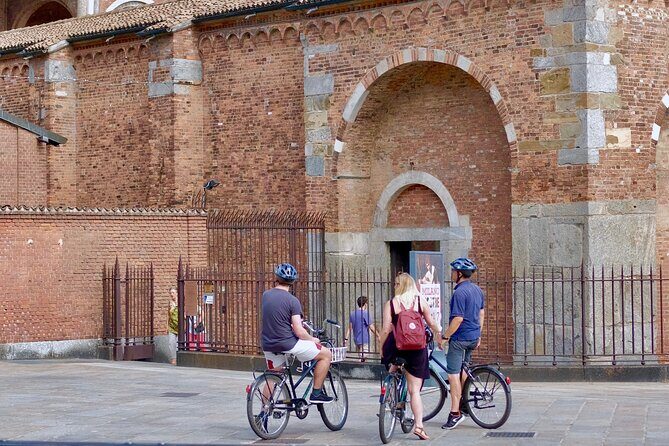
One of the first true neighborhood stops is Brera District. You’ll spend around 5 minutes there, learning about the history of the Brera palace and what shaped the area into a district tied to artists.
Brera is one of those places where the buildings and the street vibe tell a story. This stop is short, but it gives you a framework. When you later wander Brera on your own, you’re not just admiring facades—you’ll understand why this part of Milan became known for culture and creativity.
A practical tip: Brera’s streets can get busy. Since your stop is brief, keep an eye on where the group is rolling next. That helps you avoid the classic “I found a photo spot but now I’m behind” moment.
Arco della Pace and Parco Sempione: neoclassical Milan in two scenes
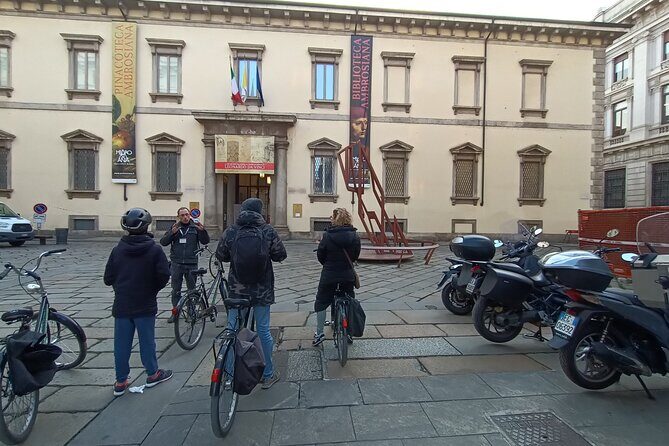
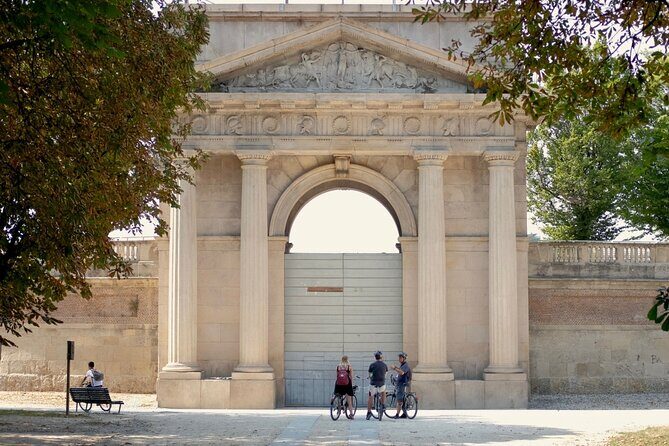
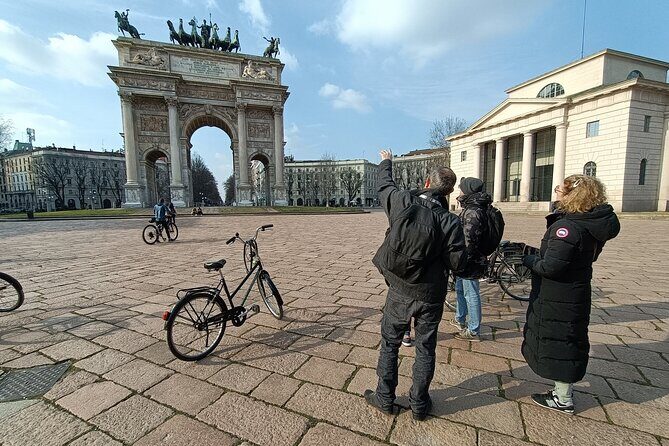
Next up is Arco della Pace, the Peace Arch positioned in front of Parco Sempione. You get about 5 minutes here, and the focus is on what makes this monument one of the city’s most neoclassical monuments.
What I like about this stop is that it’s both a landmark and a gateway. You’re not just looking at a single object—you’re seeing how the monument anchors the park area. That helps you understand Milan’s planning: grand features placed to shape the way people move through space.
This is also a good moment for quick photos, because the arch reads well from street level. Just don’t overstay; your next stops are the kind you’ll want to enjoy with clear attention, not from a rush.
You can also read our reviews of more tours and experiences in Milan

Castello Sforzesco: why this fortress still drives the city’s story
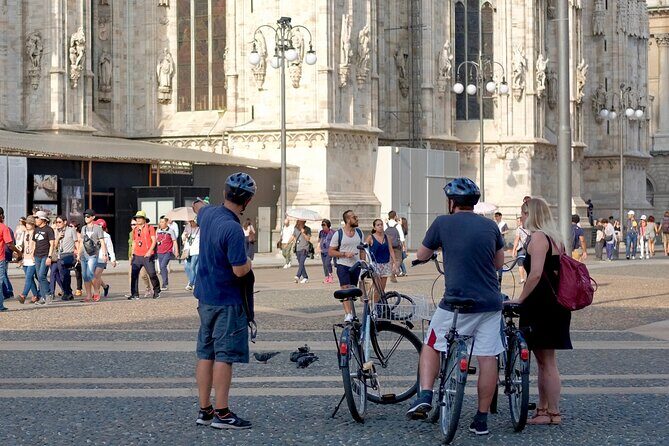
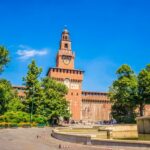
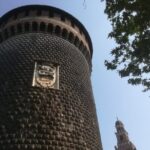
Then comes Castello Sforzesco, the big one. You’ll have about 10 minutes here, and it’s framed as one of Milan’s main symbols, tied to the city’s history and also now used by cultural institutions. It’s also described as one of the largest castles in Europe.
Even if you only see it from the outside during this tour, the context makes a difference. You’re not looking at “a castle.” You’re learning why it matters and how the building’s role has shifted over time.
This stop is often a highlight for a reason: the scale is impressive, and it’s a natural mental reset after riding through tighter streets. It’s also the kind of landmark that helps you connect Milan’s present-day identity to its past power structures.
If you want to go deeper, you can plan your own later visit. But as a first pass, this tour gives you a strong entry point without eating half a day.
Basilica di Sant’Ambrogio and Roman-era traces: spiritual layers and older stones
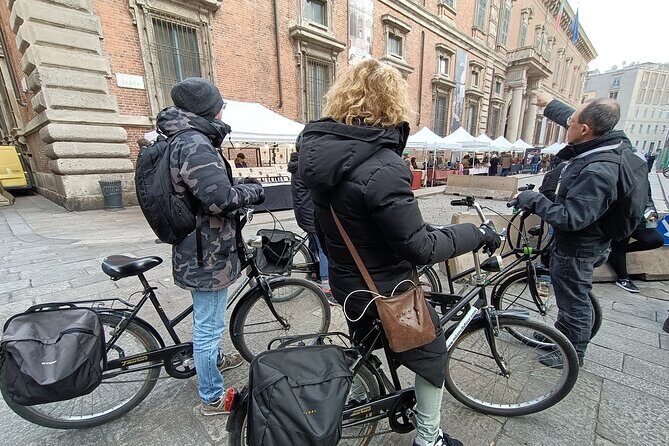
You’ll then ride to Basilica di Sant’Ambrogio, described as the ancient church of Milan’s patron saint. Expect about 10 minutes, plus a chance to absorb why it’s such a cornerstone of the city.
Right after, there’s a stop for traces of the Roman era dating back to the second century. Even with limited time, that’s a useful “Milan goes way back” moment.
This pairing matters. A basilica represents spiritual continuity, while Roman traces remind you that the foundation beneath Milan keeps older chapters alive. Seeing both during one loop helps your brain stop treating the city like a set of unrelated attractions.
The drawback here is timing: you won’t have hours at each stop. If you’re the type who wants to linger, you may need to pick one or two spots to revisit later once you’ve mapped what you like.
Darsena and waterways: where Milan slows down a bit
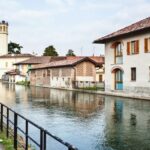
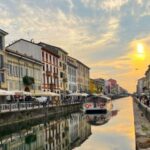
Next comes Darsena, a restaurant district known for historic waterways. You’ll spend about 10 minutes here, and the point is simple: Milan has a water-side side, even if you’ve mostly seen it as streets and stone.
This stop gives a change of pace from monuments. It’s also a better place to absorb the city as a living place—somewhere people eat, walk, and linger instead of only visiting.
I like that the tour includes this kind of stop. A bike ride can easily become “just icons.” Darsena pulls you into everyday Milan for a few minutes, which makes the rest of the day feel more grounded.
Piazza Affari and Piazza Mercanti: finance meets medieval governance
Two short stops help you understand Milan’s different layers of power.
First is Piazza Affari, the Stock Exchange square, plus a note about a contemporary art installation there. You get around 5 minutes, and the value is in seeing how Milan mixes business with public art.
Then there’s Piazza Mercanti, a medieval square tied to the ancient municipal administration. Another short stop at about 5 minutes, but it gives you a quick sense of civic roots.
Together, these stops help you read Milan’s city structure. You start to see the city’s identity as a timeline: commercial energy in one place, municipal history in another. It’s the kind of context you don’t get from only chasing photo spots.
If you’re the type who likes to know what a square “used to be,” these two are worth paying attention to even in brief windows.
Duomo area and Galleria Vittorio Emanuele II: icons from the street and arcade side
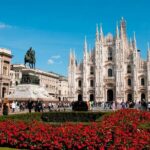
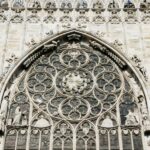
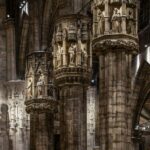
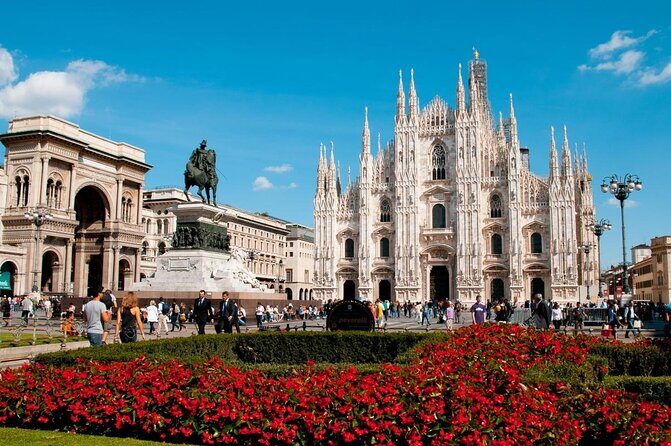
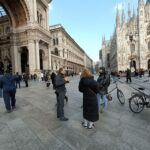
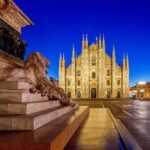
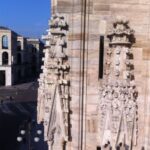
At Duomo di Milano, you’ll view the cathedral outdoors for about 10 minutes. Admission isn’t included here, so think of this as a powerful look-and-learn stop, not a ticketed inside visit.
The guide context is what makes it work. When you understand what you’re seeing, the cathedral becomes more than scale and scaffolding or postcard angles—it becomes a piece of civic identity.
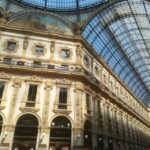
After that, you’ll roll into Galleria Vittorio Emanuele II, the luxury shopping arcade created at the end of the 19th century. You get around 5 minutes, which is enough to register the grandeur and the contrast between shopping-as-a-ritual and a city landmark.
This is also a good spot for your “I’ll return later” list. If you want inside time, you’ll want to plan that separately. But this tour helps you decide what you care about after you’ve seen it from outside and at street level.
Piazza della Scala: the theater and Palazzo Marino from the outside
The last big landmark stop is Piazza della Scala. You’ll see the external view of the La Scala theater and Palazzo Marino for about 5 minutes.
This stop is quick, but it lands on an important Milan theme: the arts. You get the feel of the theater district without needing ticketing during the bike loop.
If you love opera, ballet, or just dramatic architecture, this stop does its job. It sets the scene so you can plan a return later with more time.
Price and value: what $58.87 really buys you
The price is $58.87 per person for about 3 hours 30 minutes. To judge value fairly, look at what’s included: the bike, helmet, and a live tourist guide.
Those inclusions matter, especially when you’re traveling with limited time. You’re paying for a guided route that stacks multiple districts and major sights into one compact half-day. You’re also avoiding rental headaches and decision fatigue.
Most of the sightseeing stops are described as admission free, which helps keep the overall cost predictable. That said, Duomo di Milano and the La Scala external viewing are not listed as included admissions—so you’re seeing these from the outside. If you’re hoping for indoor time at the cathedral or a performance ticket, budget extra.
Also note that hotel pickup and drop-off aren’t included. You’ll need to be able to meet at Via Lecco, 18 under your own plans. For many visitors, that’s normal and easy. For others staying far out, it can add friction.
What the best guides do (and why names like Katia, Emilio, Simon matter)
The tour repeatedly highlights strong guide performance—especially for people who want context, not just directions. In real-world examples, guides such as Katia, Emilio, and Simon show up as favorites, praised for clear explanations, friendly communication, and keeping the pace right.
I take that seriously because a bike tour lives or dies by flow. If the guide is organized, you’ll feel safe, you’ll stay on route, and you’ll actually understand why the next stop matters. The high recommendation rate and the consistency of the comments suggest this isn’t just luck; it’s part of how the experience is run.
If you’re someone who likes to ask questions while moving, this setup tends to work well. Short pauses mean you can still get a conversation going without the ride dragging.
Practical expectations: small-group pacing and real street conditions
With a maximum of 8 travelers, you’ll still be sharing the route with real Milan street life. That’s not a flaw; it’s just city biking. The good part is that a smaller group helps you stay coordinated when pedestrians, strollers, or slower walkers appear.
Bring a calm mindset. You’ll spend portions of the time riding between stops, so you’re never fully “in museum mode.” If you want slow, quiet, read-every-sign tourism, plan to pair this with other slower stops on different days.
Also, it’s listed for a minimum age of 12 and moderate physical fitness. That makes it a realistic teen-and-up activity. If you’re bringing younger kids, double-check whether they’ll enjoy steady bike time and short walks at each stop.
Who should book this Milan bicycle tour
Book it if you want a practical first Milan day. It’s especially good when you have limited time and you still want to connect landmarks to neighborhoods.
It’s also a strong choice if you prefer an active sightseeing style but don’t want to manage bike rental logistics. The included helmet and bicycle reduce the usual “planning tax.”
If you’re expecting lots of indoor time, this isn’t that tour. It’s built for outdoor viewing and guided context, plus quick stops at key sights. You’ll likely need additional visits for the cathedral inside or for deeper museum time.
Should you book the Milan bike tour?
I’d book it if you want to get oriented fast, cover a smart lineup of central Milan sights, and come away with a clearer sense of how the city’s neighborhoods connect. The small-group format, included bike and helmet, and the steady rhythm of short learning stops make it feel like a guided route you can build on later.
Skip it or pair it carefully if you’re chasing long, lingering visits inside major sites. You’ll see plenty, but you won’t be going deep everywhere. Also, if you’re sensitive to busy streets, keep your expectations realistic: you’ll be biking through active areas, not behind ropes.
Bottom line: for a first trip to Milan, this is one of the more efficient ways to turn a half-day into real understanding—without turning sightseeing into a full-time job.
FAQ
How long is the Milan bicycle tour with a live guide?
It lasts about 3 hours 30 minutes.
How many people are in the group?
The tour has a maximum of 8 travelers.
Is the tour offered in English?
Yes, it’s offered in English.
What’s included in the price?
You get use of a bicycle, use of a helmet, and a tourist guide.
Are tickets for the Duomo or La Scala included?
No. The Duomo and La Scala are listed as outside views, and admission is not included for those.
What fitness level do I need?
The tour is described as suitable for travelers with a moderate physical fitness level.
Where do I meet, and where does the tour end?
You start at Via Lecco, 18, 20124 Milano MI, Italy, and the tour ends back at the meeting point.