REVIEW · MILAN
Venice and Verona Full Day Tour by Train from Milan
Book on Viator →Operated by Amigo Tours Spain · Bookable on Viator
You can see two classics in one day. This train trip strings together Verona and Venice with a guide who helps you skip the logistics headache.
The two things I like most: you get a short guided hit of the big sights, and then you’re let loose with free time to wander, eat, and shop. The trade-off is the pace. This is a walk-and-train day, so it can feel rushed if you want slow, museum-by-museum travel.
Group size stays small (max 30), and the leader runs point in English and Spanish. In Verona you get a guided overview and then time on your own; in Venice you get a longer window to explore after a guided introduction. One caution: the itinerary involves extensive walking and stairs, and some departures can run late, which makes timing tighter.
In This Review
- Key Things to Know Before You Go
- Train Day Dream: Verona Meets Venice Without the Setup
- Milan Morning: Meeting Point, Timing, and Getting Ready to Move
- Verona With a Guided Primer: Juliet, Castelvecchio, and Piazza delle Erbe
- The guided hit: a city orientation
- The real Verona win: independent time with context
- Venice in 4 Hours: Doge’s Palace Power and St. Mark’s Area Legends
- Guided start: Doge’s Palace and the government-prison side of Venice
- The St. Mark’s meeting point: history plus the flood reality
- Your time to explore
- The Pace Reality Check: Walking, Steps, and Train Transfers
- Cobblestones and stairs
- Transfers can tighten the schedule
- Tour Leaders Matter: The Best Part Is the Human Navigation
- Value for Money: What $192.29 Buys You (and What It Doesn’t)
- Food, Gondolas, and Spending in Venice and Verona
- Who This Tour Suits Best
- Should You Book This Venice and Verona Full Day Tour by Train?
- FAQ
- What time does the tour start and where does it meet?
- How long is the Venice and Verona tour from Milan?
- What’s included in the price?
- Is lunch included?
- Do I need to provide participant names for Venice?
- Is the tour suitable for people with reduced mobility?
Key Things to Know Before You Go
- A long day, smart structure: brief guided coverage plus meaningful free time in both cities.
- Verona highlights first: a quick orientation around Juliet’s House, Castelvecchio area, and the old Roman forum square.
- Venice is mostly your time: plan to use your window well for photos, food, and canal views.
- Small-group handling: max 30 people, so the guide can keep you moving without a crowd stampede.
- Two-language support: tour leader works in English and Spanish so most people can follow along.
- Lots of walking terrain: cobblestones and steps are part of the deal, not optional.
Train Day Dream: Verona Meets Venice Without the Setup
The genius of this tour is that it does the hard part for you. Milan to Verona to Venice is not hard, but it is time-consuming to plan, route, and keep straight when you also want to enjoy the day. Here, you start at 7:00 am and spend the day traveling by train with a leader who handles the key transitions.
You’re also not stuck in a never-ending guided lecture. In Verona, the guided portion is short and then you get your own time. Venice is built the same way: a guide introduces the area and then you’re free to roam and eat at your own speed.
If you’re the type who enjoys atmosphere and easy wandering, you’ll probably love this. If you want slow stops, long museum visits, and zero rushing, be honest with yourself: you’re signing up for a packed day.
You can also read our reviews of more tours and experiences in Milan

Milan Morning: Meeting Point, Timing, and Getting Ready to Move
You meet at Terrazza Gallia, Piazza Duca d’Aosta 9, in Milan. The start time is 7:00 am, and the tour ends back at the same meeting point.
A few practical tips that matter on day trips like this:
- Wear shoes you’d wear for real walking, not just “nice sightseeing shoes.” Cobblestones and steps show up in both cities.
- Bring a small day bag with water and a light layer. Trains and open-air walking can swing your comfort fast.
- Know that delays happen. Some guides are very good at recovery when timing gets tight, but a schedule this full still leaves less cushion.
Also, Venice has new rules that require participant names. You’ll need to provide the full names of everyone in your group when booking, so do that promptly.
Verona With a Guided Primer: Juliet, Castelvecchio, and Piazza delle Erbe
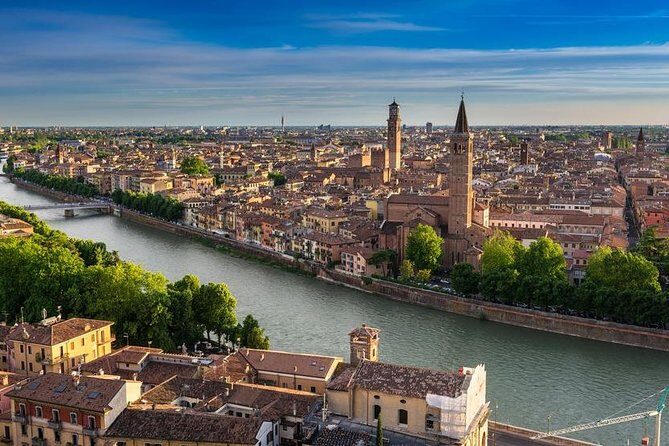
Verona is the warm-up act, and it works. The city is easy to love once you’re there, but this format helps you get your bearings fast so your independent time is more satisfying.
The guided hit: a city orientation
You’ll get a 45-minute guided visit, followed by time to explore on your own (about 1 hour 30 minutes is set aside). In that guided stretch, your leader focuses on the stories and the layout, so you’re not just wandering randomly.
From there, the tour routes you past the big “only-in-Verona” stops:
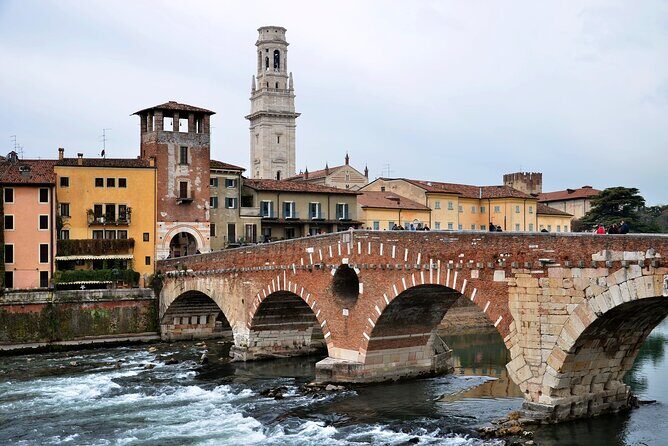
- Castelvecchio: described as the most important military construction of the Scaliger dynasty. You’ll see the red-brick look that defines much of the skyline, and you’ll have the chance to visit the museum if it fits your timing.
- Juliet’s House area: you’ll admire the facade and learn the basics behind the Romeo and Juliet legend.
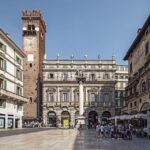
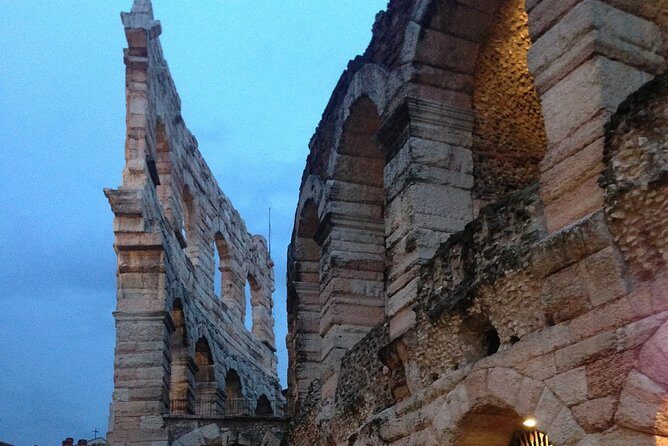
- Piazza delle Erbe: the oldest square in Verona, tied to the ancient Roman forum and long known as a central political and economic spot.
The real Verona win: independent time with context
That short “learn it, then walk it” structure is the main value. With a little context, you notice details you might otherwise miss: how streets funnel toward squares, how the Roman past still shows up in the urban plan, and why Castelvecchio matters beyond the postcard photo.
One drawback to plan for: that Verona window is not huge. If Juliet’s House is high on your list and you also want time for relaxed photos, you’ll want to move with intention during the guided portion so you’re not running later.




Venice in 4 Hours: Doge’s Palace Power and St. Mark’s Area Legends
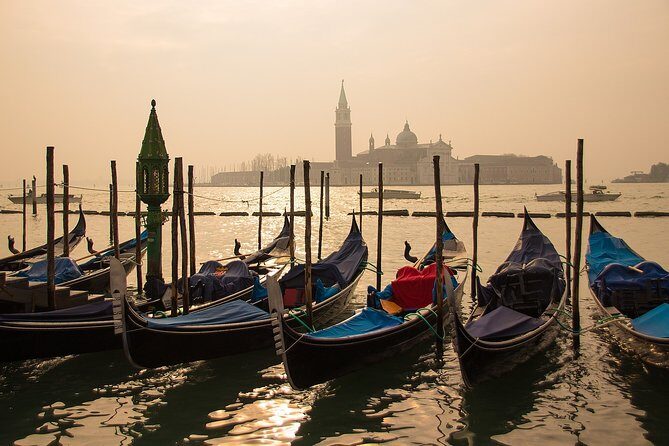
Then comes Venice. It’s famous for a reason, but it’s also famous for crowds and logistics. This tour gives you enough structure to feel oriented, then gives you enough time to enjoy it on your terms.
Guided start: Doge’s Palace and the government-prison side of Venice
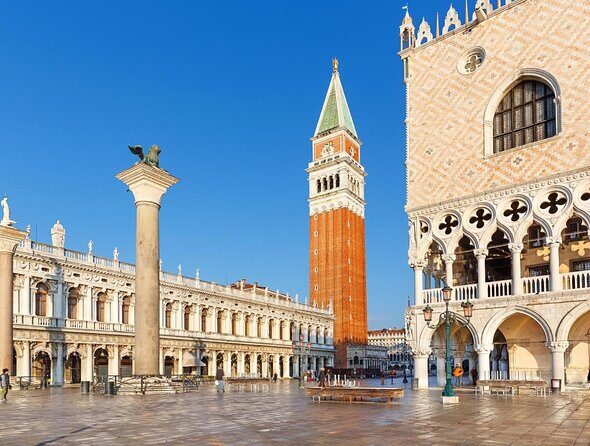
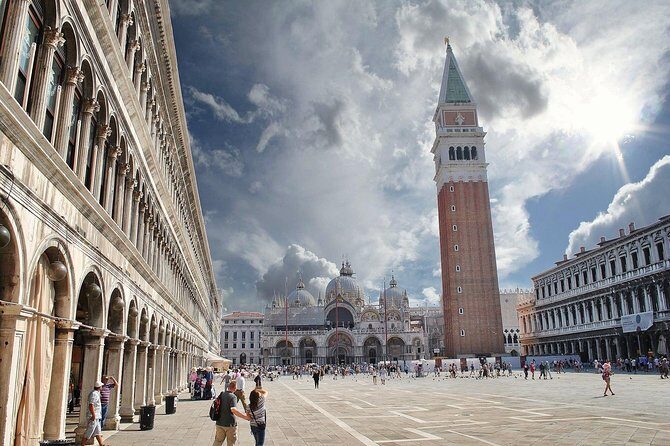
You’ll visit the building next to Piazza San Marco that’s a symbol of power and the principal Venetian Gothic work. In plain language: this is where the ruling system lived, judged, and punished. You’ll get the story behind the scale and the art packed into the place.
The St. Mark’s meeting point: history plus the flood reality
Your guide tour starts near the Basilica de San Marco area, and you’ll hear why it’s connected to Napoleon Bonaparte’s famous comment about the “most beautiful salon in Europe.” You’ll also get curious facts like recurring floods, which is the kind of Venice detail that makes you look at the city differently as you walk.
Your time to explore
After the guided introduction, you get a total Venice window of about 4 hours. That’s enough for a solid walk, a couple of key photos, and a meal, as long as you don’t try to do everything at once.
Here’s how I’d use it:
- Pick one “anchor” area for photos (St. Mark’s Square zone is the obvious choice).
- Then wander out to side streets and canal moments where it’s less about landmarks and more about the mood.
- If you want a gondola, factor in cost. One practical note from people who did it during free time: a 20-minute ride can run around €100, and you’ll want to know that upfront so it doesn’t sting later.
Also, don’t expect every major interior visit to happen in a day trip. Even with a guide, the time is limited and Venice has lines and “where do we meet back” moments that eat minutes fast.
The Pace Reality Check: Walking, Steps, and Train Transfers
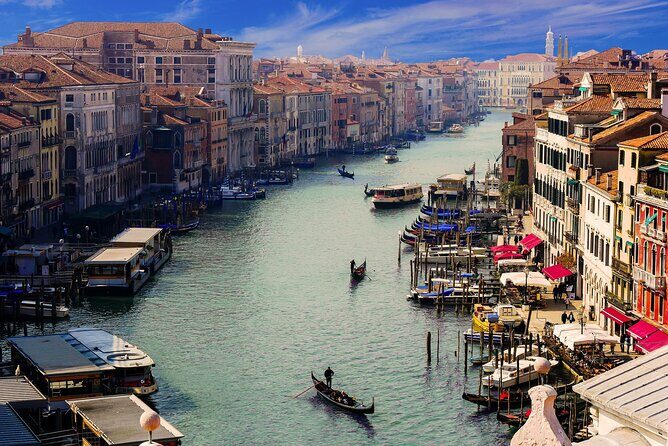
This tour is built for efficiency, not lounging. That’s great if you want maximum “I saw that” for your time in Italy. It can be frustrating if you’re someone who needs frequent sitting breaks.
Cobblestones and stairs
The terrain is uneven, and there are steps. Some people do fine with that. Others find they need to slow down. If you have any mobility limits, reduced stamina, or you expect long distances to be hard, this is the first thing to question.
A good rule of thumb: if your day normally includes climbing stairs without stress, you’ll probably be okay. If you’re planning around frequent rest stops at home, this might be too much.
Transfers can tighten the schedule
Because the day depends on train timing, you might experience tight transitions. In past experiences like this, delays can happen and the group sometimes has to move fast to catch the next train.
A smart safety move: make sure you have your guide’s phone number on the day. If someone gets separated (it happens in Venice with crowds and narrow streets), quick reconnection saves a lot of stress.
Tour Leaders Matter: The Best Part Is the Human Navigation
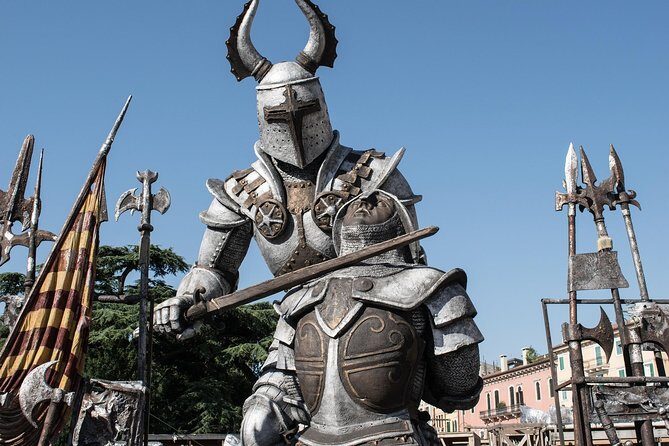
One of the most consistently praised parts of this kind of day trip is the guide. The leaders highlighted here include Lourdes, Arelette, Gaia, Laura, Chiara, Lara, and Hager Muhammad. What ties the good ones together is practical navigation and clarity.
When a guide is great, you get:
- Clean instructions on what train to take next.
- Helpful context so you know why you’re seeing something, not just what it looks like.
- Real care for the group, including checking that everyone stays together.
Language support in English and Spanish also makes a difference. If you don’t want to rely on apps all day, having someone explain the key sights directly is a big relief.
And yes, even great guides can’t erase crowds or limited time. But they can reduce the “what now” feeling, which is the difference between a fun day and a frustrating one.
Value for Money: What $192.29 Buys You (and What It Doesn’t)
At about $192.29 per person, this is not “cheap,” but it is practical. The value equation looks like this:
- You get train tickets and transportation organized for you.
- You get a tour leader to manage the transitions and provide guided coverage of major highlights.
- You get free time in both cities so you’re not stuck in a rigid schedule.
What you don’t get is also part of the price picture:
- Lunch is not included.
- You may not have time for every museum interior, depending on closures, crowds, and timing.
So if your goal is to see Venice and Verona quickly without turning your day into a spreadsheet, this price can make sense. If you’re trying to do a slow, deep, ticket-heavy itinerary, you may feel like the time budget is too tight for the cost.
Food, Gondolas, and Spending in Venice and Verona
Food is where your free time really pays off. A big advantage of having free hours is you can stop for a meal when you want, not when the tour schedule says.
In Venice, expect tourist pricing. One real-world example shared by a gondola rider: a 20-minute ride around €100. That doesn’t mean you shouldn’t do it. It just means you should decide early whether gondola is a priority.
For Verona, spending tends to feel easier on the wallet, but you’re still in a popular Italian city. Your best bet is to eat during your free time and choose places based on your route rather than chasing a single “must” restaurant.
Who This Tour Suits Best
This day trip is a strong match if you:
- Want a straightforward way to see Verona and Venice without planning every train connection.
- Like a short guided overview, then freedom to wander and pick your own pace.
- Are comfortable with a lot of walking and stairs.
- Want a group structure but still want to choose where you eat and browse.
It’s a weaker match if you:
- Need lots of rest breaks or have mobility concerns.
- Expect a relaxed itinerary with time for deep museum stops.
- Get stressed when schedules get tight, especially around train transfers.
The most important expectation-setting: you’re getting highlights plus atmosphere, not a full “master’s degree” in Venetian history.
Should You Book This Venice and Verona Full Day Tour by Train?
If you have limited time in Italy and you want to check off Venice and Verona in one day with less logistical stress, I’d say this is worth considering. The combination of train organization, a guide-led Verona highlights loop, and free time in Venice is a practical way to get real sightseeing done.
Book it if your priorities are:
- big sights, good orientation, and time to wander on your own
- comfortable walking for most of the day
- a guide who can keep the day moving (and keep you connected)
Skip it if you need slow travel, frequent breaks, or you’re hoping for lots of indoor time in multiple major buildings. In that case, you’ll likely enjoy Venice and Verona more with a longer stay and a simpler plan.
FAQ
What time does the tour start and where does it meet?
It starts at 7:00 am at Terrazza Gallia, Piazza Duca d’Aosta, 9, 20124 Milano MI, Italy, and it ends back at the same meeting point.
How long is the Venice and Verona tour from Milan?
The total duration is about 13 hours 30 minutes.
What’s included in the price?
Transportation, train ticket(s), and a tour leader who works in English and Spanish are included.
Is lunch included?
No. Lunch is not included.
Do I need to provide participant names for Venice?
Yes. Venice regulations require the names of all participants, so you’ll need to share full names when booking.
Is the tour suitable for people with reduced mobility?
It involves extensive walking, and it may not be suitable for individuals with reduced mobility. A moderate physical fitness level is required.