REVIEW · MILAN
Skip the Line: Milan – Brera Art Gallery Ticket
Book on Viator →Operated by Weekend in Italy · Bookable on Viator
Art lovers hate waiting in lines. This skip-the-line ticket helps you get into the Pinacoteca di Brera faster with an assigned entry time, so you can spend your energy on paintings. I like that you’re not herded around; you explore the museum independently through 38 rooms of Italian and Flemish art. One drawback to plan for: if your voucher doesn’t arrive or is not accepted at the door, you can lose time fast, so you’ll want to be organized with your confirmation.
This is set in the Brera Palace, with 17th-century interiors that make the whole experience feel like more than a checklist. You’ll also see major names across the centuries, from 13th-century works up through 20th-century art. The visit is short enough to fit easily into a Milan day, but you’ll need to pace yourself to get the highlights without feeling rushed.
In This Review
- Key things to know before you go
- Brera Palace: more than just a room full of paintings
- Skip-the-line: what it really buys you at Brera
- Your 2-hour visit: how to pace a 38-room museum
- What you’ll see: 13th to 20th century in Italian and Flemish focus
- The biggest names: Raphael, Titian, Tintoretto, and friends
- Caravaggio’s Supper at Emmaus: the room you’ll remember
- Andrea Mantegna and Giovanni Bellini: religious art with real punch
- Rubens, Jordaens, Van Dyck, and Rembrandt: a compact lesson in Baroque schools
- Temporary exhibition: a small bonus with real value
- Where it is and how you’ll work it into your Milan day
- Price and value: does $25.60 make sense for Brera?
- Who this ticket suits (and who should reconsider)
- Should you book this Brera skip-the-line ticket?
- FAQ
- What is the duration of the Brera Art Gallery visit?
- What does the skip-the-line ticket include?
- Do I get to explore on my own?
- How much does the ticket cost?
- What time do I enter the museum?
- Do I need to print anything to redeem the ticket?
- Is food included?
- Is the ticket refundable or changeable?
Key things to know before you go
- Timed entry matters: you’re assigned an exact entrance time you must respect.
- Skip-the-line access: your advance ticket is meant to bypass the main entrance queues.
- A self-guided museum: you explore on your own pace once inside, in about 38 rooms.
- A big art span: 13th to 20th century, with Italian and Flemish schools side by side.
- Caravaggio and Mantegna are here: including Caravaggio’s Supper at Emmaus and Mantegna’s Dead Christ.
- A bonus exhibition may be included: a temporary exhibition is listed as part of the package.
Brera Palace: more than just a room full of paintings
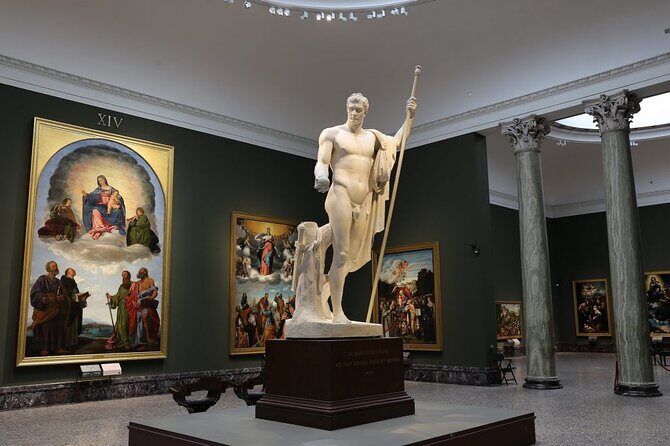
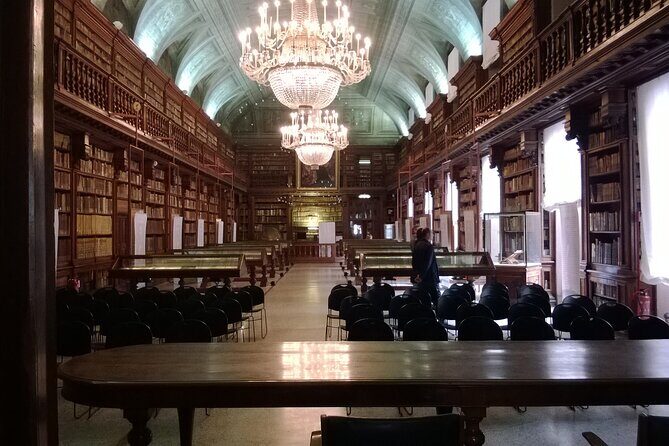
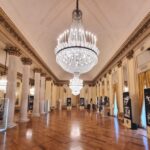
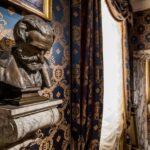
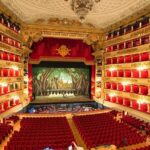
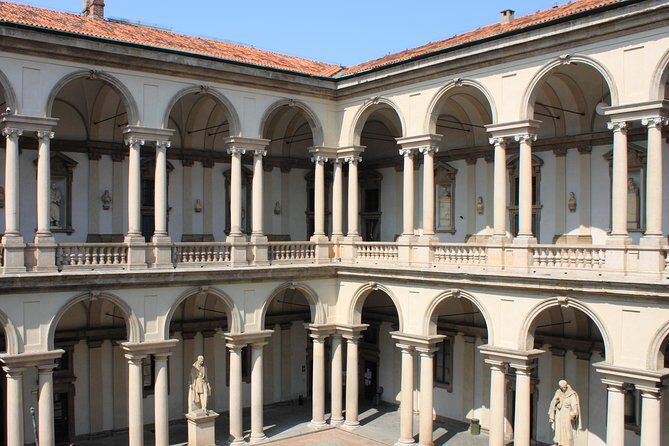
The Pinacoteca di Brera lives in the Brera Palace, a complex that feels old-school Milan in the best way. Think 17th-century interiors, plus a museum setting that began as a study collection for students linked to the Accademia di Belle Arti.
That context matters. When you walk in, you’re not just moving through galleries. You’re inside a place that was built for learning and study, which makes it easier to settle in and actually look, not just skim.
You’ll also appreciate that the museum is designed for wandering. You can go quiet and slow in the rooms that pull you in, then move quickly through areas you’re less interested in.
You can also read our reviews of more tours and experiences in Milan
Skip-the-line: what it really buys you at Brera
This ticket’s main job is simple: reduce your waiting. You use your skip-the-line access at the main entrance so you’re not stuck in the longest crowd scene.
Here’s the part you should take seriously: you’re given an exact entrance time. That time can be any point during opening hours, but once it’s assigned, you have to respect it. In practice, that means you should plan your day so you arrive with some buffer—Milan traffic, getting turned around, and lines for transit all happen.
Also note the practical redemption rule: you must print and show the Weekend in Italy confirmation voucher to redeem the tickets at the moment of your visit. If you show up without it, you could end up with an embarrassing delay.
I like timed entry for Brera because it turns your museum visit into a plan, not a gamble. But it only works if your paperwork is ready and your arrival time is realistic.
Your 2-hour visit: how to pace a 38-room museum
The experience is listed at about 2 hours. That’s a solid window for a museum with 38 rooms—fast enough to fit into a day, but long enough that you’re not racing the clock the whole time.
Because it’s self-guided, you don’t have to follow a strict route. The museum’s independent format is one of the most valuable pieces here. You can spend extra time in the rooms that catch your eye and skip past the rest without feeling guilty.
A good pacing approach for a two-hour visit:
- Start with your must-sees (so you’re not hunting for them later).
- Spend your first hour on the biggest highlights and your favorite artists.
- Leave the last chunk of time for the emotional pieces—religious works, dramatic scenes, and the works that make you stop and stare.
If you’re the type who loves looking closely, you might want more than two hours. If you’re more of a focused sampler, two hours is plenty.
What you’ll see: 13th to 20th century in Italian and Flemish focus
Brera’s collection spans a wide timeline, from the 13th century all the way to the 20th. That means your visit can feel like an art-history walk across changing styles, subjects, and techniques.
You’ll be looking at both Italian and Flemish painting traditions. The museum also holds major works that arrived through European collecting history. For example, during Napoleonic times, important paintings were appropriated from churches and other galleries after Milan became Italy’s capital.
And later, Brera received additional paintings through an arrangement tied to the Louvre. Those works specifically helped represent the 17th-century Flemish school of painting, including paintings by Rubens, Jordaens, and Van Dyck—along with pieces by Rembrandt.
That mix is one reason Brera works so well. You get variety without leaving the building.
The biggest names: Raphael, Titian, Tintoretto, and friends
If you love Renaissance to Baroque art, Brera is built for you. You’ll see well-known masters from multiple eras, including Raphael and major Venetian painters like Titian and Tintoretto.
You’ll also find Dutch and Flemish heavyweights such as Rubens, Jordaens, Van Dyck, and Rembrandt. That’s a big deal because it means you can compare styles in real time: color and drama, religious mood, portrait intensity, and the way artists handle light and emotion.
If your goal is to see world-famous names without hopping between multiple museums, Brera is efficient. One building. Multiple centuries. A lot of art that people travel specifically to find.
You can also read our reviews of more museum experiences in Milan



Caravaggio’s Supper at Emmaus: the room you’ll remember
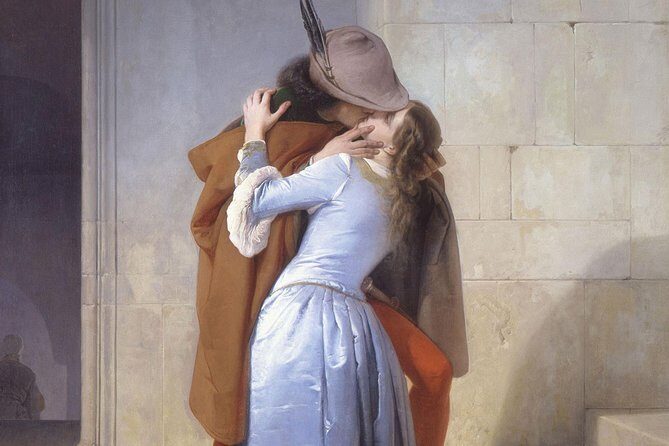
Caravaggio’s Supper at Emmaus is one of the star attractions, and it’s exactly the kind of painting that changes how you look at everything else in the museum. Caravaggio’s scenes tend to feel intense and close, and this one brings that atmosphere into Brera’s galleries.
You’ll also likely slow down for the Mantegna works. The museum highlights include Mantegna’s Dead Christ and Three Mourners. These are emotional pieces, and they’re also excellent for understanding how artists used form and expression to pull you into the moment.
I recommend you don’t just take a quick look and move on. Pause. Let your eyes adjust. If you’re short on time, decide that one of these pieces gets your full attention. The rest can be faster.
Andrea Mantegna and Giovanni Bellini: religious art with real punch
Brera doesn’t only do dramatic myth and religious theater. It also gives you religious art that feels human and present.
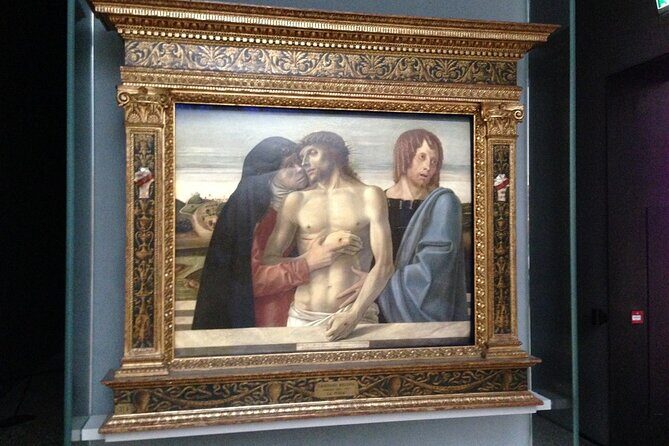
Alongside Mantegna, you’ll find Giovanni Bellini’s Pietà. Bellini is known for a softer approach and human weight in religious scenes, which makes a nice contrast to the more severe intensity you’ll see elsewhere in the museum.
This is a good spot to build your own mini-arc. For instance, you can compare how different artists handle grief and sacred subjects. You’ll start noticing differences in light, body language, and how the figures are arranged to guide your eye.
Rubens, Jordaens, Van Dyck, and Rembrandt: a compact lesson in Baroque schools
One of the clever things about Brera’s collection is how it lets you see Baroque-era thinking without leaving the building. The Flemish-focused works are connected to how the museum acquired paintings in historical agreements, including works brought in to represent the Flemish school of painting.
That matters because you can recognize shared traits: rich surface, strong character, and storytelling that feels staged but alive. And then Rembrandt’s presence gives you another angle—often more psychological, often more focused on expression and shadow.
If you like art that tells you a story even when you don’t know every detail, this section of Brera is a great use of your limited time.
Temporary exhibition: a small bonus with real value
Your ticket lists a temporary exhibition as included. That’s not guaranteed to be your favorite part, but it’s a smart way to get more than just the fixed collection.
If your schedule is tight, this matters. You’re already paying for entry and skip-the-line access; having that extra offering can turn the visit from good to excellent.
When you arrive, quickly check whether the temporary show is open during your timed window. If it is, factor it into your two-hour plan rather than treating it as an afterthought.
Where it is and how you’ll work it into your Milan day
The Brera Art Gallery is in the Brera Palace, and the area is well connected. It’s listed as near public transportation, which helps when you’re moving around Milan with a short time window.
Because the ticket includes timed entry but no transportation pickup, you’ll need to plan your own route. The best move is to base yourself around central Milan and then aim to arrive a bit early, so you’re not stressed at the exact entrance time.
Price and value: does $25.60 make sense for Brera?
At $25.60 per person, the ticket isn’t bargain-basement cheap. But it does buy you something specific: guaranteed access to skip the long lines and an assigned entry time.
So the value depends on your travel style:
- If you hate waiting and want control, paying for skip-the-line is often worth it. You’re buying time, not just entry.
- If you’re okay with waiting and you’re flexible, you might find a cheaper approach works. But Brera can be busy, so that calculation can swing fast.
Duration is about 2 hours, which also supports the price. You’re not paying for a long guided program; you’re paying to reduce friction and get into the museum when you want.
If your printed voucher is ready and your entry time is respected, this ticket is a smart way to spend your Milan time on art instead of managing queues.
Who this ticket suits (and who should reconsider)
This works best for you if:
- You want an independent museum visit (no strict pacing required).
- You care about specific artists like Caravaggio, Mantegna, Raphael, Tintoretto, and Rembrandt.
- You’re trying to fit Brera into a packed Milan itinerary and want to protect that time.
You might reconsider if:
- You’re the kind of traveler who shows up without printing documents or double-checking your voucher.
- You’re uncomfortable with timed entry rules.
One more reality check from real-world behavior: in some cases people have reported ticket or voucher issues, confusing instructions, or problems at the door that delayed or blocked admission. That’s not the museum’s fault; it’s the third-party coordination piece. The practical fix is to confirm your voucher details early and arrive prepared.
Should you book this Brera skip-the-line ticket?
I’d book it if your top priority is getting into Pinacoteca di Brera smoothly and spending your time looking at big paintings, not queuing. The biggest reason is straightforward: skip-the-line plus an exact entry time turns Brera into a controlled visit.
Book with confidence if you can print the Weekend in Italy voucher and show up on time. If you’re even slightly unsure about your email-to-voucher flow, take a moment to verify everything before you leave your hotel.
If you love the museum vibe and you plan to give Caravaggio, Mantegna, and Bellini real attention, this is a good use of money. If you’re on a tight budget and you don’t mind waiting, you might decide to risk buying standard entry instead.
Either way, Brera is worth your time—timed entry just helps you spend that time where it counts.
FAQ
What is the duration of the Brera Art Gallery visit?
The experience is listed at about 2 hours.
What does the skip-the-line ticket include?
It includes guaranteed skip-the-line access to the Pinacoteca di Brera, and a temporary exhibition is listed as included.
Do I get to explore on my own?
Yes. Once inside, you can explore independently at your leisure.
How much does the ticket cost?
The price is listed as $25.60 per person.
What time do I enter the museum?
You’re assigned an exact entrance time that you must respect. The time can fall anywhere during opening hours, and it’s shown on the voucher.
Do I need to print anything to redeem the ticket?
Yes. You must print and present the Weekend in Italy confirmation voucher at the time of the visit.
Is food included?
No. Food and drinks are not included.
Is the ticket refundable or changeable?
It’s non-refundable and cannot be changed for any reason.